
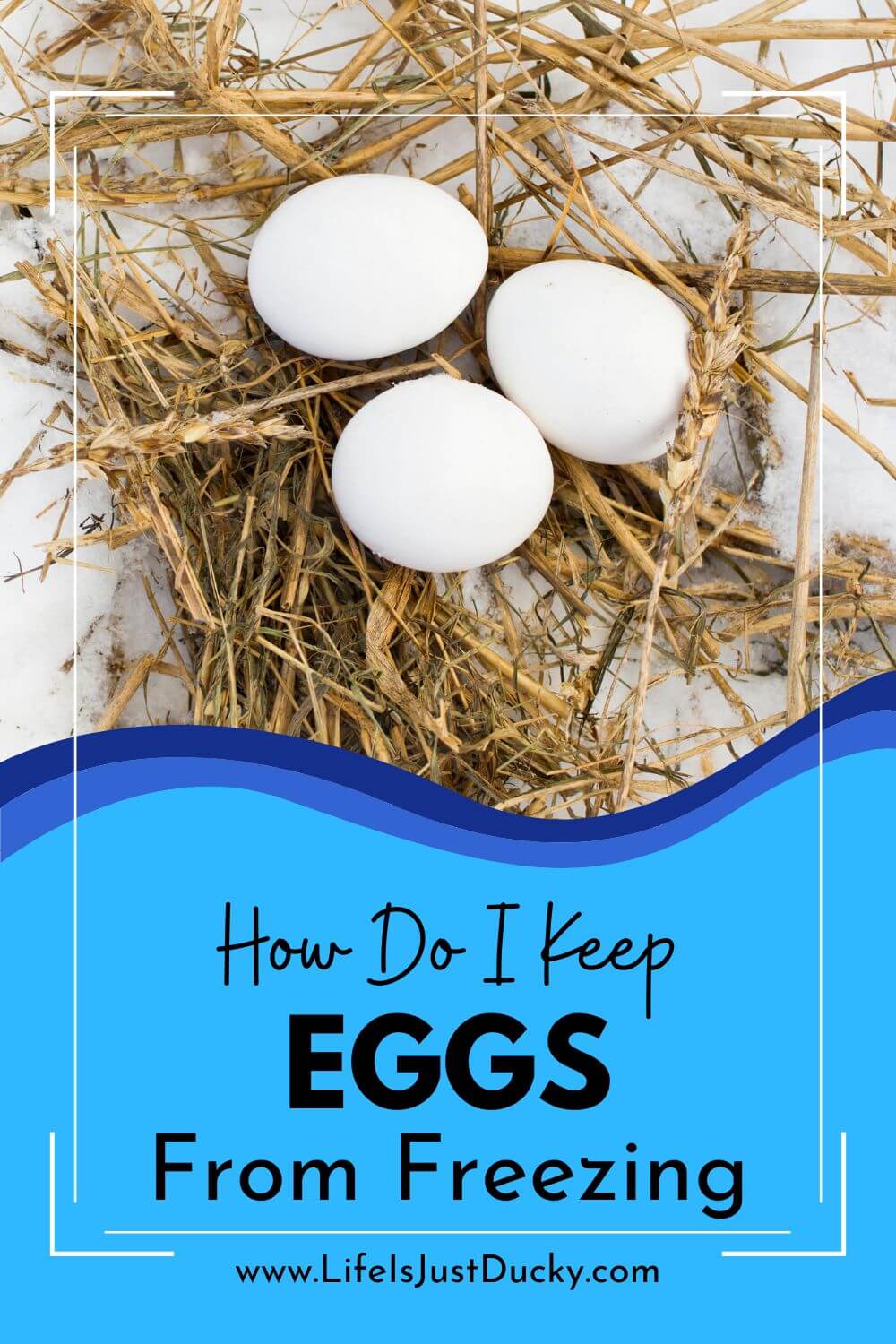
Eggs are a precious commodity in the winter months, so you don’t want to lose even one. But if it gets really cold where you live, do eggs freeze?
Yes, they can if your temperatures get below freezing. Let’s talk about how to keep eggs from freezing in your coop. And what you can do if they do freeze.
Chickens and ducks usually do well when the winter chill sets in. With their new winter feathers after their fall molt, they are all set to live in an unheated coop all winter. But your eggs will not fare as well. So how do you prevent cracked, frozen eggs?
This post may contain affiliate links. I will be compensated if you make a purchase after clicking on my links. Please read my disclosure if you have questions.
Thank you for supporting this site with purchases made through links in this post. For Starters Here’s My Amazon Store.
At What Temperature Does A Chicken Egg Freeze?
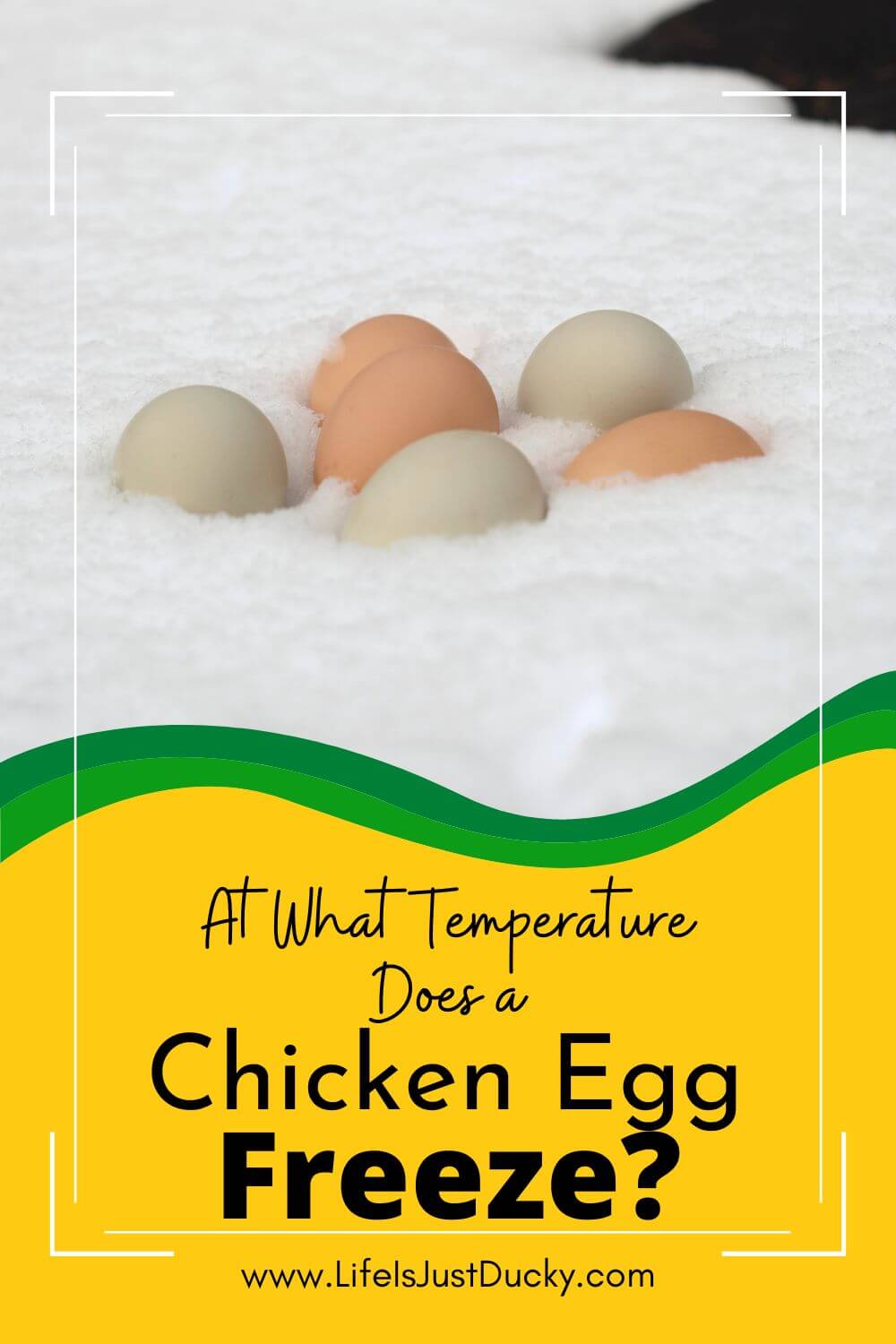
Eggs, like anything else that is mostly water inside, will freeze if it gets cold enough. A chicken egg’s freezing point is about 28 °F ( -2.2° C ) But it will take a little while for it to fall to that temperature.
Related>> Make Peeling Farm Fresh Eggs So Much Easier.
How to Keep Chicken Eggs From Freezing in the Coop.
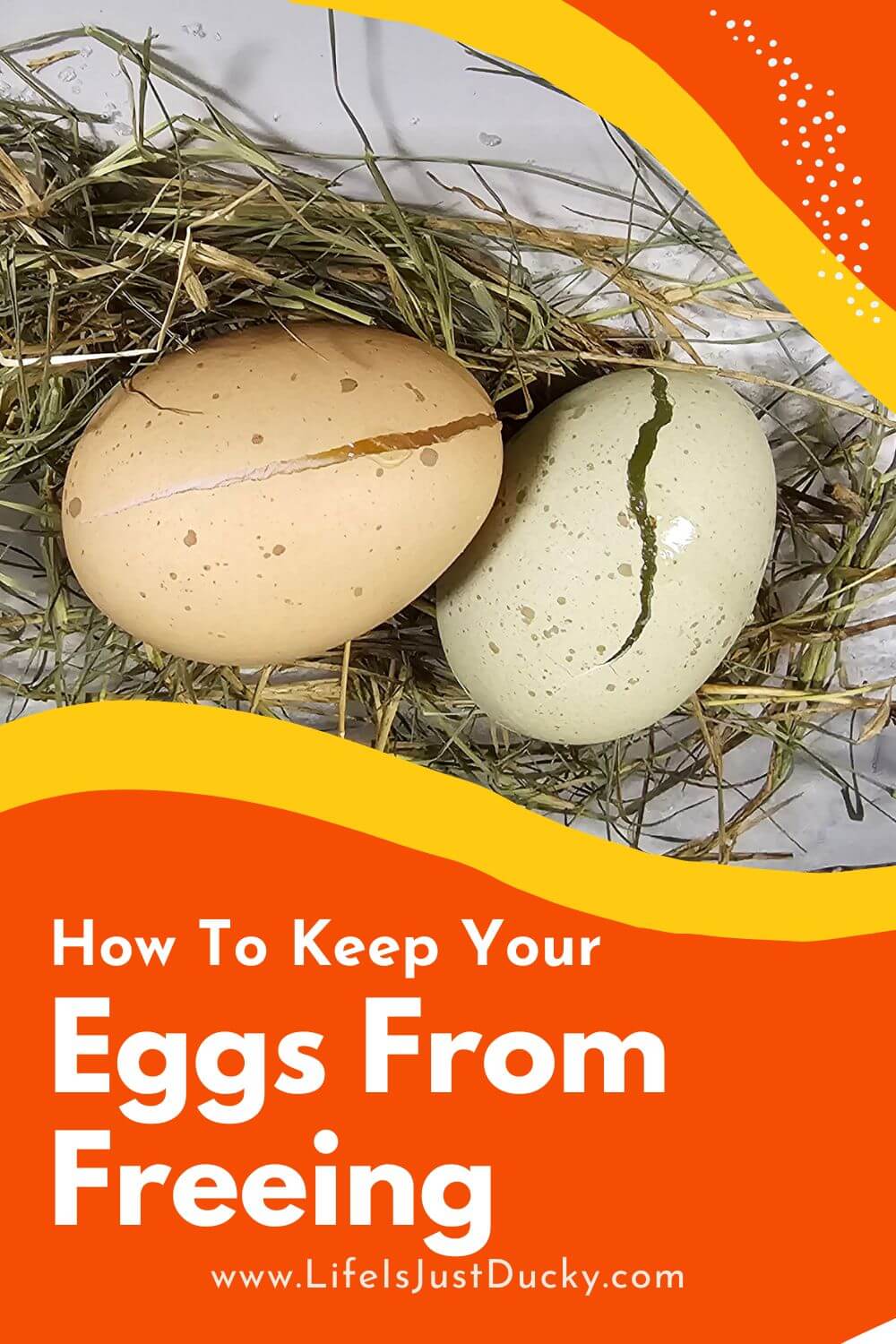
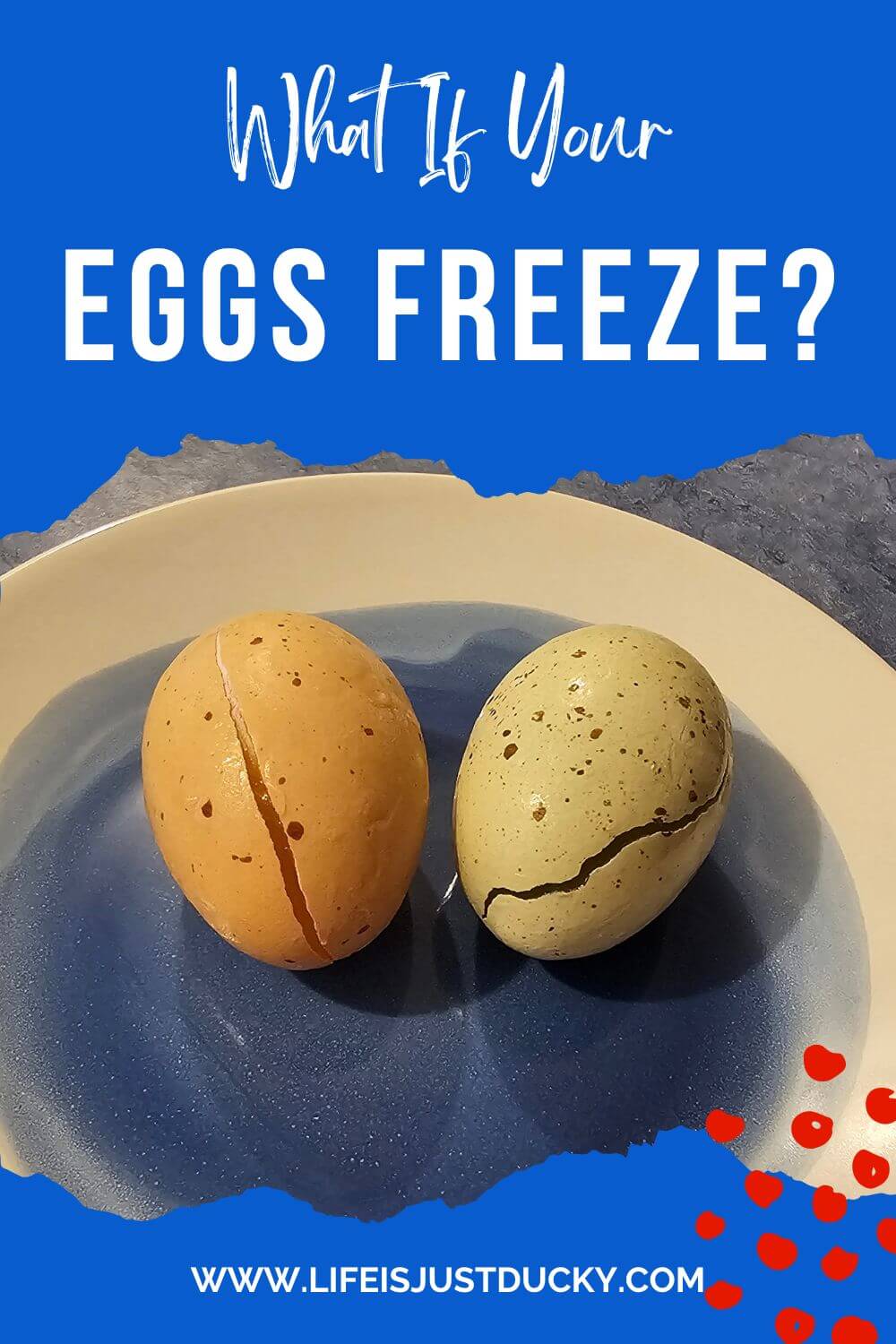
Without proper planning, your eggs could freeze in your coop. The white and yolk will expand as they freeze and push against the shell causing it to crack. Sometimes these cracks are easily visible, but sometimes they’re hairline cracks that you can’t easily see. These cracks can let bacteria into the egg making them unsafe to eat. And in the winter when eggs are in short supply, a ruined egg can be quite upsetting.
How Do I Keep Eggs from Freezing?
You can’t stop winter, but you can prepare for it.
Preventing eggs from getting cold and cracking can be a challenge if you live where it freezes in the winter. So, what are some things you can do to keep egg freezing from happening in your coop?
Why Do Eggs Freeze?
When an egg is laid, it will be about 105° F. (40.5° C) Immediately it will start to cool. The warmer you keep the nesting boxes, the longer it will take for that egg to cool down to a freezing temperature. There are many ways to slow that process down. So, what are some of the things you can do to keep your eggs warmer, for longer?

Should You Heat The Coop?
Preventing frozen eggs in your coop needs some prior planning, but is heat the answer?
It may seem logical to heat your coop in the winter. That might keep your eggs warm enough to keep them from freezing and it would keep your chickens toasty warm. But actually, that can do more harm to your birds than the little good it could do. Why you ask? There are a few reasons
- Fire – Each winter coops, barns, and even homes burn down because heat lamps start fires. The lamps can fall down, short out, or catch dry litter on fire. Extension cords are not a great idea in the coop either.
If you do decide to heat your coop, Make sure it is securely attached. - Moisture – A heat source can cause condensation. This is not good for chickens in the cold weather.
- Losing Power – Your birds will get used to the cold gradually through fall and the start of winter. They put on extra down feathers which insulate their bodies. If you are keeping them unnaturally warm, their bodies will not properly prepare themselves.
If you lose power, your birds, who are now not used to the cold, can freeze or go into shock when faced with cold temperatures they are unprepared for.
(Caution: There are some breeds like silkies (chickens) and muscovies (ducks) that do not do well in the cold. Know your breeds and get the right ones for your environment)
Related>> Can You Keep Ducks With Chickens?
Should You Add A Light In The Coop?
Some flock keepers will add lights during the winter. This will add a small amount of heat to the coop. But it breaks their natural slowdown of egg production. It is harder on their bodies to have to lay through the winter when they would naturally get a break.
So, what else can you do to keep eggs from freezing?
Related>> Best Winter Waterers For Chickens And Ducks.
How To Keep Eggs Warm.
If you already have an existing coop this may not be the easiest solution, but the nesting box location is very important and can make a huge difference in whether your eggs freeze or not.
- Build Nesting Boxes Inside – If you haven’t built your chicken coop yet, you may want to put your nesting boxes inside your coop. Yes, the nesting boxes that stick out the side of the coop are convenient for collecting, but they expose the eggs to the cold and they will cool off so much faster.
- Insolate Your Boxes – If you already have that type of coop, you will want to insulate the nesting box on all sides or you will lose a lot of heat right where you need it most.
At the very least you can pack bales of straw all around them on the outside when freezing temperatures threaten. - Orientation – Positioning your coop so the nesting boxes face east or southeast will allow the sun to warm the boxes up at the first break of day. As this is about the time when most chickens lay their eggs, this can help warm the nesting boxes.
- Use The Sun – If you live in a cold climate and are building or buying a new coop, think about where you will locate your coop. Putting your coop in full sun will keep your whole coop warmer, including your nesting boxes.
- Insulate The Coop – Whether you pile straw or hay bales to the outside walls of the coop, or you build your coop, much like your house with insulated walls, your whole coop will stay much warmer if there are no drafts and the heat your birds give off doesn’t escape.
Don’t forget to insulate the underside of your coop if you have an elevated coop. - Deep Litter – A thick layer of deep litter in the winter will make a cleaner environment and help keep your coop warmer in the winter, this in turn will help keep your eggs from freezing. For a cold winter, the hollow shafts of straw insulates better than hay or shavings.
You can add a thick layer of straw to the nesting box also for more of that insulating effect.
Caution: If you are planning on composting your bedding for your garden. Make sure you use organic straw. Straw is often sprayed with herbicides and this can kill your garden.
Related>> Deep Litter – The Best Method For A Duck And Chicken Run.
Keep Eggs From Freezing In The Nesting Boxes.
- Collect Your Eggs Often – Most eggs are laid early in the day, so collect them first thing in the morning, then collect your eggs again just before bed. If you are home during the day, collecting them several times during the day should help even more. You can even ask a neighbor or your child to collect them when they get home from school.
The more often you can collect them the less likely they will be frozen. - Broody Hen – If you have a hen that goes broody in the winter, don’t discourage her. She can sit on the eggs keeping them warm until you are ready to collect them. Just make sure she has water and food nearby so it doesn’t affect her health.
- Put Up Curtains – Putting curtains up at the front of each nesting box, will keep the heat in longer. The thicker the material the longer it will keep heat in. Let the curtains hang down across the front of the nesting boxes in the winter, they can be pulled back in the summer.
- Close Some Nesting Boxes – You probably have several nesting boxes in your coop. I know I do. But in the winter, when the chickens are not laying as many eggs, you can close some of them off.
Blocking chickens from having their own private pace to sit will force them to use the same box(s) and that will keep hens sitting on the eggs that have already been laid, keeping them warm for a longer period of time.
Related>> Is Raising Ducks Right For You?
One Last Tip to Keep Eggs from Freezing.
If You Have Ducks, it is a little bit easier to get unfrozen eggs in the winter.
- Lay One Time Of Day – Ducks are more consistent about laying their eggs very early in the morning, so collecting them before you go to work or in the morning when you open up the coop, will probably take care of all the eggs for the day.
- Larger Eggs – Duck eggs take longer to cool down, just because of their increased size.
- Bury Their Eggs – Ducks still have the instinct to protect their eggs so they will cover them with the deep litter that is in their nest boxes. This helps to insulate them from the cold.
- More Eggs – You also will get more eggs through the winter as ducks don’t have such a drastic slowdown in egg production as chickens do. So even if you lose a few, you will still have a lot more eggs than if you are relying on chicken eggs.
Storing Eggs In Winter.
During the warmer months, it is fine to store your eggs at room temperature. But in the cooler months when your coop temperature drops below about 45°F (C), and the eggs are cold to the touch when you collect them, then your eggs should be refrigerated to be stored.
Being that cold in the coop is the same as being in the refrigerator and condensation will form on them when they warm to room temperature. Condensation will make the properties of the bloom less effective.
Related>> Caring For Ducks In Winter. What You Need To Know.
How Can I Tell If An Egg Is Frozen?
If the egg is not cracked, you can’t tell for sure if it is frozen or not. But there are a few clues that they might be.
First, the eggs will be very cold. They may make an audible sound when shaken if they are starting to freeze.
Another test is to gently spin it on the counter. The non-frozen egg may wobble more. Not frozen eggs have an air sack that can let them slosh from side to side.
But the biggest clue is when it is fully frozen it will usually crack.
Related>> What Is The Best Way To Store Farm Fresh Eggs?
Is It Safe To Eat Frozen Eggs?
If you suspect your egg may be frozen, you may wonder what you should do with them. Can you eat them? Do you have to throw them away?
This depends on their condition.
If The Egg Isn’t Cracked –
A frozen egg that hasn’t cracked can still be eaten. Place it in the refrigerator where it will thaw and be ready to be used. It is best to use it in scrambled eggs or used in baking as the texture may be a little grainy.
Related>> 10 Necessities To A Perfect Duck House.
If The Egg Is Cracked But The Membrane Is Intact –
Even if the egg has a crack, but the membrane is intact and the egg isn’t obviously dirty, you can still use the egg, but you should use it right away. If you can’t use it immediately, put it in a plastic bag or container and freeze it until you are ready to use it. Though cold weather slows bacteria down, it does not eliminate it, so you will want to cook your eggs thoroughly just in case.
If The Egg Membrane Is Broken –
If the egg is cracked and the membrane is broken there is no way to keep the bacteria out of the egg, so people should not consume them.
However,….. If you just can’t bear to throw them out, they can be cooked, very well done, and fed back to your chicken, ducks, or even your dogs.
Their digestive systems are better equipped to handle any bacteria that may be left after cooking them.
Related>> What Can Chickens Eat And 10 Things To Avoid.
Should You Feed Chickens Their Own Eggs? –
Oh, yes! Feeding your chickens and ducks their own eggs seems a bit odd at first. But it is actually a great source of protein and other nutrition. This will be a nutritious snack. You can also add greens powder or powdered egg shells for extra nutrition. Free food for your birds and no waste! And your flock will love it.
With a few modifications and checking for eggs more often, you should be able to have fresh eggs all winter and keep eggs from freezing in your coop.
Keep Chicken Eggs From Freezing On The Way In From The Coop.
One last thought. Make sure you plan for your trip from the coop to the house. Bring a cooler with a warm towel in it for the trip to the house. If it is a long walk, they could freeze on the way.
How To Keep Chicken Eggs From Freezing In The Coop.
Preparing for winter is a must if you live in a cold environment. By taking a few extra steps you should be able to keep eggs from freezing this winter. Winter can be challenging, but with a little planning, your coop will be ready to keep your fresh eggs ready for you to enjoy, even on the coldest days.
I hope these tips help keep your eggs from freezing and make keeping chickens and ducks more enjoyable this winter.
More You May Enjoy
The Simple Start Raising Ducks System.
Setting Up A Brooder Box For Baby Ducks.
A Well Designed Duck Coop To Make Your Life Easier.
Duck Eggs vs. Chicken Eggs, Why Duck Eggs Are Better.
Raising Ducks 101 – How To Take Care Of Baby Ducklings.
How To Get Clean Water For My Ducks.
Happy Backyard Homesteading!

I believe everyone can grow at least part of their own food! Let me show you how.

Mary is a gardener, backyard homesteader, and duck wrangler. She is also the owner and writer of LifeIsJustDucky.com and AGoodWordADay.com. (for daily devotions) Mary is passionate about helping others expand their backyard homesteading skills and learn to be more self-sufficient, no matter where they live.