
The first time I raised ducklings, I wasn’t really sure what I was getting myself into.
My daughter brought home some baby ducklings for us to raise, and suddenly I was responsible for these tiny, peeping balls of fluff. I had never raised chickens or ducks before, so there was a lot I didn’t know. Ducklings needed heat, special attention to their food and water, and a brooder that could handle just how messy they were going to be.
I had a lot to learn about how to raise ducklings—and I had to learn it really fast.
This post may contain affiliate links. I will be compensated if you make a purchase after clicking on my links. Please read my disclosure if you have questions.
Thank you for supporting this site with purchases made through links in this post. For Starters Here’s My Amazon Store.

Over the years, I’ve raised plenty of ducklings, and I’ve learned what works, what doesn’t, and a few things I wish someone had told me before those first babies arrived.
So if you’re getting ready to bring home your first ducklings, I’m going to share what I’ve learned to help you give them a safe, healthy start.
And get ready. Ducklings are adorable, but they are also very, very messy.
Is Raising Ducklings Right for You?
Before you bring home those adorable little balls of fluff, there’s something you should consider.
Ducklings are adorable. Ducks are messy.
They grow quickly, they need plenty of water, and they can turn a clean brooder into a wet, messy place in no time.
They also need daily care, safe housing and protection from predators once they move outside.
That doesn’t mean you shouldn’t raise ducks. I absolutely love mine.
But it’s better to know what you’re getting into before you bring home the babies.
Not sure if ducklings are right for you? Download my free Is Raising Ducklings Right for You? guide and see what life with ducks is really like.
And if you’re seriously considering raising ducks, my ebook Everything You Need to Know Before Raising Ducks walks you through the things you should know before you get started.
What Do Ducklings Need?
Before your ducklings come home, have these things ready:
- A safe brooder
- A reliable heat source
- Non-slip bedding
- Duckling or waterfowl starter feed
- Brewer’s yeast if using non-medicated chick starter
- A safe waterer
- Appropriate grit once you begin offering foods other than starter feed
- Plenty of clean, dry bedding
- Enough room for them to move around
- A plan for where they will live when they outgrow the brooder
Ducklings grow surprisingly fast. What seems like a wonderfully roomy brooder on day one can feel awfully small a couple of weeks later.
And don’t forget that ducklings are waterfowl.
They are going to make water a complete and utter mess.
Set Up the Brooder Before Your Ducklings Arrive
A brooder is simply a safe, warm place for your ducklings to grow until they are ready to move outside.
You can make a brooder from a large plastic tub, stock tank, wooden box or another suitable container. It needs to be safe, secure and well ventilated, with enough room for the ducklings to move around comfortably.
The important thing is that your ducklings have a warm area and enough room to move toward the heat when they are cold and away from it when they are warm.
You don’t want the entire brooder to be the same temperature.
You want a warm area and a cooler area so your ducklings can choose where they are comfortable.
Related>> Setting Up A Brooder Box For Baby Ducks
Keep the Brooder Safe
Make sure the brooder is protected from other pets, young children and anything else that might see a box full of fuzzy ducklings as an interesting toy.
And secure your heat source carefully.
How Warm Do Ducklings Need to Be?
Newly hatched ducklings cannot regulate their body temperature well, so they need supplemental heat. Start with a brooder temperature of about 90°F during the first week, then gradually reduce the temperature as they grow and feather out.
The exact temperature doesn’t have to be perfect. What matters is that your ducklings have a warm area and enough room to move away from the heat when they get too warm.
Watch your ducklings.
If they are huddled tightly under the heat source, they are probably cold.
If they are trying to get as far away from it as possible, they may be too hot.
When they are comfortably spread around the brooder, eating, drinking and resting, that’s a good sign that they are comfortable.
Want an easy way to keep track of the temperature as your ducklings grow? Get my free Duckling Brooder Temperature Chart.
⚠️ Safety Tip: Secure Your Heat Lamp!
Never rely on the clamp alone to hold a heat lamp.
A heat lamp can become extremely hot, and if it falls into the brooder, it can ignite bedding and cause a fire. Ducklings are active little creatures, and equipment can get bumped or knocked loose.
Secure the heat lamp to something solid so it cannot fall, even if the clamp slips or fails. Keep the lamp a safe distance from bedding and anything else that could catch fire.
Before you leave your ducklings unattended, check that the lamp is securely fastened and that nothing can move it closer to the bedding.
A heat lamp can be useful for brooding ducklings, but it needs to be treated like the fire hazard it is.
A heat plate is another option and eliminates some of the fire risks associated with a heat lamp. Whichever heat source you choose, make sure it is safely installed and that your ducklings have enough room to move away from the heat.
🌼 From Mary’s Backyard
When I got my first ducklings, I was told I needed a heat lamp.Nobody told me to check the temperature under the lamp.
When I finally took a thermometer into the brooder, I discovered that the area underneath that lamp was about 120°F!
My poor ducklings were huddled at the far end trying to get away from it.
That taught me a lesson I have never forgotten:
Don’t just follow the instructions. Check what is actually happening in your brooder.
A thermometer is inexpensive insurance, and your ducklings’ behavior will give you another very important clue.

Ducklings Need Water
This is one of the biggest differences between raising ducklings and raising chicks.
Ducklings need water with their food.
They need to be able to drink freely, and their waterer needs to be deep enough for them to submerge their bills.
But there is a catch.
Ducklings will try to turn their drinking water into a swimming pool.
And they will probably succeed.
They splash.
They climb in.
They fling water everywhere.
Then they walk through the wet bedding. (and maybe their food)
Then they do it again.
Welcome to raising ducks.
Keep Drinking Water Clean
Give your ducklings fresh, clean drinking water and check it frequently.
Ducklings can make a clean waterer dirty remarkably quickly.
One of the best things you can do is set up the waterer so that splashing doesn’t soak the entire brooder. As they grow, you can adjust the setup to keep water away from the bedding as much as possible.
This will save you a tremendous amount of work.
Because wet bedding plus ducklings equals a very stinky brooder.

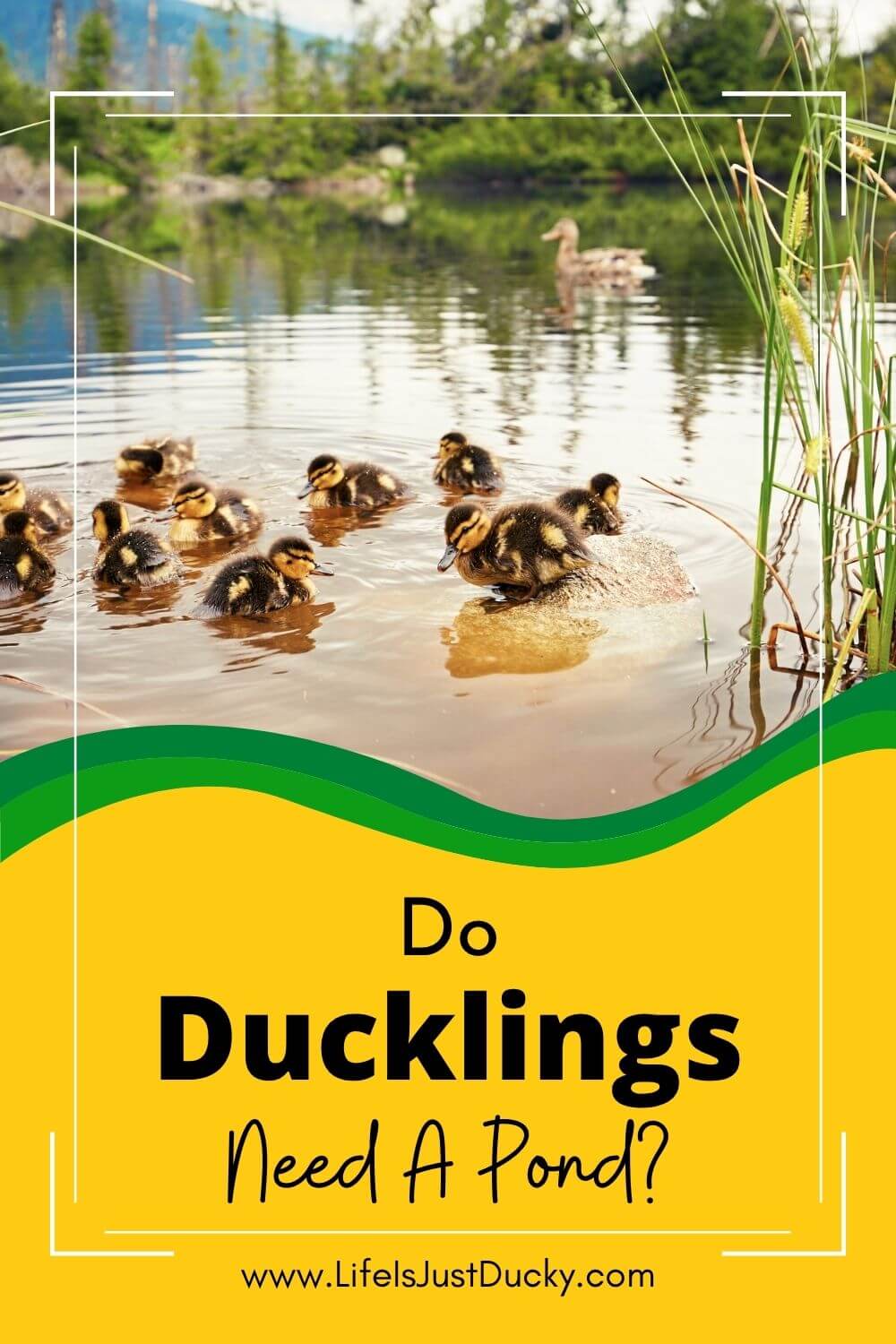
Can Ducklings Swim?
Ducklings love water. Of course they do—they’re ducks!
But very young ducklings aren’t ready for a big swimming pool. They can become chilled, exhausted or have trouble getting out of the water. They don’t need swimming water for the first few weeks, to grow up healthy, so you don’t have to provide a pool at all.
If You Want to Give Ducklings a Swimming Pool
If you do want to give your ducklings a little swimming pool, keep the water no more than about 3 inches deep.
The pool should also be near their heat source so they can get out of the water and warm themselves up afterward.
Don’t leave very young ducklings swimming unattended.
Remember, these little babies aren’t waterproof yet. They haven’t developed the full feathering and oil protection that adult ducks have, so getting wet can cause them to become chilled.
And don’t make the mistake of thinking, “They’re ducks. They can swim.”
Yes, they can swim.
That doesn’t mean they can’t get into trouble in the water.
What If a Mother Duck Is Raising the Ducklings?
If you have a mother duck raising her own ducklings, you may not need to worry about providing the babies with a separate swimming pool. Mom will take care of much of their warmth and protection.
But you do need to think about the water container that Mom uses.
If the mother duck has a tub or other container deep enough for her to bathe in, put bricks, steps or another easy way for the ducklings to get out inside it.
Ducklings are curious.
They will follow Mom.
They may hop into water that is much too deep for them.
And don’t underestimate how high a duckling can jump!
🌼 From Mary’s Backyard
When my mother duck had ducklings, I gave the babies a small dish where they could play in the water.But Mom wanted to use the larger water trough.
I made sure there were bricks inside the trough so that if a duckling hopped in, it had a way to climb back out.
That little bit of preparation could save a duckling’s life.
Related>> Do Ducks Need A Pond To Be Happy And Healthy?
What Do You Feed Ducklings?
Ducklings need a good-quality food that provides the protein, vitamins and minerals they need for rapid growth.
Waterfowl or duckling starter feed is an excellent choice if you can find it. It is formulated specifically for growing ducks and is an easy way to meet their nutritional needs.
But there is a problem for many backyard duck owners: waterfowl feed isn’t always easy to find.
Chick starter is available at just about every farm and feed store, so it is often the more practical choice.
Non-Medicated Chick Starter + Brewer’s Yeast
If you can’t find waterfowl starter, non-medicated chick starter with brewer’s yeast is a good option for ducklings.
That’s what I use.
Ducklings need more niacin than chicks, and brewer’s yeast is an easy way to supplement their diet with additional niacin.
I simply sprinkle about ¼ to ⅓ teaspoon of brewer’s yeast per duckling over their feed each day. I add it to the top of the feed every time I refill their feeder.
[Brewer’s Yeast – I use this for my ducklings](AFFILIATE LINK)
Just be sure the chick starter you choose is non-medicated.
I don’t think you need to make feeding ducklings complicated. If you can find a good waterfowl starter, use it. If chick starter is what is readily available, use non-medicated chick starter and add brewer’s yeast.
Don’t Feed Ducklings Adult Duck Food
One mistake I don’t want new duck owners to make is feeding their ducklings the same food you feed adult ducks. (don’t freak out if they get a little of moms)
Ducklings need a growing diet. Adult feed isn’t adequate for growing ducklings.
Adult feeds are formulated for mature birds, and the nutritional needs of a growing duck are different.
Layer feed is an especially poor choice for ducklings because it contains much more calcium than a growing duckling needs.
Protein levels can also vary among adult feeds, and ducklings need a higher amount of protein for healthy growth and development.
So don’t just grab a bag of adult duck or chicken feed because it has “duck” or “poultry” on the label.
Feed your ducklings a food formulated for growing birds.
What About Treats?
Ducklings can enjoy small amounts of appropriate greens, herbs and other treats as they grow, but treats should never replace their balanced starter feed.
I like introducing my ducklings to greens and herbs when they are young. A little chopped greenery floating in their water can turn into a fun activity as well as a tasty treat.
Just remember that treats are extras. Their starter feed should provide the foundation of their diet.
Ducklings Need Grit for Foods Other Than Their Starter Feed
Ducklings don’t have teeth. Instead, they use grit in their gizzard to help grind up food.
If your ducklings are eating only commercial starter feed, they generally don’t need additional grit because the feed is already finely processed. But once you begin giving them greens, herbs, vegetables or other foods besides their feed, provide appropriate chick-sized grit so they can properly grind their food.
Think of grit as their teeth.
The grit stays in the gizzard and helps break down the foods they eat. Just make sure you choose a grit small enough for young ducklings.
Related>> What To Feed Ducklings For Happy Healthy Baby Ducks

Give Ducklings a Non-Slip Floor
One of the most important things in a duckling brooder is something that is easy to overlook:
Make sure your ducklings have good traction under their feet.
A slippery brooder floor can contribute to leg problems, including splay leg. Ducklings need a surface they can grip as their legs develop.
What Can You Use for Brooder Bedding?
There are several options that work well.
Rubber shelf liners are one of my favorites. You can cut them to fit your brooder, and when they get dirty, simply take them out and wash them off. They provide good traction and are especially handy when ducklings are very young.
Pine shavings also work very well, and I’ve often used them with my ducklings from day one. I’ve never had my ducklings try to eat the shavings. They are absorbent, easy to find and make good brooder bedding.
Whatever bedding you use, the most important thing is to keep it dry and clean. Ducklings produce a surprising amount of moisture, especially around their waterer, so you’ll probably be changing wet spots frequently.
⚠️ Safety Warning: Don’t Use Cedar Shavings
Don’t use cedar shavings for ducklings.
Cedar contains aromatic oils that can irritate the respiratory system and cause other health problems in birds. With young ducklings spending so much time in their brooder, this is not a risk worth taking.
Stick with safer bedding choices such as pine shavings or washable, non-slip materials.
And remember: dry bedding with good traction is much more important than having the “perfect” type of bedding.
Prepare for a Mess
Let’s just be honest.
Ducklings are messy.
They may be adorable little balls of yellow fluff, but they are not tidy.
They poop everywhere.
They splash water everywhere.
They walk through their water.
They walk through their food.
Then they walk through everything else.
Ducklings create wet bedding much faster than chicks do, which means you will need to change wet areas frequently and keep adding clean, dry bedding.
This is not a problem you solve once.
It is part of raising ducks.
If you are someone who needs everything to stay clean and dry, ducks may test your patience.
But if you can laugh about it, you’ll probably do just fine.

Ducklings Need Company
Ducks are social creatures, and ducklings especially need companionship.
I recommend raising at least three ducklings together whenever possible. A duckling that is alone can become extremely distressed.
There really is safety in numbers when you are a small bird in a big world.
But companionship becomes especially important when your ducklings are eventually introduced to an established flock.
Don’t Put a Lone Duckling Into an Established Flock
It can be tempting to buy or hatch one duckling and then plan to add it to the ducks you already have.
I would be very cautious about doing that.
Ducks have a social hierarchy, and an established flock may not readily accept a newcomer—especially a single young duck that doesn’t have another duck its own age to stay with.
🌼 From Mary’s Backyard
I learned this one the hard way.I once integrated a juvenile duck into an existing flock by itself. The other ducks never really accepted it. It was picked on and remained an outsider instead of becoming a true part of the flock.
Looking back, I wish I had given that young duck a companion.
There really is safety in numbers.
A young duck that has another duck beside it has a buddy to sleep with, eat with and explore with while it adjusts to the larger flock.
If you’re adding young ducks to an established flock, give some thought to their social needs—not just whether they can physically live together.
And remember that introducing ducks is something that should be done gradually and with supervision. Don’t simply put a vulnerable youngster into an established flock and walk away.
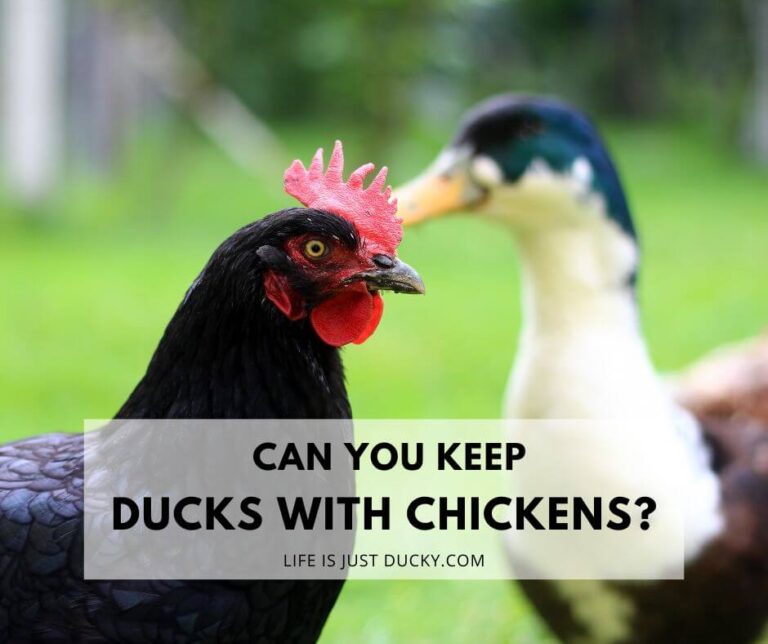
Related>> Can Ducks and Chickens Live Together? What You Need to Know
How to Handle Ducklings
Ducklings are small and fragile, and there is one part of a duckling that you need to be especially careful with:
Their legs and feet.
Their legs and feet are among the most delicate and easily damaged parts of a duckling. They are strong enough to walk and run, but they can be injured if you grab, pull or put unnecessary pressure on them.
Legs are not handles.
Never pick up a duckling by its foot or leg. You can seriously injure them.
When you need to pick up a duckling, approach calmly and support its entire body. Gently place your hands around its body and keep its wings secure as you lift it.
Don’t chase it around the brooder if you can avoid it. Chasing makes ducklings frightened of you and makes handling much harder.
If you need to catch a duckling that doesn’t want to be caught, gently guide it into a corner rather than running after it.
The more calmly you handle your ducklings when they are young, the easier it will be to handle them when they are grown.
When Can Ducklings Go Outside?
Ducklings are generally ready to move from the brooder to their outdoor coop at around 6 to 8 weeks old, when they are fully feathered and can regulate their own body temperature.
Weather matters, though. A fully feathered duckling moving outside in warm weather has a much easier transition than one moving from a warm brooder into cold temperatures.
If it is cold outside, introduce them to the outdoors gradually so they have time to acclimate to the change in temperature. Give them a warm, dry and protected place to retreat while they adjust.
Once they’re fully feathered and comfortable regulating their own temperature, they are ready to begin life as outdoor ducks.
Moving Ducklings From the Brooder to the Coop
Eventually, those tiny ducklings will become real ducks.
And it happens faster than you think.
Before they move outside permanently, make sure their housing is ready.
They need a dry, sheltered sleeping area, protection from wind and severe weather, clean bedding, safe drinking water, enough space, secure fencing and protection from predators.
Don’t wait until the ducklings are too big for their brooder to start figuring out where they’re going to live.
Related>> 10 Necessities To A Perfect Duck House
Protect Ducklings From Predators
A duckling is an easy meal for a predator.
Dogs, cats, raccoons, hawks, snakes and other predators can all pose a threat depending on where you live.
And don’t assume a fenced area is automatically safe.
Your duck run needs to be designed so predators can’t easily reach through the fencing or get underneath it.
Young ducklings are especially vulnerable, so keep them protected until they are large enough and their housing is secure.
This is one place where it is much better to prevent a problem than learn about it the hard way.
Related>> Preparing For Predators On The Homestead.
Common Duckling Mistakes
Most duckling problems aren’t caused by some complicated disease or unusual condition.
They are often caused by getting the basics wrong.
Not preparing before the ducklings arrive. Have the brooder, heat, bedding, food and water ready first.
Making the entire brooder too hot. Ducklings need to be able to move away from the heat.
Using an unsecured heat lamp. Never rely on the clamp alone.
Using a slippery floor. Give those little feet good traction.
Letting them get soaked. Young ducklings can chill quickly when wet.
Not providing enough water. Ducklings need water available when they eat.
Using the wrong feed. Ducklings need the right nutrition for rapid growth, including adequate niacin.
Feeding adult or layer feed. Growing ducklings have different nutritional needs.
Not providing grit when offering foods other than starter feed. Ducklings use grit to grind those foods.
Keeping a duckling alone. Ducks are social animals.
Forgetting how fast they grow. Make sure their brooder and eventually their housing have enough room.
Underestimating predators. A secure home is essential.
And perhaps the biggest mistake of all:
Thinking ducks will be as tidy as chickens.
They won’t.
🌼 From Mary’s Backyard
If there is one thing I hope you take away from this article, it’s that raising ducklings isn’t difficult—but it does require being prepared.My first ducklings taught me a lot because I didn’t know what I was doing.
I learned about heat the hard way.
I learned how quickly ducks can turn clean water into a swamp.
I learned that slippery floors can cause serious problems.
I learned that a lonely duckling really does need a friend.
And I learned that ducks are worth all the mess.
There have been joys and sorrows, plenty of cleaning, and lots of delicious duck eggs over the years.
I wouldn’t trade the experience for anything.
Frequently Asked Questions About Raising Ducklings
How warm should a duckling brooder be?
Start with a brooder temperature of about 90°F during the first week, then gradually reduce the temperature as your ducklings grow and feather out. Watch their behavior to help determine whether they are comfortable.
How long do ducklings need supplemental heat?
Ducklings need supplemental heat until they can regulate their body temperature and are adequately feathered. The exact timing depends on their age, feather development and the weather.
Can ducklings swim?
Young ducklings can swim, but they don’t need to swim to grow up healthy. If you provide a small swimming area, keep it no more than about 3 inches deep, supervise them and make sure they can get out easily and get back to a warm area.
Do ducklings need a pond?
No. Ducklings need clean drinking water, but a pond isn’t necessary. Swimming is an extra, not a basic requirement.
Can ducklings eat chick starter?
Yes. If waterfowl starter isn’t available, non-medicated chick starter with brewer’s yeast can be used. That’s what I use for my ducklings.
Can ducklings eat medicated chick feed?
Choose non-medicated chick starter if you’re using chick feed for ducklings. Ducklings don’t get the desease that the medication is for and since they eat more than chicks, they will get an overdose of the medication.
Can ducklings eat layer feed?
No. Layer feed is formulated for mature laying birds and contains more calcium than growing ducklings need. Ducklings need a feed formulated for growth.
Do ducklings need grit?
Ducklings eating only commercial starter feed generally don’t need additional grit. Once you begin giving them greens, herbs, vegetables or other foods, provide appropriately sized grit to help them grind those foods.
How many ducklings should I get?
Ducks are social animals, so I recommend getting at least three ducklings rather than raising a single duckling by itself whenever possible.
When can ducklings go outside?
It depends on their age, feather development, weather and housing. Wait until they can handle the outdoor conditions and make sure they have a warm, dry and secure place to retreat.
How often should you clean a duckling brooder?
At least daily, and often more frequently around the waterer. Ducklings produce a tremendous amount of moisture, so remove wet bedding promptly and replace it with clean, dry bedding.

Ready to Raise Ducklings?
Raising ducklings is one of those backyard adventures that looks easy when you see a picture of three fluffy babies waddling across the grass.
Then you bring them home.
Suddenly you have three tiny creatures that eat, drink, poop, splash, yell and grow at an astonishing rate.
But if you prepare their brooder, give them the right food and water, keep them warm and dry, and protect them from predators, you can give those little ducklings a great start.
And before you know it, those fuzzy little babies will be following you around the yard as full-grown ducks.
That’s when the real fun begins.
Ready to Raise Ducks?
Raising ducklings is just the beginning. Before you know it, those tiny balls of fluff will be full-grown ducks, and you’ll have a whole new set of questions.
Where should they live? What should they eat? How do you keep their water clean? How do you protect them from predators? How many ducks should you have? And how do you make caring for them easier instead of turning it into a daily chore?
That’s exactly why I created The Simple Start Raising Ducks System.
It’s my main class for people who want to raise ducks successfully without having to figure everything out the hard way.
[Learn more about The Simple Start Raising Ducks System]
If you’re still deciding whether ducks are right for you, start with my free Is Raising Ducklings Right for You? guide. And if you’ve already decided that ducks are in your future, my ebook Everything You Need to Know Before Raising Ducks is a great place to start.
Then, when you’re ready to actually get started, The Simple Start Raising Ducks System will walk you through what you need to know to raise your ducks with confidence.
Ready for More? Explore These Other Duck-Raising Articles:
- What To Feed Ducklings For Happy Healthy Baby Ducks.
- Setting Up A Brooder Box For Baby Ducks.
- How To Get Clean Water For My Ducks
- Do Ducks Need A Pond To Be Happy And Healthy?
- 10 Necessities To A Perfect Duck House
- Preparing For Predators On The Homestead
- Best Ducks for Eggs: 7 Highly Productive Duck Breeds
- Best Gifts for New Duck Owners (Helpful Starter Ideas They’ll Actually Use)
And when you’re ready to learn about caring for your ducks beyond the duckling stage, come back for my complete guide to How to Raise Ducks for Beginners.
Happy Backyard Homesteading!

I believe everyone can grow at least part of their own food! Let me show you how.

Mary is a gardener, backyard homesteader, and duck wrangler. She is also the owner and writer of LifeIsJustDucky.com and AGoodWordADay.com. (for daily devotions) Mary is passionate about helping others expand their backyard homesteading skills and learn to be more self-sufficient, no matter where they live.