

Starfruit is one of those fruits that makes people stop and ask, “What is that?”
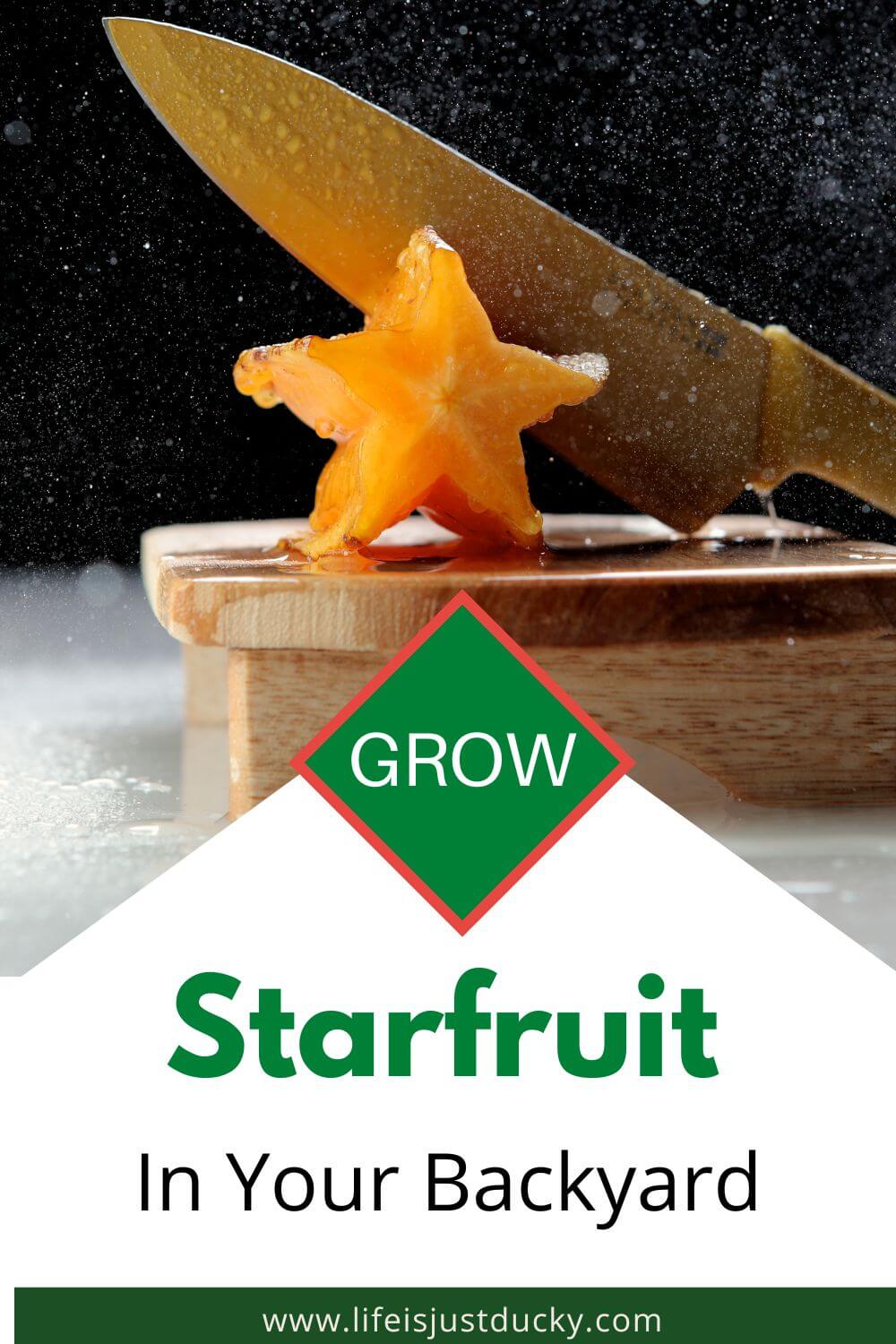
Also called carambola, starfruit is a tropical fruit with a crisp, juicy texture and a sweet, slightly tart flavor. But what really makes it stand out is its shape. Slice the fruit crosswise and every piece looks like a little star.
If you live in a warm climate, growing your own starfruit tree can be incredibly rewarding. The tree is beautiful, the flowers are lovely, and once it begins producing, you can have fresh starfruit right outside your door.
And there is another very good reason to grow your own. Starfruit can be surprisingly expensive to buy, and because the fruit has thin skin and bruises easily, it doesn’t ship particularly well.
So, if you’ve ever wondered what starfruit is, how to grow starfruit, when to harvest it, or what to do with it once you have it, you’re in the right place.
This post may contain affiliate links. I will be compensated if you make a purchase after clicking on my links. Please read my disclosure if you have questions.
Thank you for supporting this site with purchases made through links in this post. For Starters Here’s My Amazon Store.
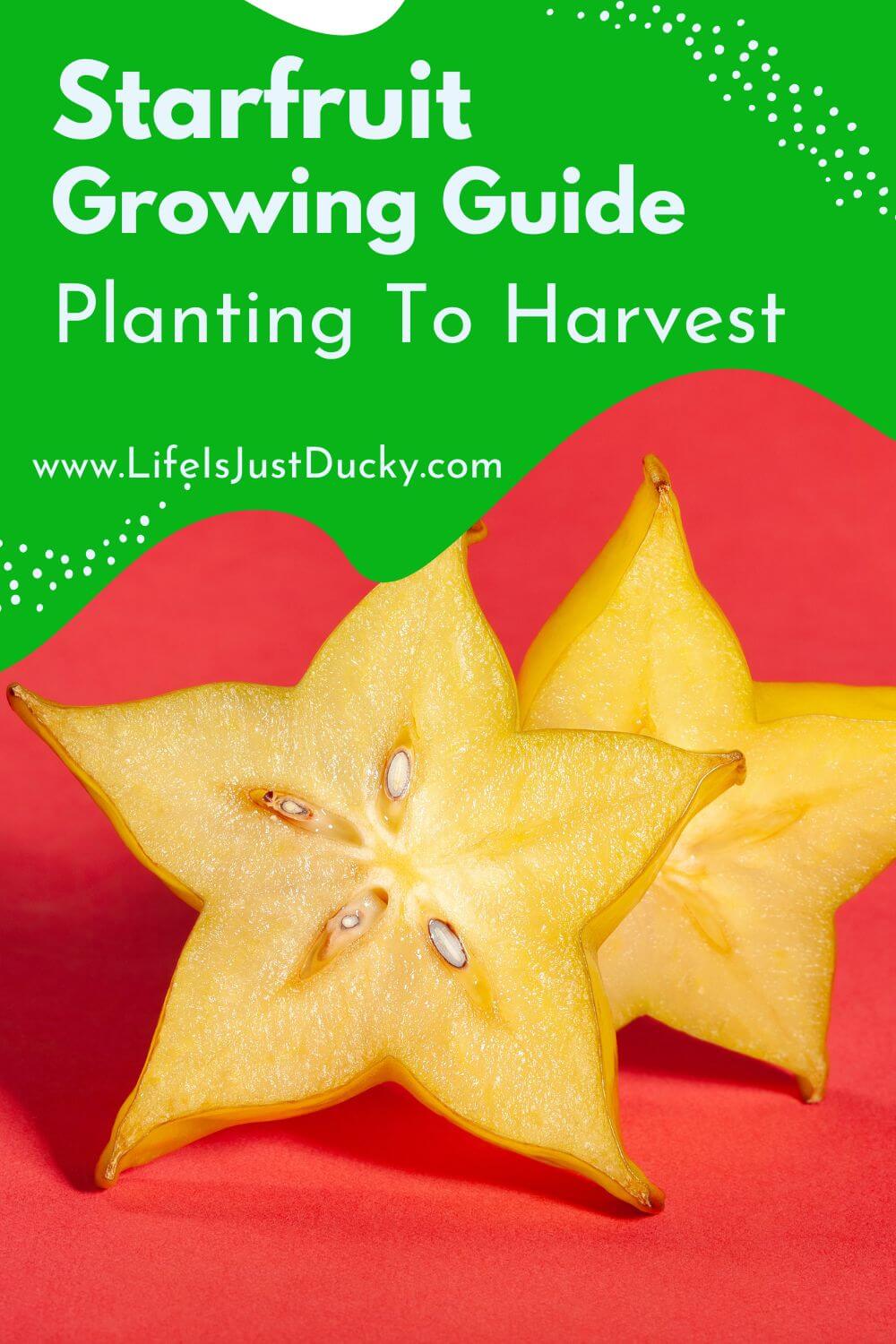
What Is Starfruit?
Starfruit, or carambola, is the fruit of the tropical tree Averrhoa carambola.
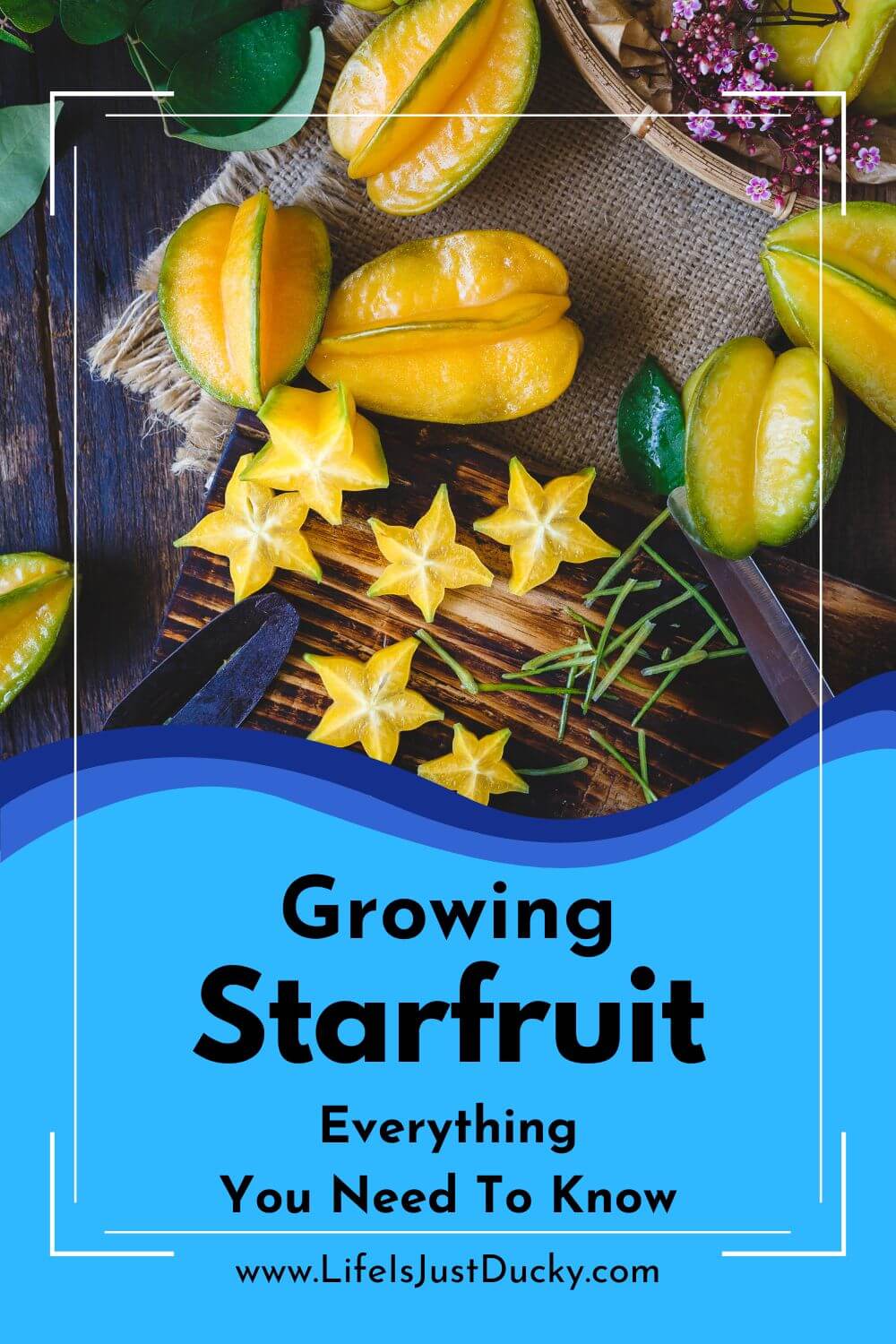
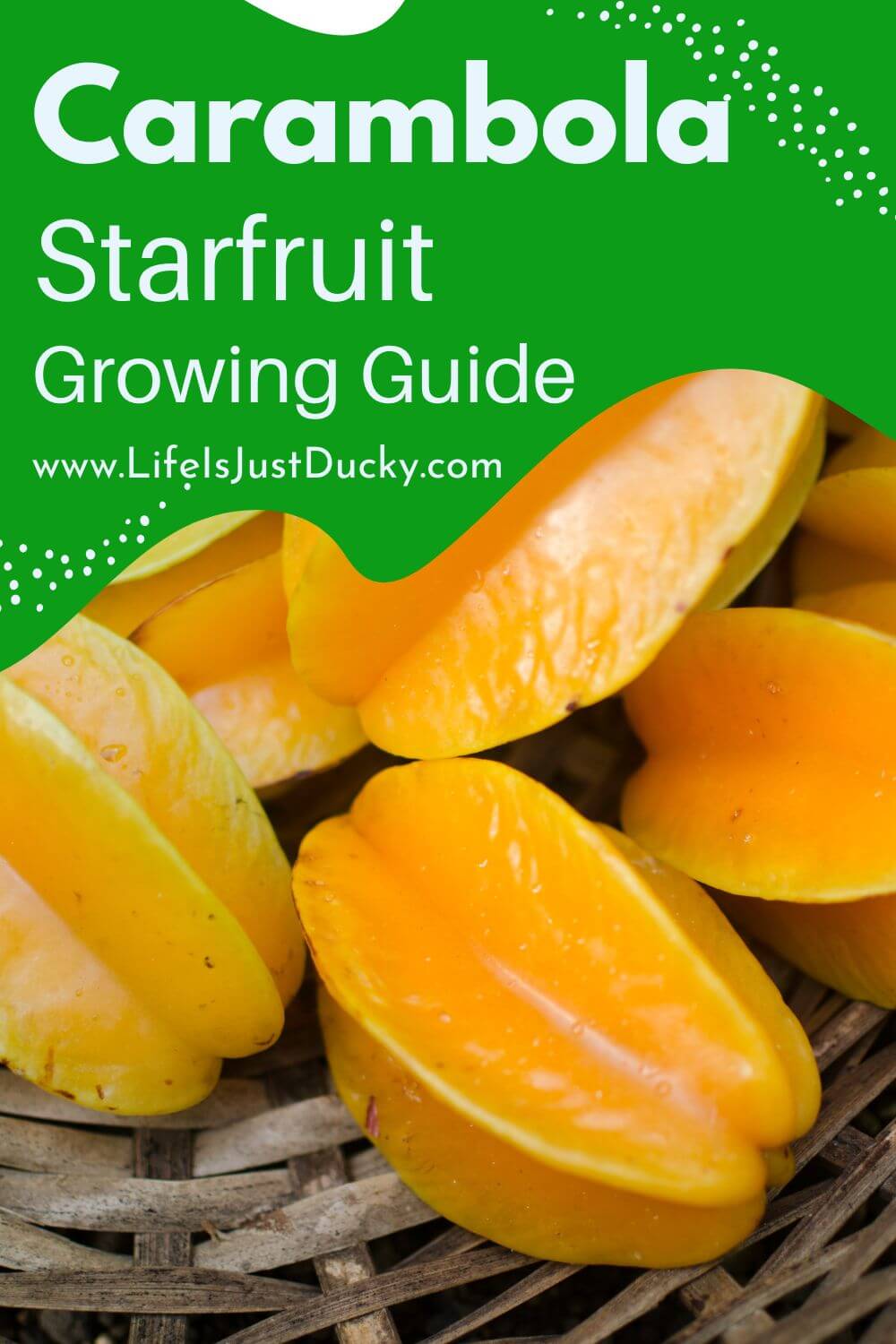
The fruit is oblong with five prominent ridges running along its sides. When you slice it crosswise, those ridges create the familiar star shape that gives the fruit its name.
The flavor depends on the variety and how ripe the fruit is. Some starfruit is mildly sweet and tart, while other varieties are wonderfully sweet and juicy when fully ripe.
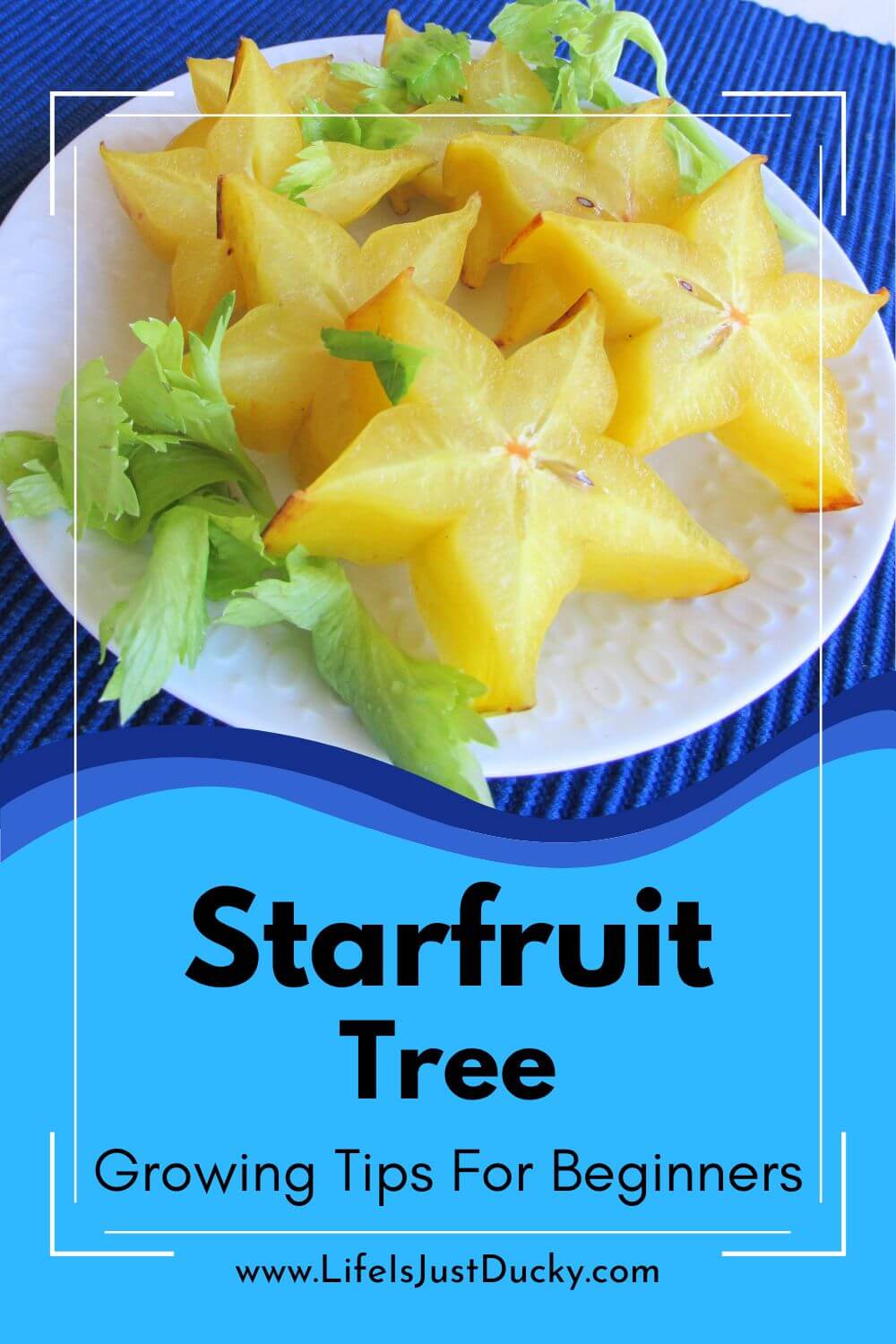
One of the best things about starfruit is how easy it is to eat. There is no thick peel to remove and no large pit in the middle. Simply wash it, slice it, and eat it.
And if you’ve never tasted a fresh, fully ripe starfruit, you’re in for a treat. It is crisp, juicy, and wonderfully refreshing.
Where Does Starfruit Grow?
Starfruit is a tropical and subtropical fruit tree, so it loves heat, humidity, and sunshine.
It grows particularly well in warm areas such as southern Florida, Hawaii, and other tropical and subtropical regions. Starfruit trees are generally suited to USDA Zones 9 through 11, although their ability to tolerate cold depends on the age and health of the tree.
Young trees are particularly sensitive to cold. Temperatures around 32°F can cause serious damage, while a mature tree may survive a short period around 27°F. Even mature trees, however, are much happier when protected from freezing temperatures.
If you live in a colder climate, you can grow starfruit in a large container and move it into a protected location when cold weather arrives. With regular pruning, a container-grown starfruit tree can be kept much smaller than a tree planted in the ground.
In warm climates, a mature starfruit tree can reach 25 to 30 feet tall and 20 to 25 feet wide. That makes it an attractive shade tree as well as a productive fruit tree.
The tree is beautiful even when it isn’t carrying fruit. Starfruit trees produce clusters of pink or lilac flowers, often several times throughout the year.
How to Grow a Starfruit Tree
Growing starfruit successfully starts with choosing the right location. Give your tree plenty of sunlight, good drainage, adequate moisture, and room for its roots and branches to develop.
Sunlight
Starfruit trees need full sun for healthy growth and good fruit production.
Choose a location that receives at least six hours of direct sunlight each day. More sun is generally even better, particularly if your goal is a productive fruit tree.
Soil for Starfruit Trees
Starfruit prefers slightly acidic soil with a pH between 5.5 and 6.5.
Good drainage is especially important. Starfruit trees need regular moisture, but their roots are sensitive to being waterlogged. If your soil stays wet after heavy rain, improve the drainage before planting or consider planting your tree in a raised area.
This is one reason I pay so much attention to soil when planting fruit trees. Healthy roots are the foundation of a healthy tree, and getting the soil right before planting gives the tree a much better start.
Watering Starfruit
Starfruit trees need consistent moisture, especially while they are becoming established and during extended dry periods.
The trick is to keep the soil moist without keeping it soggy. Allowing the tree to become severely drought-stressed can affect its growth, flowering, and fruit production.
A layer of appropriate organic mulch around the tree can help conserve soil moisture, but keep mulch away from direct contact with the trunk.
Fertilizing Starfruit Trees
Starfruit trees are fairly heavy feeders, particularly when they are actively growing and producing fruit.
In soils that are low in fertility, the traditional recommendation is to fertilize approximately every 60 days with a fertilizer such as 6-2-6, supplemented with magnesium, iron, and other micronutrients.
How much fertilizer your tree actually needs depends on the size of the tree, your soil, and the particular fertilizer you use. Always follow the application instructions on your fertilizer rather than assuming that more is better.
Good nutrition helps support healthy foliage, flowering, fruit development, and overall tree health.
Pruning a Starfruit Tree
A starfruit tree can become quite large if left completely unpruned. Fortunately, you don’t have to let it reach its maximum size.
Regular pruning can help keep a tree at a manageable height, particularly in a backyard garden. It also makes harvesting easier and can help maintain good airflow through the branches.
This is especially important if you’re growing starfruit in a smaller yard or in a container.
I would much rather have a slightly smaller tree that I can easily care for and harvest than a huge tree with most of its fruit twenty feet above my head!
When Does a Starfruit Tree Produce Fruit?
One of the most exciting things about planting a fruit tree is waiting for that first harvest.
Starfruit trees generally begin producing fruit at around 3 to 4 years old, although the exact timing depends on the variety, growing conditions, and whether you start with a grafted tree or one grown from seed.
Once established, starfruit trees can flower and produce fruit several times throughout the year in warm climates.
That can mean multiple harvests instead of one short harvest season, which is one of the things that makes tropical fruit trees so much fun to grow.
🌼 From Mary’s Backyard
Starfruit is one of those fruits I think is especially fun to grow at home.You can certainly buy it at the grocery store, but when you grow your own, you get to pick it when it is perfectly ripe instead of wondering how long it has been sitting on a shelf.
And let’s be honest—there is something pretty special about walking into your backyard, picking a strange-looking piece of fruit, slicing it up, and finding a bunch of little stars inside.
That’s one of the things I love about growing unusual fruits. They’re not just food. They’re a little bit of fun, too.
Why You Should Grow Starfruit
There are plenty of reasons to plant a starfruit tree besides the fruit itself.
In a warm climate, a mature starfruit tree makes a lovely shade tree. The foliage is attractive, the flowers add a splash of color, and then you get the bonus of harvesting your own fruit.
And that fruit can be expensive.
Starfruit can cost $2 or more for a single fruit in some grocery stores. Since it has thin skin and bruises easily, it doesn’t ship particularly well. That makes growing your own even more appealing.
Of course, saving money isn’t the only reason to grow it.
Fresh-picked starfruit is crisp, juicy, and wonderfully refreshing. There is something about eating fruit straight from the tree that you simply can’t duplicate with fruit that has traveled hundreds or thousands of miles to reach the grocery store.
If you enjoy growing unusual fruits, starfruit can quickly become a favorite.
Is Starfruit Good for You?
Starfruit is a naturally low-calorie fruit that provides a number of useful nutrients.
It contains fiber and vitamin C, along with B-complex vitamins and flavonoids. It also provides smaller amounts of minerals such as potassium, phosphorus, zinc, and iron.
That combination makes starfruit a delicious way to add variety to your diet while enjoying something you’ve grown yourself.
As with any fruit, it isn’t necessary to think of it as a miracle food. It’s simply a delicious, nutrient-rich addition to an overall healthy diet.
One important note: people with kidney disease or impaired kidney function should talk with their healthcare professional before eating starfruit, because starfruit contains compounds that can cause serious problems for some people with kidney disease.
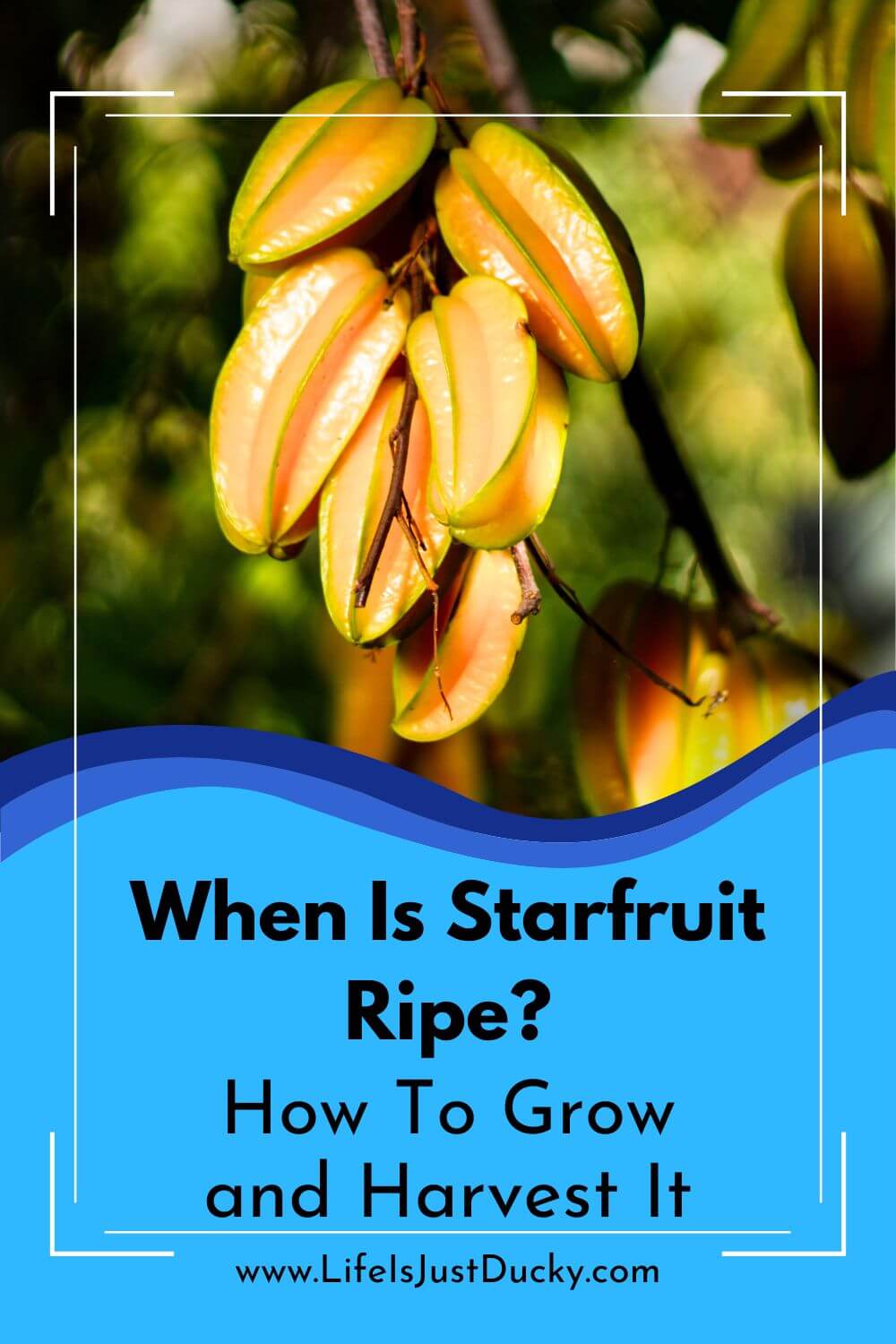
How to Tell When Starfruit Is Ripe
Knowing when to harvest starfruit is important because the flavor changes considerably as the fruit ripens.
Young fruit is generally light green and can be quite tart. As it ripens, the color changes from green to yellow or light orange.
The ridges, or ribs, along the fruit will also begin to develop some brown coloring.
For eating fresh, I like starfruit when there is almost no green remaining and there are just a few brown streaks along the ribs. At that point, the fruit should be sweet, crisp, juicy, and full of flavor.
If you’re growing your own tree, you’ll soon get a feel for the perfect stage of ripeness.
🌼 From Mary’s Backyard
One of the things I’ve learned about growing fruit is that you can’t always go by the calendar to decide when something is ready to eat. The tree may tell you one thing, but the fruit will tell you another!With starfruit, I pay much more attention to the color and the little changes along the ribs than I do to how many days it has been on the tree. When most of the green is gone and the fruit has that beautiful golden color with just a little brown along the edges, I know I’m getting close to that sweet, juicy stage I want.
It’s worth waiting for. A starfruit picked at the right stage is a completely different experience from one that is still green and tart.
How to Eat and Use Starfruit
One of the best things about starfruit is how little preparation it requires.
You can simply slice it and eat it fresh. The skin is edible, and the small seeds can be eaten as well, although you can remove them if you prefer.
Those beautiful star-shaped slices also make starfruit a natural addition to fruit salads. It adds both flavor and a little bit of fun to an ordinary bowl of fruit.
Starfruit can also be juiced or blended into drinks and smoothies. If you have a large harvest, try using it to make jellies, preserves, breads, or pies.
It’s a surprisingly versatile fruit, and once a tree starts producing heavily, you’ll probably find plenty of ways to use it.
How to Store Fresh Starfruit
Starfruit is a delicate fruit, so it doesn’t have a particularly long shelf life once it is fully ripe.
If your fruit is still a little green when you pick it, let it finish ripening at room temperature. Turning the fruit occasionally can help it ripen evenly.
Once it is fully ripe, use it fairly quickly for the best flavor and texture.
Ripe starfruit generally lasts about 2 to 3 days at room temperature or approximately 5 days in the refrigerator.
If your tree is producing more fruit than you can eat fresh, don’t worry. That is a good problem to have! Put some into fruit salads, juices, baked goods, jellies, and other recipes.
Can You Grow Starfruit in a Container?
Yes! Growing starfruit in a container is an excellent option if you don’t have the climate to leave the tree outdoors all year.
Choose a large container with good drainage and place it in a sunny location. As the tree grows, regular pruning will help keep it at a manageable size.
Container growing also gives you an important advantage in colder climates: you can move the tree into a protected location when freezing weather is expected.
A container on wheels can make this much easier, particularly as the tree gets larger.
Can You Grow Starfruit From Seed?
You can grow starfruit from seed, but if your goal is to get fruit sooner, purchasing a healthy grafted tree is generally a better choice.
Seed-grown trees can take longer to produce fruit, and the resulting fruit may not be exactly like the fruit from which the seed came.
A grafted tree from a reputable nursery gives you a better idea of the variety you’re getting and can shorten the wait for your first harvest.
Does Starfruit Need Another Tree?
No. Starfruit trees are generally self-fertile, which means a single tree can produce fruit.
That’s good news for backyard gardeners who don’t have room for several large fruit trees.

How Cold Can a Starfruit Tree Get?
Cold is one of the biggest challenges when growing starfruit.
Young trees can be damaged around 32°F, while mature trees may survive a short period around 27°F. However, starfruit is definitely not a cold-hardy fruit tree, and protection should be provided whenever freezing temperatures are expected.
If you live in an area with regular freezes, consider growing your tree in a container or providing another protected growing environment.
Does Starfruit Grow All Year?
In warm tropical and subtropical climates, starfruit can flower and produce fruit several times throughout the year.
Instead of waiting for one short harvest season, you may find your tree flowering and producing fruit in several different flushes.
This is one of the great advantages of growing tropical fruit in a warm climate.
Is Starfruit Easy to Grow?
If you live in a warm climate, starfruit can be a relatively easy tropical fruit tree to grow.
Give it full sun, well-draining soil, consistent moisture, adequate nutrition, and protection from cold, and it can reward you with years of beautiful growth and delicious fruit.
The biggest limitation is temperature. Starfruit simply isn’t a cold-hardy tree.
But if you have the climate for it, I think it’s absolutely worth growing.
Frequently Asked Questions About Starfruit
How long does it take for a starfruit tree to produce fruit?
A starfruit tree can begin producing fruit when it is about 3 to 4 years old, although the exact timing depends on the variety, growing conditions, and whether the tree was grown from seed or purchased as a grafted tree.
Can you grow starfruit in a pot?
Yes. Starfruit can grow well in a large container as long as it receives plenty of sunlight, consistent moisture, and proper nutrition. Container growing is especially useful for gardeners who need to protect the tree from freezing temperatures.
Does starfruit need full sun?
Yes. Starfruit trees grow and produce best when planted in full sun. Choose a location with at least six hours of direct sunlight each day.
How often does a starfruit tree produce fruit?
In warm tropical and subtropical climates, an established starfruit tree can flower and produce fruit several times throughout the year.
Do you need two starfruit trees to get fruit?
No. Starfruit trees are generally self-fertile, so you can grow a single tree and still harvest fruit.
How do you know when starfruit is ripe?
Ripe starfruit changes from green to yellow or yellow-orange. The ribs may develop some brown coloring. For the sweetest flavor, allow the fruit to become almost completely yellow with just a little brown along the ribs.
Can you eat the skin of starfruit?
Yes. The skin of starfruit is edible. Simply wash the fruit, slice it crosswise, and enjoy it. The seeds are also edible, although some people prefer to remove them.
How long does fresh starfruit last?
Once ripe, starfruit generally keeps for 2 to 3 days at room temperature or about 5 days in the refrigerator. For the best flavor and texture, enjoy it as soon as possible after it ripens.
What does starfruit taste like?
The flavor varies by variety and ripeness, but ripe starfruit is generally sweet, juicy, crisp, and slightly tart. Some varieties are noticeably sweeter than others.
Can you grow starfruit from seed?
Yes, but seed-grown trees can take longer to produce fruit and may not produce fruit identical to the parent tree. A grafted tree is generally a better choice if you want fruit sooner and want to know which variety you’re growing.
Is starfruit good for you?
Starfruit is naturally low in calories and provides fiber, vitamin C, B-complex vitamins, flavonoids, and several minerals.
However, people with kidney disease should avoid starfruit unless their healthcare professional specifically says it is safe for them, because starfruit can cause serious toxicity in people with impaired kidney function.
🌼 From Mary’s Backyard
One thing I especially enjoy about growing fruit that you don’t see every day at the grocery store is sharing it with other people.Starfruit is perfect for that.
Put a bowl of those little golden stars on the table and somebody is almost always going to ask, “What are those?”
That’s part of the fun of growing your own food. You aren’t just harvesting something to eat. You get to introduce your family and friends to fruits they may never have tried before.
And when that fruit came from a tree growing in your own backyard, somehow it tastes even better.
Grow Your Own Tropical Fruit
If you enjoy growing unusual fruit in your backyard, starfruit is a wonderful addition to a tropical fruit garden.
And it doesn’t have to be the only one.
You can also learn how to grow mangoes, pineapples, papayas, and other tropical fruits right at home. When you plant fruit trees, don’t overlook the importance of building healthy soil. Giving your trees a good foundation from the beginning can make a tremendous difference in how they grow.
A backyard full of tropical fruit trees may sound like a dream, but in the right climate, it can become a very productive reality.
Have you ever tasted a fresh-picked starfruit? If you grow one, what is your favorite way to use the harvest?
More You May Enjoy
How to Grow Fruits and Vegetables at Home: Beginner Guide to a Productive Garden
How to Grow Sweet Muscadine Grapes in Your Backyard Garden
How to Grow Barbados Cherry (Acerola Cherry) in Your Backyard
How to Grow Your Own Papaya Tree For Amazing Nutrition
How To Grow Your Own Pineapple In Your Backyard?
Happy Backyard Homesteading!

I believe everyone can grow at least part of their own food! Let me show you how.

Mary is a gardener, backyard homesteader, and duck wrangler. She is also the owner and writer of LifeIsJustDucky.com and AGoodWordADay.com. (for daily devotions) Mary is passionate about helping others expand their backyard homesteading skills and learn to be more self-sufficient, no matter where they live.