

Do you want to plant an herb garden, but don’t know where to begin? In just a few steps, you will be growing the most delicious, healthful, easy, and cost-effective plants in your garden.

This post may contain affiliate links. I will be compensated if you make a purchase after clicking on my links. Please read my disclosure if you have questions.
Thank you for supporting this site with purchases made through links in this post. For Starters Here’s My Amazon Link.
Grow Your Garden.
If you grow a garden, you probably already know the wonderful benefits the vegetables from your garden will give you. The tasty treats for dinner, the good for your body vitamins and minerals, the calming of the soul as you sit and survey your garden.
Then there is the benefit to the pocketbook as you don’t have to go to the store as often, and the fun of finding new ways to cook all the produce. The more I learn about gardening the more I learn how those plants can help my body.
But what about herbs?
Related>> How To Start A Vegetable Garden.
Why Grow Herbs?
A wonderful addition to any vegetable garden is an herb garden.
There are so many great reasons to start an herb garden.
Herbs have been used throughout history for their culinary uses to flavor your food and drinks, healing properties to make you healthier. And can help your animals stay healthy.
Herbs add fragrance and beauty to potpourri and sachets. And gardeners value herbs for pest control and companion planting.
There are so many ways to use herbs. But have you priced them lately? Herbs are one of the “biggest bang for the buck” things you can grow.
Here is a rundown of reasons to grow and use your own herbs.
Herbs Add Flavor To Your Food.
Food just tastes better with a few herbs sprinkled on or in. You could try adding lemon thyme to fish or mint to your tea and spaghetti sauce would just not be the same without basil and oregano.
There’s a whole new world out there when you add fresh herbs to your cooking.
Related>> How to Grow Nasturtiums: Companion Planting, Growing Tips & Edible Flowers
Herbs Add Nutrition To Your Food.
I once had someone tell me, for good nutrition I should eat the parsley on my plate and throw the rest away.
Well, that’s a bit drastic, but they are right that parsley does pack a big punch of nutrition, as do a lot of other herbs. That’s why a little mixed into your food can add so much to the nutrition on your plate.
If you have a variety of herbs every day you will fill in the nutritional holes and make your body more resistant to disease so you will be less likely to need as much medicine.
Grow Your Own Medicine With Herbs.
Did you know that more than 25% of today’s medicines are derived from plants?
Many of the herbs you are familiar with have medicinal properties. The oregano on your back porch has antibiotic properties and the mint in your front flower garden makes a great tea to calm your stomach. And if you get into poison ivy, you will appreciate jewelweed as it can help alleviate the itch and blistering.
The aloe vera that you have as a house plant is wonderful for that finger you just burned
Do herbs fix everything? No, of course not. If you have a ruptured appendix, a surgeon is exactly what you need and quickly.
But that being said, there are many things you don‘t need to rush off to the doctor for. If you have an herb garden you may be growing the cure right outside your kitchen door.
Related>> Poison Ivy 101 – How To Identify and Treat.
Grow Nutrition And Medicine For Your Animals With Herbs.
What a great way to give great nutrition and disease resistance to your animals.
When you grow herbs, yourself, you will be more likely to feed herbs to your chickens or ducks. Herbs are helpful to your animals because they will be able to ward off disease better and the eggs they produce will have much higher nutritional values for you.
You can also put herbs in their nest boxes some of which help keep pests away.
Companion Planting With Herbs.
Many herbs have beneficial properties for your vegetable garden too.
Borage attracts bees and other pollinators, Dill lures pests away from tomatoes. Chives repel cabbage moths, and basil makes tomatoes taste better.
And that only scratches the surface. Sprinkle your annual herb plants throughout your garden for the many benefits they provide.
Related>> My Favorite Companion Plants
Growing Herbs Saves Money.
If you use fresh herbs for cooking or medicine you already know how expensive they are. And it just kills me to throw away half a batch of herbs that I just spent a fortune for, just because I don’t need the whole bunch.
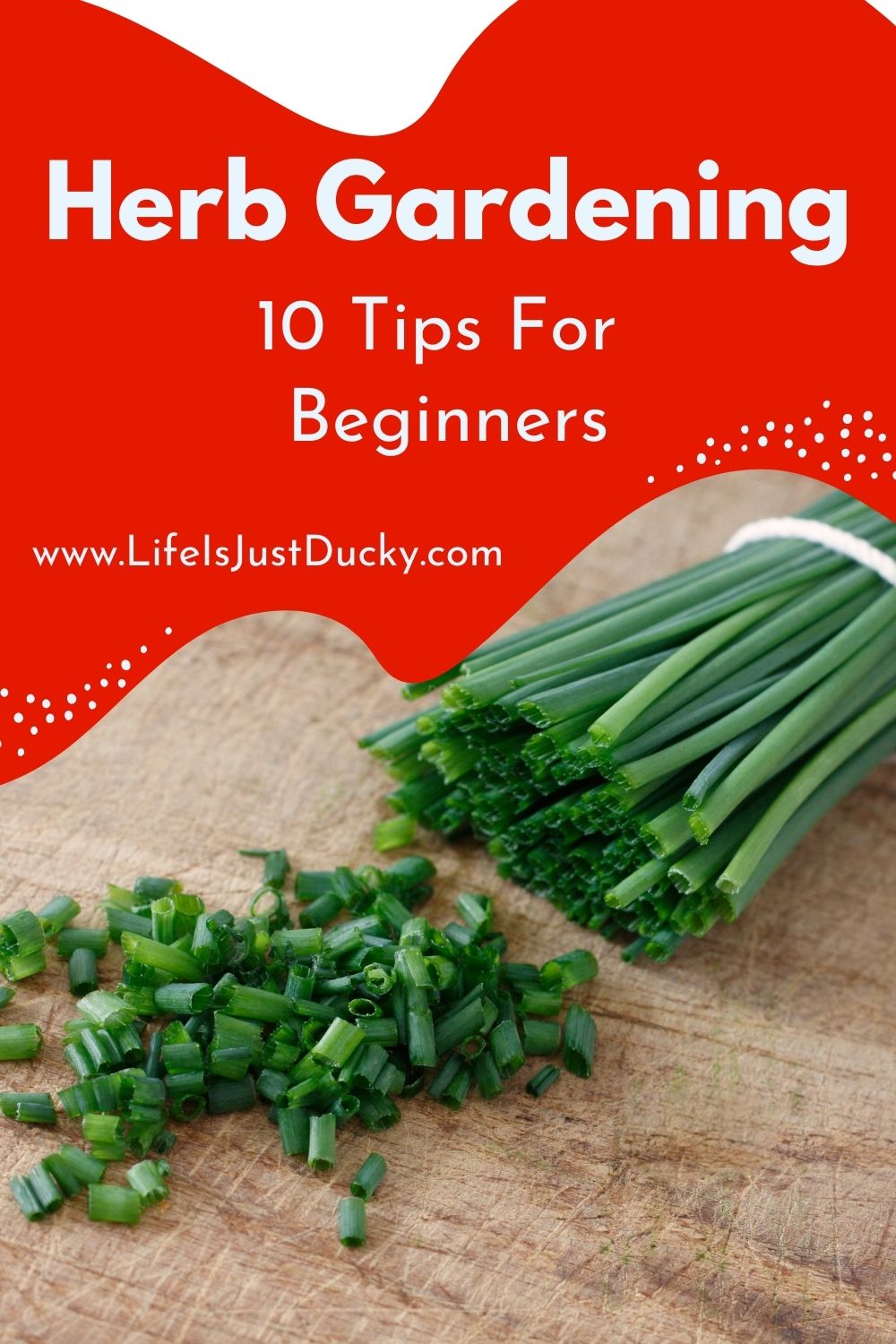
When you grow it yourself, it’s ready when you want it and you can take just what you need. You can save even more by starting your own plants with high-quality, fresh seeds. Chives is a very easy first herb to grow from seeds.
Related>> 10 Amazing Health Benefits Of Tumeric

Where To Plant Your Herbs In An Outside Herb Garden.
A kitchen herb garden is one of the most useful gardens you can grow. Most herbs require little in the way of maintenance, and you can grow a generous supply in a surprisingly small space.
Select a small patch as close as possible to your kitchen door. As you plan, consider the times you will dash out to grab a handful of chives or basil when it’s raining or something on the stove needs your attention. Having your herbs within easy reach can make a big difference.
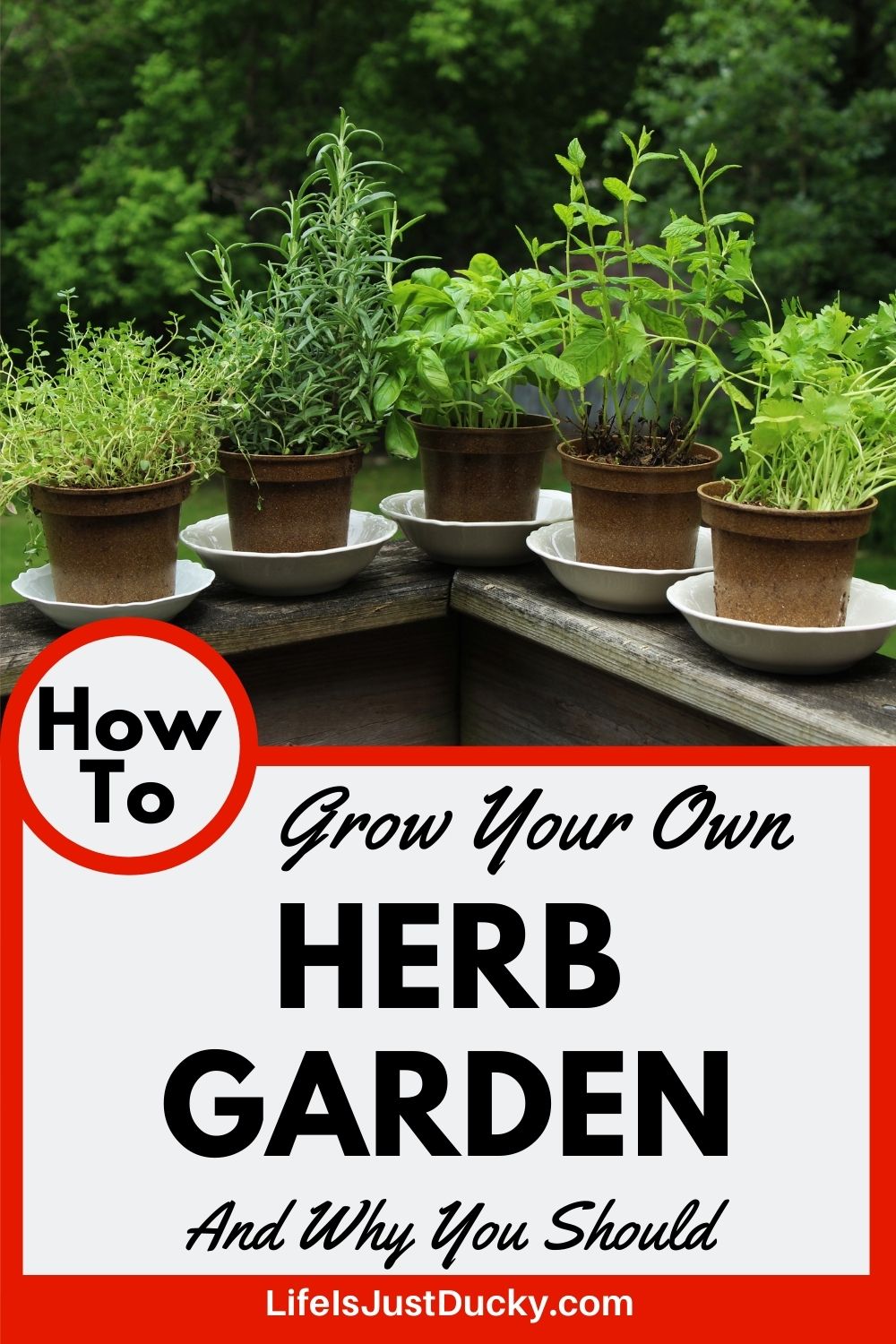
Your first herb garden can be a tiny plot of ground, a few pots on the back deck, or just tuck your herbs right into your vegetable garden, so when you harvest your vegetables you can pick your herbs at the same time.
How Do You Start An Herb Garden?
The first thing is to find a place with plenty of sun and well-drained soil, then you will need to prepare the ground. But if your space is partially shady, there are a few herbs, such as cilantro, parsley, and mint that will do just fine with only 3 or 4 hours of sunlight.
Growing your herbs in raised beds is a great way to ensure loose soil that drains well. Then add compost or worm castings to give your herbs the nutrients they need.
Make sure it is located where it will be easy to water as many herbs like regular watering, especially in hot weather.
Related>> A Beginners Guide To Herb Gardening.
Growing Herbs In Pots.
Using containers is a great way to grow many herbs. They can be a beautiful way to accent your home or be purely utilitarian. Any pot that has a hole in the bottom and is large enough for the plant you want to grow is fine. Consider the full size of the herb when choosing your pot.
Watering regularly is very important for container gardens.
Related>> How To Start Container Gardening.
Start Your Herb Garden Slowly.
Your first kitchen herb garden will be successful if you start slowly. Start your garden with some of your favorites. Start small, and you’re sure to be delighted by the fantastic flavors of your homegrown herbs.
Start with one variety and learn all you can about it. What it needs to grow, how to cook with it, how it benefits your body. Can your animals benefit from it as well? Then begin again with a new herb.
What Herbs Can Be Planted Together.
When planning your herb garden, it helps to know which herbs are perennial and which are annual. Annuals will need to be replanted each year, while the perennials will last several years.
It is helpful to plant perennials in a more permanent spot that won’t be disturbed each growing season like a vegetable garden.
Not all herbs grow equally well in all places. Learn which ones grow well in your area. Make sure the perennial will grow in your zone. If it is too cold in your area, you may want to grow it in a container that can be brought inside during the winter.
You will also want to separate the Mediterranean herbs, that don’t need as much water from the water lovers like mint.
Related>> What Is Composting?
Seeds or Plants?
Though almost all herbs can be started from seeds, some herbs are much easier to get started from a small plant, root division, or even a cutting from a neighbor or friend’s herb plant. Most annuals are easy to start from seed.
What Herbs Should You Start With?
When growing herbs, it’s always best to start with what you already love and use. You will use a lot more of them and learn to appreciate your herbs more if they are already ones you are familiar with.
You also want to choose easy to grow herbs. Easy peasy herbs for a new gardener, are basil, chives, and dill. These all grow well from seeds, are very forgiving of a little neglect, and can be used in so many recipes.
Related>> Mint: Growing, Cooking, Using, Healing.
Harvest Herbs Frequently.
One of the biggest differences between most vegetable plants and herb plants is harvesting.
Herbs need to be harvested frequently to encourage new leaf growth. They grow thicker and bushier and taste better without going to seed as soon if they get a regular haircut. So even if you don’t need handfuls of herbs, harvest them anyway.
Even if you don’t need them, your plants will benefit from small trims often. You can give the excess to your chickens or ducks or just put them in the compost pile or feed your worm bin.
This is also a great time to preserve some herbs for winter when they may not be growing, or use them in your favorite craft.
For best results, harvest in the morning using a pair of garden shears or kitchen scissors. And never remove more than one-third of the plant so it has enough strength to keep on growing.
Flowers are not welcome on your herb plants, (the herb often gets bitter when it flowers) unless you are trying to attract pollinators.
Grow An Indoor Herb Garden.
Herbs can be grown inside also. You just want to make sure you use a large enough container and most importantly, that your herbs get enough sunlight.
If you don’t have a very sunny window, you may need to supplement with a sunlamp, for strong and healthy growth.
Herbs can be grown inside all winter long no matter where you live.
Related>> How To Grow Herbs Inside All Winter.
Many herbs can be grown as microgreens for added nutrition 365 days a year.
Related>> Microgreens – How To Grow Them.
Herb Gardening Tips For Beginners.
- There are many plants that are considered “herbs”, so each type will have different needs.
- Add labels to each of your herbs to make them easy to identify when using.
- It’s best to grow mint, and the mint family, in a pot on its own, as it can quickly smother other herbs.
- Sow seeds of annual herbs every two-three weeks so you have a continuous crop throughout summer.
- If you have the room, let some herbs flower, as they attract pollinators.
- Plant in raised beds or plant your herbs in pots if you have soggy ground part of the year.
- Fertilize lightly, most herbs don’t need much fertilizer but need a PH of 6 – 7.
- Plant close to your house so you will use more of them.
- Harvest Often.
- Don’t forget to use them!
Herb Gardening Kits.
Make it easy with an indoor gardening kit for herbs at your fingertips all year long. These make a great gift!
Conclusion:
Now it’s time to plant your herbs!
With a little experience, you will be growing lots of herbs and finding new and awesome ways to use them. And you and your family will be better off for it.
- Why Grow Herbs
- Herbs Add Flavor
- Herbs Add Nutrition
- Grow Your Own Medicine
- Grow Nutrition and Medicine For Your Animals
- Companion Planting
- Growing Herbs Saves Money
- Where To Plant Your Herbs
- Growing Herbs In Pots
- Grow An Indoor Herb Garden
- Herb Garden Tips For Beginners
Learn More:
A Beginners Guide To Herb Gardening.
How To Grow Herbs Inside All Winter.
The Beginner’s Garden Jumpstart
Build Million Dollar Garden Soil
Did you like this post? Then, I’d love it if you’d share it!
Want some more top posts? Check out this list of Readers Favorites.
Happy Backyard Homesteading!

I believe everyone can grow at least part of their own food!

Mary is a gardener, backyard homesteader, and duck wrangler. She is also the owner and writer of LifeIsJustDucky.com and AGoodWordADay.com. (for daily devotions) Mary is passionate about helping others expand their backyard homesteading skills and learn to be more self-sufficient, no matter where they live.




I grow a lot of chives. Not on purpose. They have become invasive. Worse yet, they are nearly tasteless. Why do they have no flavor?
There are many things that can affect the growth of herbs, but with chives, the quickest way to tasteless leaves is to over-fertilize. That puts on a lot of growth to the detriment of the flavor. Make your chive plants work for it and they will have fewer leaves but a stronger flavor.
Thank you for your time and effort.
Enjoyed.
Thank you so much. I’m glad you stopped by.