
Sweet, Hardy, and Perfect for Southern Homesteads
Let’s walk through everything you need to know to successfully grow muscadine grapes—from choosing the right variety to planting, training, pruning, and harvesting. Whether you’re a homesteader, gardener, or grape enthusiast, this guide will help you turn a simple vine into a fruitful investment.
If you’ve ever had the pleasure of tasting a muscadine grape—plump, juicy, and bursting with flavor—you already know how special they are. Muscadines are far more than just a regional delicacy; they’re a backyard gardener’s dream.
This post may contain affiliate links. Please read my disclosure if you have questions.
Thank you for supporting this site with purchases made through links in this post. For Starters Here’s My Amazon Link
A Great Addition To Your Backyard
If you’re looking for a fruit that’s easy to grow, bursting with flavor, and uniquely suited for Southern gardens, look no further than muscadine grapes. These native gems of the Southeastern United States aren’t just delicious—they’re resilient, disease-resistant, and a beautiful addition to your edible landscape.
These grapes are not only delicious and nutritious, but they’re also easy to grow, long-lived, and perfect for edible landscaping.
Whether you’re dreaming of homemade jelly, fresh fruit for snacking, or even a small-batch backyard wine, muscadines are a fantastic choice for homesteaders and gardeners alike.
In this guide, we’ll explore everything you need to know to grow muscadine grapes—from selecting varieties and preparing your soil to pruning, harvesting, and enjoying the fruit of your labor.
Who Am I?
With many years of hands-on gardening experience, I’ve planted and harvested everything from tomatoes to muscadine grapes and teach others how to do the same through my online beginner gardening classes. From composting to companion planting, my tips come from real-life success (and failure!) in the garden, and a deep love of growing food for my family — and hopefully yours too.
What Are Muscadine Grapes?
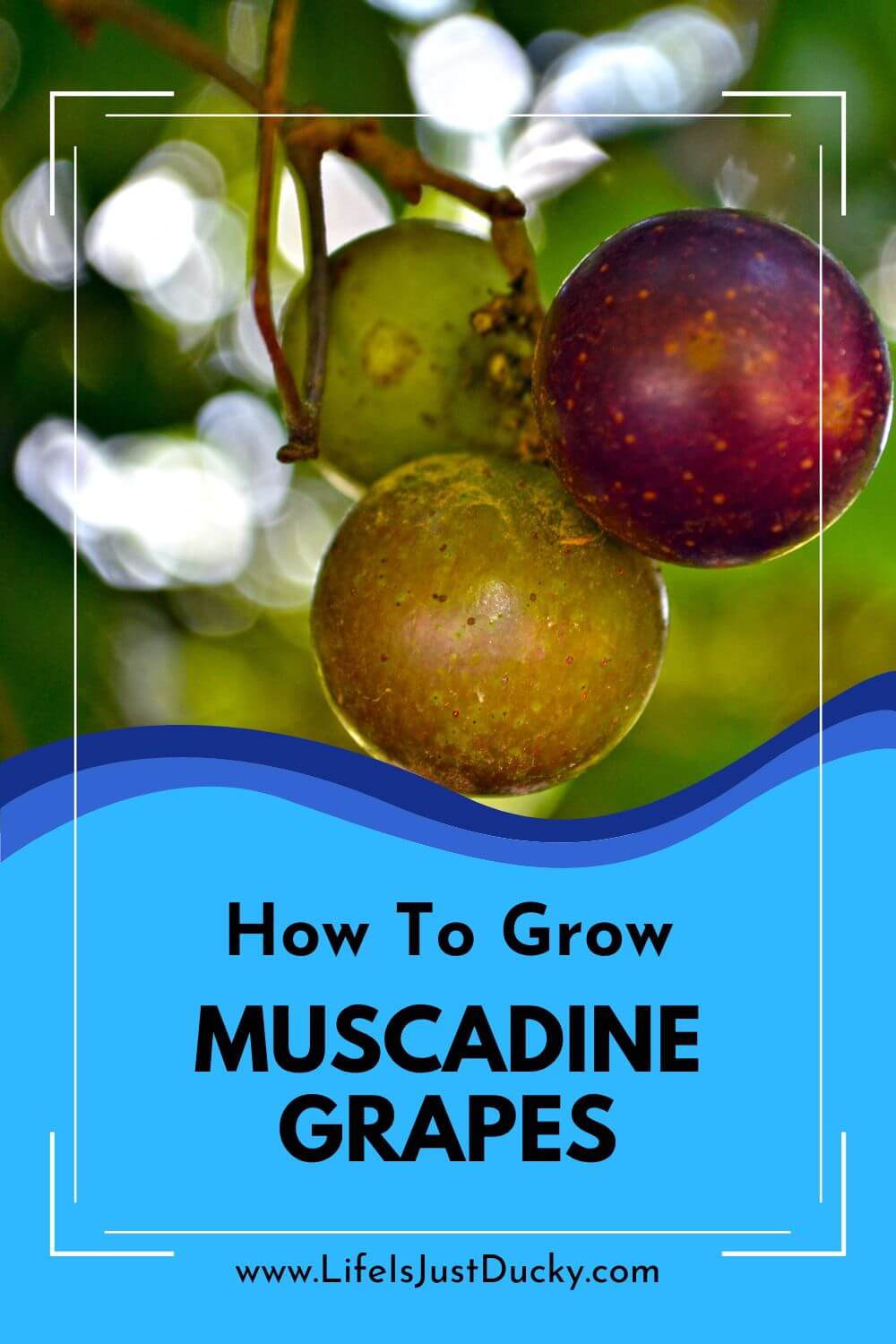
Muscadine grapes (Vitis rotundifolia) are native to the southeastern United States and thrive in warm, humid climates. Unlike the European grape varieties commonly found in grocery stores (like Vitis vinifera), muscadines have thick skins, seeds, and a bold, sweet flavor. They’re known for their robust resistance to pests and fungal diseases, making them an ideal choice for organic and backyard growers.
One famous variety of muscadine is the Scuppernong, a bronze-colored grape historically used for making homemade wine. These grapes have a rich heritage in Southern culture and cuisine and are gaining popularity among home gardeners across USDA Zones 7–10.
Related>> How to Grow Fruits and Vegetables at Home
Key Differences Between Muscadine and European Grapes:
Muscadines have:
- Thicker skin: Better disease resistance and longer shelf life
- Seeds: Most varieties have them, though some seedless types are emerging
- Sweeter flavor: Higher sugar content and richer taste
- No chill hours required: Muscadines don’t need a cold period to produce fruit
- Heat-tolerant: Muscadines thrive in hot, humid climates
- Cold-sensitive: Vines may die if temperatures fall below 0°F

Choosing the Right Muscadine Variety for Your Garden
There are dozens of muscadine cultivars to choose from, with varying colors, flavors, harvest times, and fertility types. When selecting muscadine grapes, consider the following:
Color Options:
- Bronze: light and fruity
- Black or purple: Rich, intense flavors
- Red: Less common, often sweet and visually striking
Harvest Timing:
- Early-season: Ripen as early as July
- Mid-season: Extend your harvest into early fall
- Late-season: Last into October in some climates
Self-Fertile vs. Female Varieties:
- Self-fertile vines produce fruit on their own.
- Female vines need a self-fertile vine nearby (within 50 feet) for pollination.
For beginners or small-space gardeners, start with a self-fertile variety like ‘Carlos’, ‘Nesbitt’, or ‘Darlene’. If you’re planning multiple vines, mix female and self-fertile varieties to boost yields and enjoy a wider range of flavors.
Pro tip: If you want grapes for fresh eating, choose a variety known for its sweetness and size, like ‘Late Fry’ (my personal favorite!) or the intriguingly named ‘Pineapple’—yes, it has hints of pineapple flavor!
Related>> How To Grow Your Own Pineapple

How to Plant Muscadine Grapes
Site Selection:
Muscadine grapes need full sun—at least 6–8 hours per day. Choose a location with good air circulation and well-draining soil. Avoid low-lying areas where water might pool after a rain.
Soil Preparation:
- Soil pH should be between 6.0–7.0, with 6.8 being ideal.
- Avoid soils with PH higher than 7.0.
- Loosen the planting area deeply to encourage root development.
If your soil is heavy clay or has poor drainage, plant your grapes on a raised bed or mound. Muscadines hate “wet feet” but also don’t tolerate drought well.
Planting:
- Set up your trellis or arbor system first—muscadines are heavy vines and need sturdy support.
- Plant vines in early spring after the last frost.
- Space plants 20 feet apart.
- Dig a hole twice as wide and deep as the root ball.
- Backfill with soil and mulch heavily to retain moisture and suppress weeds.
- In colder zones, mound mulch around the base of the trunk during winter to protect roots. (Remove the mulch in the spring to avoid stem rot)
Related>> Mulch For Your Vegetable Garden.
Watering Muscadines
Consistent watering is critical, especially during the growing season. While they’re drought-tolerant once established, young vines need about 1–2 inches of water per week.
- Avoid overhead watering; use drip irrigation or soaker hoses.
- Cut back on watering in late summer to help the vine begin its natural dormancy process, especially in northern areas.
- Stop watering when the fruit is ripening to increase sugar content.
Fertilizing Muscadine Vines
Muscadine grapes are not particularly heavy feeders, but balanced nutrition is essential for healthy growth and fruit production.
General Fertilizer Schedule:
- Use a balanced fertilizer such as 10-10-10.
- Year 1: Apply ¼ lb. monthly from April to July.
- Years 2–4: Increase by ¼ lb. each year (up to 1 lb.)
- After Year 4: Maintain based on vine growth and fruiting.
Look for signs of deficiency (such as slow growth or pale leaves), and consider a soil test every few years to adjust nutrients like magnesium, potassium, and boron—especially in sandy soils where trace minerals wash away quickly. Adding a small amount of rock dust or Azomite will supply the trace minerals that your vines need.
Related>> Azomite Rock Dust
Pruning and Training Muscadines
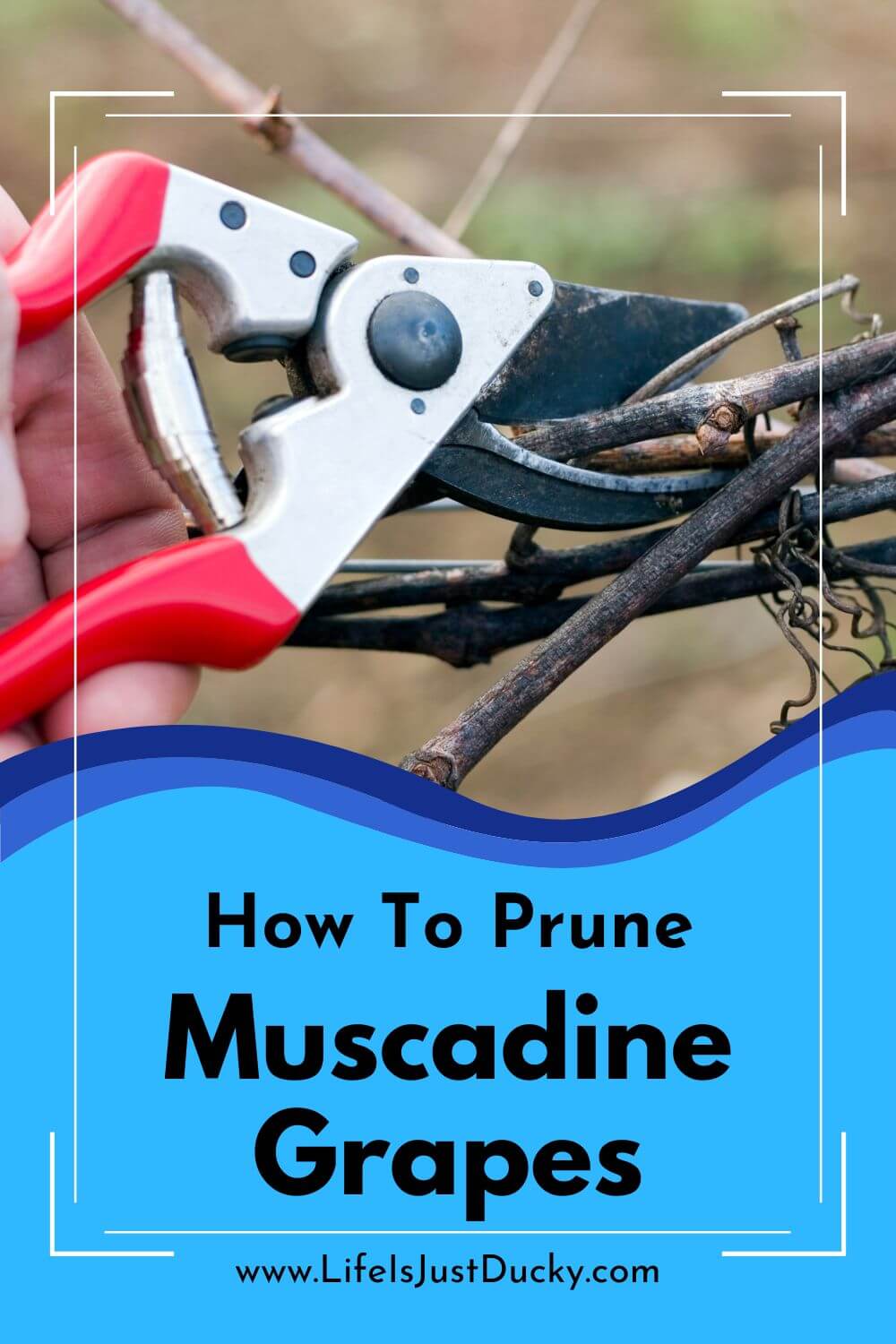
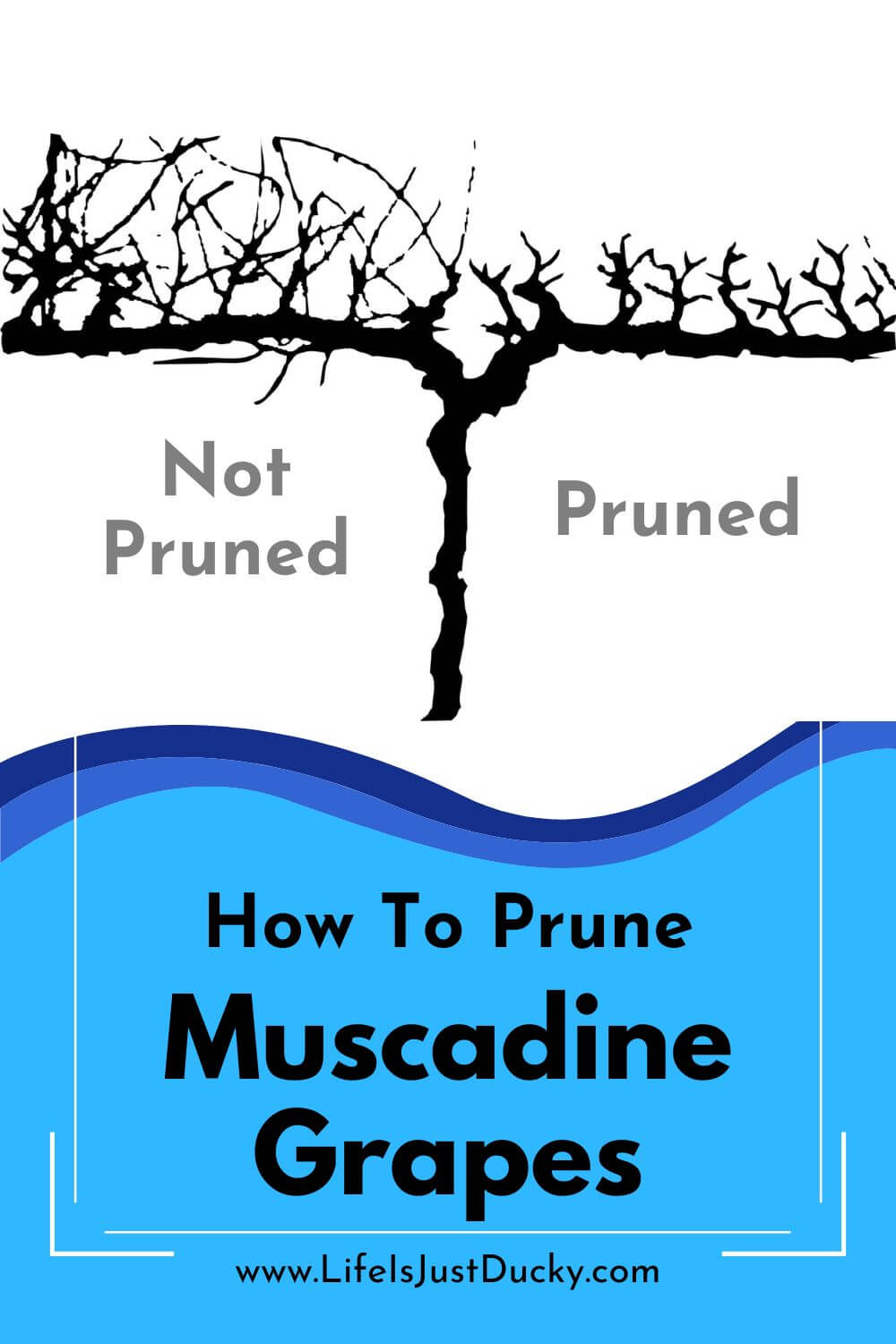
Proper pruning is the secret to healthy, productive grapevines. At first, it seems counterproductive, but your vines really will produce more fruit if pruned every year as grapes grow on new growth.
Start by training the main stem to grow straight up to your trellis wire. Once it reaches the wire, allow it to branch into two cordons (arms), one in each direction.
Avoid letting the vine develop too many lateral branches—muscadines have heavy foliage, and shaded branches produce less fruit.
Initial Training:
- Train the vine to a single trunk up to a wire.
- At the top, encourage one or two horizontal arms to grow outward in each direction.
- Keep lateral branches short to maximize sunlight and airflow.
Winter Pruning:
Even in zone 10, your vines will lose all their leaves in the winter.
- Prune vines in late winter while they are still dormant.
- Remove at least 90% of the previous year’s growth.
- Fruit grows on new wood, so don’t skip this step!
Summer Pruning:
- Remove water sprouts, excess runners, and tendrils that are around a stem.
- Tendrils can girdle branches if left alone—carefully cut them off.
- Focus the plant’s energy on ripening fruit and maturing branches.
- Avoid heavily pruning during the growing season, as the plant needs leaves to photosynthesize and generate energy for the next growing season.
Related>> How To Grow A Mulberry Tree.
When and How to Harvest Muscadine Grapes
Muscadine grapes are usually ready to harvest between July and October, depending on the variety and your location.
- Look for full color (bronze, black, or red, depending on the type).
- Firmness: Fully ripe grapes soften slightly but hold their shape.
- Taste is the best test—ripe grapes should be bursting with juice and sweetness.
- Ripe muscadines fall off the vine easily when gently pulled.
Pick grapes individually or shake ripe ones onto a tarp—just be gentle! A mature vine (over 4 years old) can yield anywhere from 50 to 130 pounds of fruit per season—plenty for fresh eating, juicing, canning, or winemaking.
What Can You Do With Muscadine Grapes?
You can use muscadines just like any other grape—but their bold flavor shines in:
- Fresh eating (chill them for an extra treat!)
- Juice and jelly (just screen out the seeds)
- Homemade wine
- Sauces and syrups (yummy on meats)
- Dehydrated snacks
- Freezing (great for smoothies)
Because they have thick skins and seeds, they’re not always ideal for popping whole in your mouth until you’re used to the texture—but once you get the hang of it, it’s hard to stop!
Related>> How To Grow Barbados Cherry.
Health Benefits of Muscadine Grapes
These grapes aren’t just tasty—they’re packed with powerful nutrients.
Why Grow Muscadines for Your Health?
- High in resveratrol (antioxidant linked to heart health)
- Rich in Vitamin C and Vitamin E
- Contains ellagic acid, which may have anti-cancer properties
- Good source of fiber
- Naturally anti-inflammatory
- Hydrating
They contain up to 40 times more antioxidants than regular table grapes—making them a true superfood, so go ahead and snack guilt-free!

Related>> How To Grow Papaya.
Final Thoughts: Grow Muscadine Grapes In Your Garden
Growing muscadine grapes is one of the most rewarding additions to your backyard garden or homestead. They’re beautiful, bountiful, and deeply tied to Southern traditions. With just a little effort in planting, training, and pruning, your muscadine vine will provide sweet fruit—and stunning landscape appeal—for decades to come.
Many vines can live over 300 years with proper care, making them a true legacy crop. Whether you’re starting with a single vine or creating an entire grape arbor, muscadines will be a delightful, productive part of your homesteading journey.
FAQ About Muscadine Grapes
What are muscadine grapes?
Muscadine grapes are thick-skinned grapes native to the southeastern United States. They grow well in hot, humid climates and are known for their sweet flavor, high antioxidants, and tough skins.
Where do muscadine grapes grow best?
Muscadines thrive in warm southern climates with full sun and well-draining soil. They are especially popular in states like Georgia, Florida, Mississippi, and the Carolinas.
Do muscadine grapes need two plants to produce fruit?
Some muscadine varieties are self-fertile, while others need a second plant nearby for pollination. If you only want one vine, choose a self-fertile variety.
How long does it take muscadine grapes to produce fruit?
Most muscadine vines begin producing fruit within 2 to 3 years after planting, though full harvests may take a little longer.
When are muscadine grapes ready to harvest?
Muscadines are usually harvested from late summer into early fall. Unlike bunch grapes, they ripen individually and are picked one at a time when soft and fully colored.
Can you eat muscadine grape skins?
Yes, the skins are edible, though they are thicker than grocery store grapes. Some people eat the whole grape, while others squeeze out the pulp and discard the skin.
What do muscadine grapes taste like?
Muscadines have a rich, sweet flavor with a slightly musky taste. Bronze varieties tend to taste milder, while dark purple varieties are often bolder and sweeter.
Are muscadine grapes healthy?
Yes. Muscadines are packed with antioxidants, fiber, and vitamins. They are especially known for their high resveratrol content.
What can you make with muscadine grapes?
Muscadines are commonly used for jelly, jam, juice, wine, syrup, desserts, and fresh eating.
More You May Enjoy
The Beginner’s Garden Jumpstart.
22 Best Cool Season Vegetables To Grow In Your Garden.
Microgreens – How To Grow Them – The Beginners Guide.
How To Prepare Your Garden For Spring Planting.
Keep Bugs Out Of Your Garden – Naturally!
A Beginners Guide To Herb Gardening.
Happy Backyard Homesteading!

I believe everyone can grow at least part of their own food! Let me show you how.

Mary is a gardener, backyard homesteader, and duck wrangler. She is also the owner and writer of LifeIsJustDucky.com and AGoodWordADay.com. (for daily devotions) Mary is passionate about helping others expand their backyard homesteading skills and learn to be more self-sufficient, no matter where they live.