

Barbados cherry, also known as acerola cherry (Malpighia emarginata), is a tropical and subtropical fruit-bearing shrub or small tree that’s both beautiful and bountiful. With its glossy green leaves, bright pink flowers, and tangy-sweet fruit loaded with vitamin C, it’s a perfect addition to a backyard homestead—especially for those gardening in warmer climates.
If you’re looking for a hardy, fast-growing fruit plant that rewards you with multiple harvests a year and boasts impressive nutritional benefits, Barbados cherry deserves a spot in your garden. Here’s how to grow and care for this vibrant and productive plant.
This post may contain affiliate links. I will be compensated if you make a purchase after clicking on my links. Please read my disclosure if you have questions.
Thank you for supporting this site with purchases made through links in this post. For Starters Here’s My Amazon Store.

What Is Barbados Cherry?
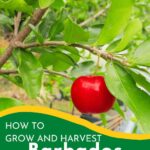
Barbados cherry is a small tropical fruit tree native to the Caribbean, Mexico, and Central America. It’s prized for its bright red fruit, which resembles a cherry but has a tangy citrus-like flavor.
- Botanical name: Malpighia emarginata
- Common names: Acerola cherry, Barbados cherry, West Indian cherry
- Growth habit: Shrub or small tree (6–12 feet tall) Evergreen
- Hardiness zones: USDA Zones 9–11
- Fruit season: All year; multiple harvests possible. Blooming occurs all along its leaf axils year-round.
- Fruit flavor The fruit is juicy with a sweet and tart flavor and contains three small winged edible seeds. It gets sweeter the darker the fruit gets.
Barbados cherry is not only delicious but also a superfruit. It’s incredibly high in vitamin C—one cherry can contain up to 80 times the vitamin C of an orange!
Related>> How To Start Container Gardening Like A Pro.
Why Grow Acerola Cherry?
This tropical fruit plant has many benefits for backyard growers:
- Fast fruiting: Often begins producing fruit within 1–2 years after planting.
- Multiple harvests: Produces fruit several times a year with proper care.
- Compact size: Easy to manage and harvest in small garden spaces.
- Drought-tolerant: Once established, it handles dry spells well.
- Attractive landscape plant: Glossy leaves, pink flowers, and red fruit make it beautiful in edible landscaping.
- Food For The Flock: Wonderful chicken garden plant.
- Nutritional powerhouse: Rich in vitamin C, antioxidants, B Vitamins, and other nutrients.
Two or three Barbados cherries provide over 100% of the daily recommended value of vitamin C. This makes Barbados cherries one of the richest natural sources of vitamin C, making them a valuable addition to a diet for boosting immune function, antioxidant protection, and overall health.
When Does It Flower and Fruit?
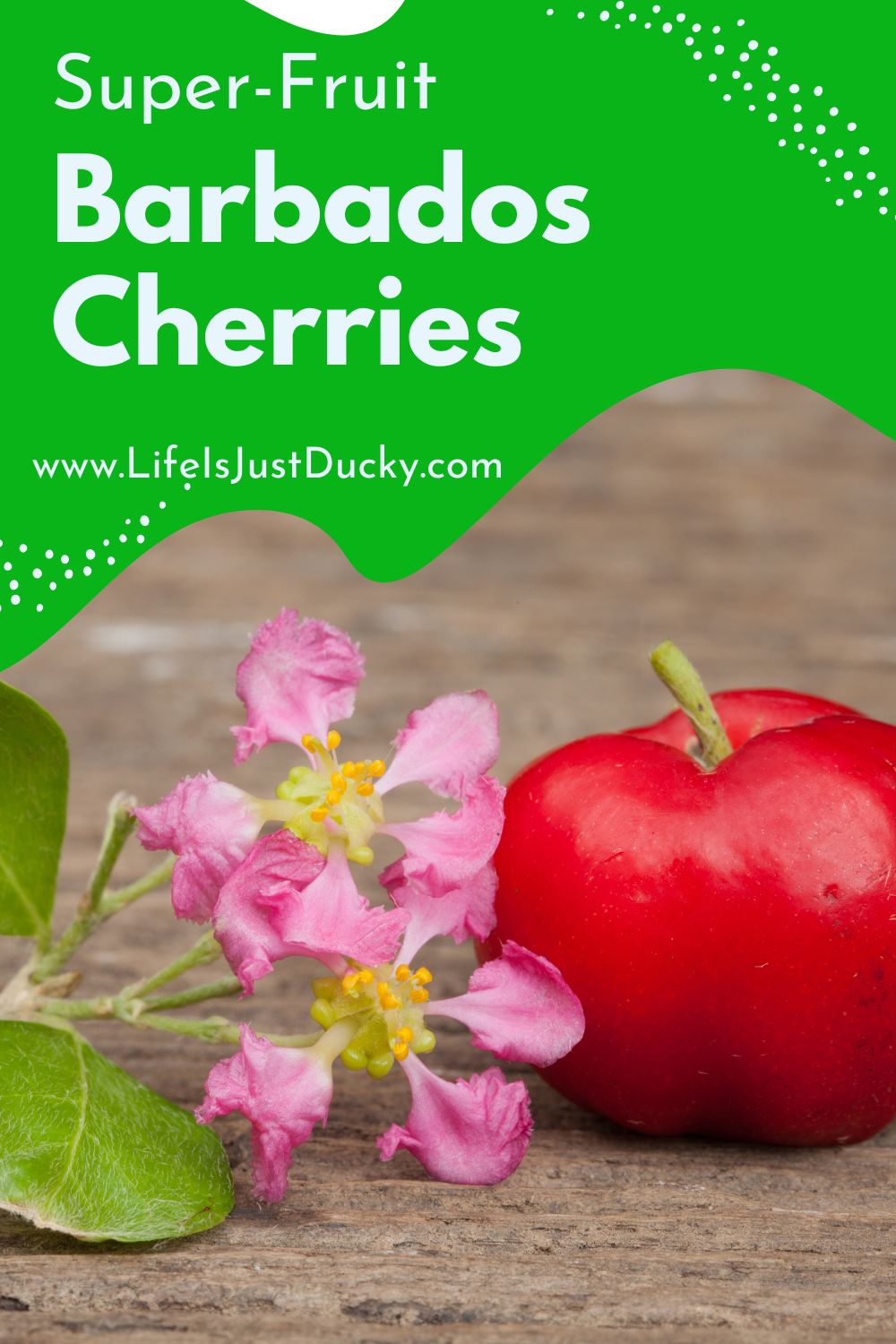
Barbados cherries tend to flower almost year-round, producing blossoms in waves. The cycle is triggered by weather—during dry spells, the plant rests, and after a good rain, it bursts into bloom with clusters of delicate flowers that resemble crepe myrtle. Once the flowers fade, the bush pauses until the next round of dry weather, followed by rainfall, when it will flush out again. From flower to ripe fruit takes only about 22 days, making it one of the fastest fruiting plants you can grow. Bees are the primary pollinators, so keeping a healthy local bee population nearby is key to a bountiful harvest. With the right conditions, a Barbados cherry plant can produce fruit steadily for up to 15 years.
Related>> How To Grow A Mulberry Tree.
Choosing the Right Location
Barbados cherry loves sun and warmth. Choose your planting site carefully to give your plant the best possible start.
Ideal Growing Conditions:
- Sunlight: Full sun (at least 6–8 hours daily)
- Soil: Well-draining, slightly acidic to neutral (pH 5.5–7.0)
- Spacing: 8–10 feet apart if planting more than one
- Wind protection: Especially important for young plants
Avoid low-lying areas where water collects, as root rot can be a problem in soggy soil.
Grow Your Own Tropical Fruit
 Buy Now →
*ad
How to Plant Barbados Cherry
Planting your acerola cherry properly is key to its success.
Planting Steps:
- Choose a healthy plant from a reputable nursery or online supplier.
- Dig a hole twice as wide and the same depth as the root ball.
- Amend the soil with compost or aged manure to improve fertility and drainage.
- Place the plant in the hole, making sure the top of the root ball is level with the surrounding soil.
- Backfill and gently firm the soil around the roots.
- Water thoroughly after planting.
- Mulch around the base to conserve moisture and suppress weeds, but keep mulch a few inches away from the trunk.
A Barbados cherry will also grow well in a large container, especially if you’re gardening in a cooler climate or have limited space.

Caring for Your Acerola Cherry Tree
Once planted, Barbados cherry is relatively low-maintenance, but some attention will help it thrive and fruit abundantly.
Watering:
- Water deeply 1–2 times a week during dry periods.
- Young plants need consistent moisture.
- Established trees are drought-tolerant but produce more with regular water.
Fertilizing:
- Apply a balanced organic fertilizer (like 5-5-5) 3–4 times a year.
- Supplement with compost or worm castings and azomite around the root zone at least once a year.
- Too much nitrogen can encourage leaves over fruit, so avoid overfeeding.
Pruning:
- Prune lightly after each fruiting cycle to maintain shape and encourage airflow.
- Remove dead or crossing branches.
- You can train it into a tree form or keep it shrubby with regular pruning.
Related>> How to Grow Fruits and Vegetables at Home
Pest and Disease Control:
Barbados cherry is relatively pest-resistant, but occasional issues can arise:
- Aphids and scale: Use neem oil or insecticidal soap if infestations are heavy.
- Fruit fly: Harvest fruit promptly and use traps if necessary.
- Root rot: Avoid overwatering and ensure good drainage.
Related>> Keep Bugs Out Of Your Garden, Naturally.
Growing in Pots or Containers
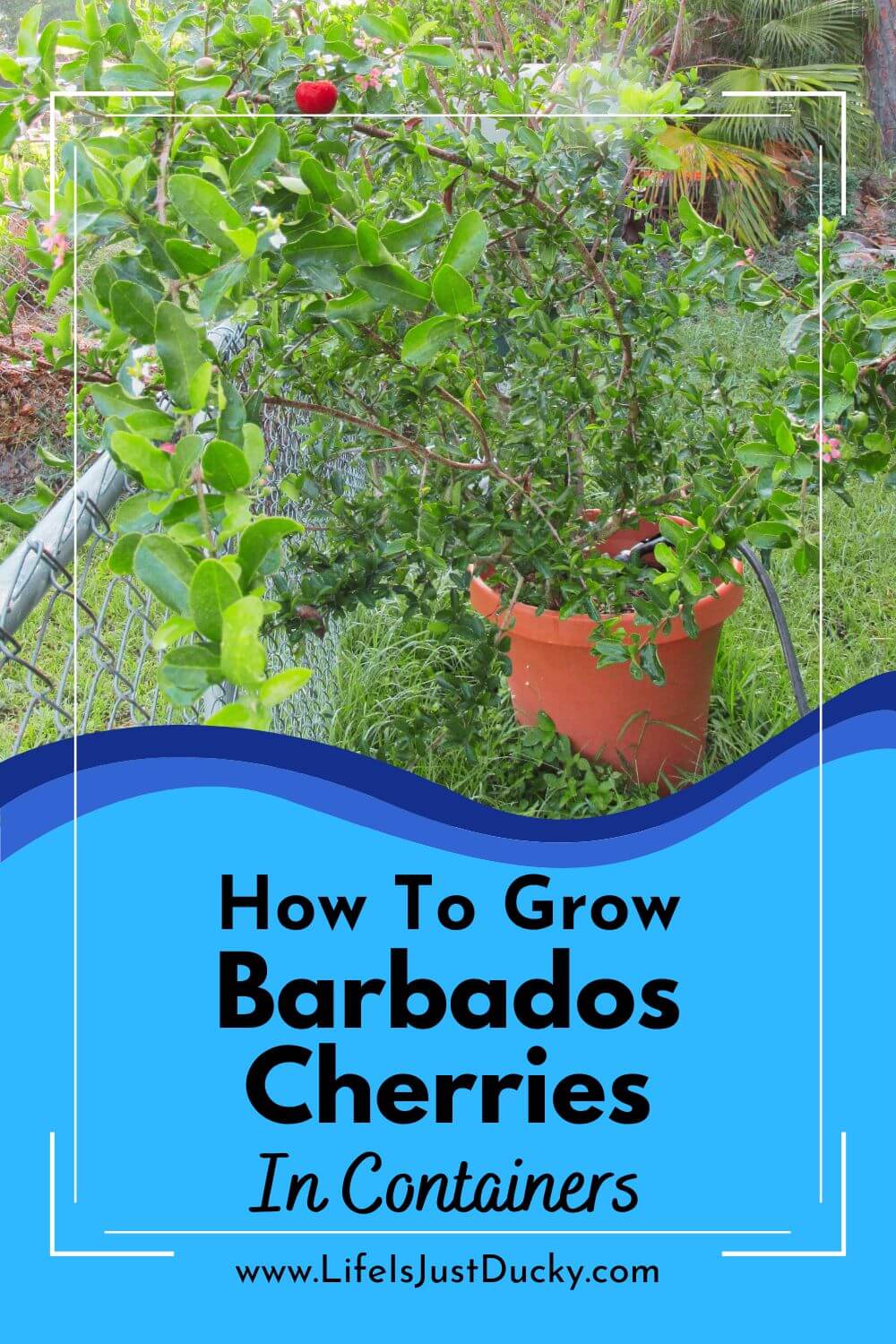
Don’t have room in your garden? You can still grow acerola cherry in a large container.
Container Growing Tips:
- Use a 15- to 25-gallon pot or larger with good drainage.
- Choose a high-quality potting mix (not garden soil).
- Fertilize more frequently, as nutrients leach faster in containers.
- Water when the top 1–2 inches of soil feel dry.
- Move to a sheltered location or indoors if temperatures drop below 30°F.
With good care, container-grown trees can still produce a healthy harvest.
Grow Your Tropical Plants In Pots

4-Pack Fabric Grow Bags 25 Gallon
Buy Now →*ad
When and How to Harvest
Barbados cherry fruit ripens quickly—often just 3–4 weeks after flowering.
Harvesting Tips:
- Wait until the fruit turns bright red and slightly soft to the touch.
- Pick by hand or with small clippers.
- Harvest daily during peak season to avoid overripe fruit falling to the ground.
- Handle gently—acerola cherries bruise easily and have a short shelf life.
They’re best eaten fresh, frozen, or used quickly in juices, smoothies, jams, and syrups.
Propagating Acerola Cherry
Want more plants? Barbados cherry can be propagated in several ways:
- Seeds: Not always true to type and slow to germinate.
- Cuttings: Take semi-hardwood cuttings in summer and root in moist potting mix.
- Air layering: Encourages root growth on a live branch before cutting it from the parent.
Most gardeners prefer cuttings or buying grafted nursery plants for faster, more reliable fruit production.
Related>> Grow Your Own Pineapple.
Cold Climate Tips
While Barbados cherry is frost-sensitive, gardeners in cooler climates can still enjoy this tropical treat with a little planning.
- Grow in a container and bring indoors or into a greenhouse during winter.
- Provide supplemental heat or lighting in an indoor growing area if needed.
- Use frost cloth to protect outdoor plants from unexpected cold snaps.
Even brief exposure to frost can damage or kill the plant, so plan accordingly if you’re outside USDA zone 9.

Common Questions About Growing Barbados Cherry
How long until it bears fruit?
Most Barbados cherry trees will produce their first fruits within 1–2 years of planting if grown from cuttings or nursery stock.
Do I need more than one plant for pollination?
No—Barbados cherry is self-pollinating, so one plant is enough to produce fruit. However, having multiple plants may increase yield due to more flower activity and pollinator visits.
How big will it get?
With regular pruning, you can keep the plant at 6–8 feet. Left unpruned, it may grow up to 12 feet or more.
Great Addition To Your Chicken Garden.
One of my favorite things about growing Barbados cherry is watching how much my chickens and ducks enjoy it, too. Every morning, they come running out of the coop and make a beeline for the tree, hoping to snatch up any ripe fruit that dropped overnight.
It’s like their little treasure hunt—and nothing goes to waste. The tart little cherries are a healthy treat for them, and I love knowing that even the fallen fruit helps nourish my flock naturally.
Planting Barbados Cherries for Your Chickens and Ducks
Barbados cherry bushes (also known as acerola cherries) are a fantastic addition to a chicken garden, free-range area, or even right inside your flock’s run.
These hardy, fruit-bearing shrubs grow thick and bushy, which not only provides shade and shelter for your chickens and ducks but also produces a steady supply of bright red cherries packed with vitamin C and other nutrients.
Your flock will absolutely love pecking at the fallen fruit, and since Barbados cherries are naturally tart and juicy, they make a refreshing and healthy treat on hot days. The bushes themselves are resilient and can handle some pecking and scratching at their base, making them an easy-care plant to add to your homestead.
Over time, the plants can grow into dense hedges that serve as both natural fencing and protection from aerial predators, while also giving your birds something fun to forage around.
Planting Barbados cherries where your chickens and ducks roam is a win-win—you’ll enjoy the delicious fruit for yourself, and your flock will benefit from shade, forage, and a nutrient-rich snack.
Final Thoughts
Barbados cherry is a rewarding addition to any edible landscape. With its ornamental appeal, high nutritional value, and ability to fruit multiple times a year, it’s a tropical gem that deserves a place in your homestead garden.
Whether you’re growing it in the ground or a pot, with a little sun, water, and care, you’ll be enjoying tart, juicy acerola cherries in no time.
Ready to grow your own Barbados cherry?
Pin this guide or share it with fellow backyard growers who love adding new and exciting fruits to their garden!
Happy Backyard Homesteading!

I believe everyone can grow at least part of their own food! Let me show you how.
Mary is a gardener, backyard homesteader, and duck wrangler. She is also the owner and writer of LifeIsJustDucky.com and AGoodWordADay.com. (for daily devotions) Mary is passionate about helping others expand their backyard homesteading skills and learn to be more self-sufficient, no matter where they live.










Wonderful information! I didn’t realize that it’s actually a bush and not a tree- I just bought one and the branch was so droopy because it wasn’t tied to the stick that was in the same pot, so I went ahead and tied it. Do you think I should remove the stick and let it drop over- your picture above resembles how mine was…
Tying it up is fine as long as it is not tied tight. You don’t want your tie to girdle the branch. Make sure the tie is stretchy and it is checked often. Pruning to get a good shape is helpful too. Check out the post: Pantyhose in the garden?
Hello thank you for the useful topic
I am living in gulf area middle east
I have this tree
But I have a problem
The tree set alot of bloom flower but after some time the most of the flowers fall off only few become fruit
What is the problem
Thanks and excuse my English 🙂
Salim, There are many things that can cause blossom drop. The amount of water, temperature, nutrients. But the most likely thing is the lack of pollinators. One thing you can do is plant flowers that attract pollinators around your bush. In some areas that don’t have many pollinators, you may want to keep a beehive. Good Luck.
Loved reading about the barbarous cherry tree. I am so excited that mine has blossoms for the first time! I planted it three years ago but is growing in tree form, not bush.
That is so exciting!
Hi Mary,
I am planning to start a food forest in my garden and am wondering how long it takes for Barbados cherry to start bearing fruit after it has sprouted?
I’ll only be living in this house for another 1.5 years, so time is quite a constraint.
On the plus side, I live in Uganda, almost right on the Equator, so temperatures are high and so is rainfall…perhaps that may speed things up?
All the best & thanks for your post!
Emile
Emile,
I’m sorry, I’ve never grown them from seed, but even from air layering it took a couple of years for ours to start producing. I’m sure the soil and climate will have a lot to do with it though. Maybe you can keep it in a large container and take it with you. Just be sure the container has a saucer under it so it doesn’t root into the ground, like I did. 🙂
I wish there were indoor growing helps here or somewhere! With or without led grow lights! I have a 5’ tree I got from a Nursery in Florida, and I have 7 remaining green cherries, about 5/8” in size, and I’m in Anchorage, Alaska, and I water it about every two days in it’s 15” container, when branches start wilting and hanging down! Soon after I water it, the new branches are straight and rigid again, and it’s full of new growth, and the new leaves are at least several times larger than the older leaves that it came with! I do rarely ever take it outside, but will, occasionally, when bees may be flying around! Do I need a larger container, or any other suggestions?
If it is wilting for lack of water after only a couple of days, I’m sure it needs a bigger pot and maybe a more absorbent potting mix. This bush will get at least 12′ tall so it will have a big root ball. Wow! Growing a tropical plant in Alaska! That’s pretty cool. If it blossoms and you don’t want to take it outside, try hand pollinating it. A little, soft paintbrush does a great job.
Hey Mary!
I’ve just found this gorgeous tree at my grandparent’s backyard!
I would like to freeze them so I can collect enough to cook with! Can I make a pie from the frozen cherries? How would you go about it?
The problem with a pie is the seeds. It is not a true cherry so it doesn’t have a stone, but 3 seeds. It would be a job to remove them all. However you could stew it (kind of like a jam) and make a pie that way. It would be worth a try. Bet they would make a great jam too come to think of it. 🙂 Let me know how it comes out.
Hi Mary! I have a young cherry tree, about 2 1/2 feet tall, that is growing quite well. It has put out 3 long branches full of new leaves. I was wondering if I should prune it back so that the main trunk grows thicker, and has more upwards growth, or leave It alone?Thank you for all your tips!
The barbados cherry is a bush, not a tree. It will have many branches. That being said, it can take on the shape you want in your landscape, I let mine “free form”. It has many branches and I only prune it to get rid of dead branches and control it so I can mow around it. It is shaped much like a crape myrtle so I’m sure it could be pruned like they do those. I like to keep mine “droopy” co I can pick more fruit.
I’ve got a Barbados tree that I bought at Home Depot. It bloomed twice and gave us cherries. Then winter came and it stopped, plus started looking sad. Now that it’s warmed up, I’ve planted it in the ground. Now all the leaves are turning yellow. Any idea what the problem is? I’m in central Florida.
Mine always looks sad this time of year too. It is at least semi-deciduous and it likes a LOT of water. It will likely come back and bloom again. I have found that a period of not watering it and then watering it heavily spurs the bloom cycle.
Hi Corey
Did watering help? We went through a very dry spell here and I’m having the same problem. 😥
My barbados cherry is in full bloom here. Still only has baby leaves, but it looks pink all over.
I have been watering mine.