
You can’t grow greens all year, can you?
There’s one thing that most people don’t get enough of in their diets, and that’s greens. And since some type of greens can be grown every month of the year everywhere. There is really no reason not to. You scoff? Read on and I’ll tell you how to grow greens in your garden and house all year long.

This post may contain affiliate links. Please read my disclosure if you have questions.
Thank you for supporting this site with purchases made through links in this post. For Starters Here’s My Amazon Link
Why Grow Greens All Year.
Growing (and eating) greens has gotten to be all the rage in the last few years and for good reason, I might add. Though each is different, they all are a nutritional powerhouse. High in many vitamins, minerals, and phytonutrients.
Eating leafy green vegetables, such as spinach and kale, once or twice per day has been found to halt mental decline by an average of 11 years.
Nutritious, Delicious, and easy to grow. Since home-grown vegetables go from garden to table within hours (sometimes minutes) they retain most of their nutritional value. The vegetables you find in the grocery store can’t boast that.
[Tweet “You can grow and eat greens all year! #growsomegreens #gardening #healthyeating”]
For instance, per cup, turnip greens provide more than 1/3 of the daily requirement of vitamin A and C and all the Vitamin K for your daily needs. They also have one of the highest amounts of calcium of any vegetable.

Some Greens Aren’t Green.
Not all greens grow green either. The red varieties of “greens” have a higher amount of lycopene. Another important nutrient. Not to mention, they make an otherwise blah salad, pretty and part of food enjoyment is looking “pretty”.
Most greens are easy to grow and with a little careful choosing, a few tools, and succession planting. You can be enjoying loads of greens throughout the year. And that will not only be a real boost to your health but for your wallet as well. As greens are easy to grow in great abundance from just the cost of a pack of seeds.
Hmmm. Sounds like we need to add a few more greens to our diet!
[mailerlite_form form_id=1]
How To Care For The Greens
One thing all greens have in common is that they are all very heavy feeders. Greens grow best with a good rich soil and some feeding (side dressing) every couple of weeks. A little fish emulsion is much loved by greens as is compost or worm tea.
Related: Throw A ‘Compost’ Tea Party For Your Plants.
You will also want to mulch to conserve water and keep the roots cooler.
If you start to have competition…. as in bugs, greens don’t need pollination so you can use row covers to keep the pests off ensuring pristine leaves for your salad or stir fry.
Greens are really very easy to grow. Short of watering and keeping them fed, greens do pretty much everything else by themselves. No staking, no tying. Keep them weeded and watered and you will be harvesting basket after basket of breakfast, lunch, and dinner.
Related: Mulch For Your Vegetable Garden.
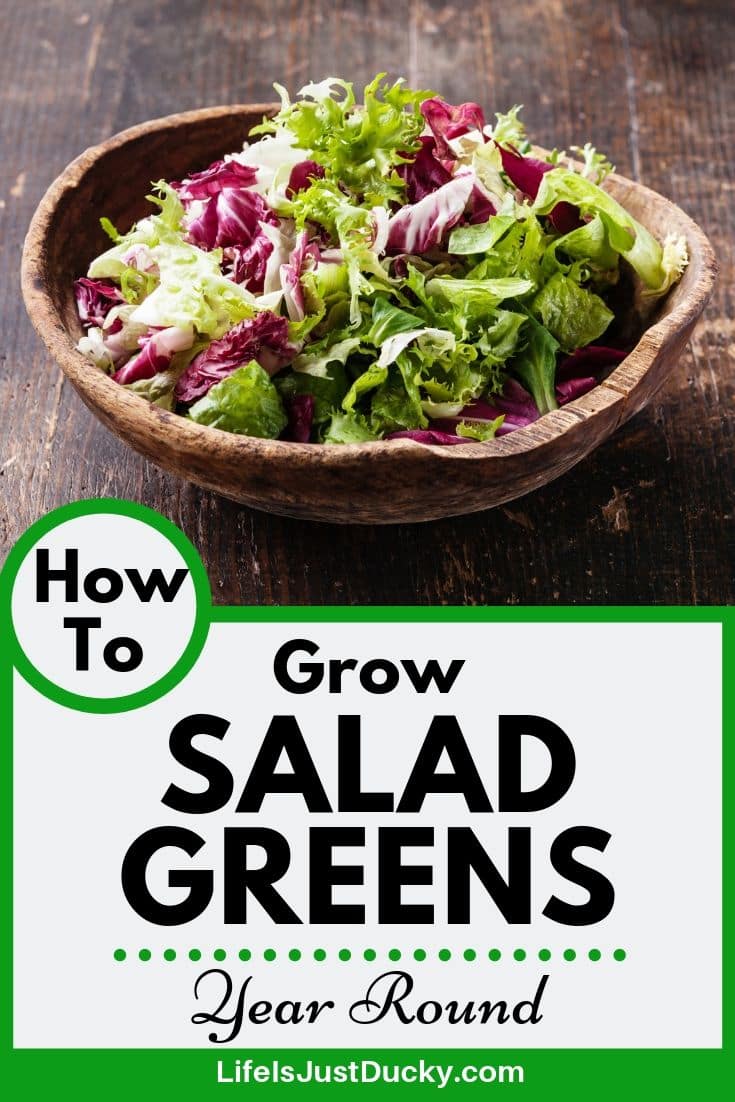
How To Grow Greens All Year
Get a head start on spring by starting your seeds inside. That way when the soil is warm enough, your plants will already be growing and it will only be weeks, or maybe even days before they are ready to start harvesting.
Related: Start Seedlings Like A Pro
Greens can be planted in the ground as soon as the soil can be worked.
There are also greens for every taste. Kale to romaine, chard to pac choi, mache to arugula, mustard to spinach, nasturtium to collards. The list goes on and on. Some grow better in one season, some in another. By growing several, you can spread out the season and eat your own fresh greens all year long.
With season extenders like low tunnels to keep the frost and snow off, many people can grow greens like kale and chard right through the winter. Just get them growing well before cold weather hits.
For those with really cold temperatures, microgreens and baby greens can be grown inside on a window sill or under grow lights.
Related>> Caesar Salad Soup: A Creamy Lettuce Soup
Grow Quick Greens
Some greens can be very quick to grow. Microgreens can take just days from planting to table and can be grown inside in the dead of winter. Baby greens can take only about a month making them perfect to put in between long growing plantings like tomatoes or cucumbers. Most greens are able to be harvested any time in their growing cycle and even a little at a time by cutting the outside leaves and letting the rest of the plant grow.
You can also grow greens in a Garden Tower inside. You can grow an insane amount of food in a very small space, all through winter.
Grow greens using succession planting keeps you from having 52 heads of lettuce all at once. A couple a week per person makes much more sense. So plan out your bed and plant as much as you will need for 2 weeks, then plant again in 2 weeks and 2 weeks after that.
If your greens start to bolt, pull them out and feed them to the worms, ducks, or chickens, or if you don’t have any of those…(gasp)…put them on the compost pile and start harvesting the next one in line.
Grow The Greens That Grow Best In Your Climate
Every area has greens that grow best for them. In my area spinach only grows for a very short period of time, but I can grow Malabar spinach most of the year. Some greens are also better for the cool season, kale is great in the cool season and if given a head start and a little protection with row covers, it will continue to give you a harvest right through most winters.
Sweet potato vine (yes you can eat the leaves) will grow right through the hottest of summers if given enough water. And room to grow I might add.
Where it’s really hot many greens like a little shade and lots of water. (Come to think of it so do I.)

Grow Greens In Containers
If you don’t have a lot of space (or any) in the ground, remember, you can always grow greens in pots. Whether hanging planters, window boxes or grow bags. You can always find a spot for a few greens.
Related: How To Save Money With Grow Bags.
Perennial greens.
In addition to the usual annual garden greens we are all familiar with, there are perennial greens. These are usually bushes that live for years. Some types of perennial greens are dandelions, sorrel, tree collards, and miners lettuce, just to name a few. Here in the south, I eat from my longevity spinach, Malabar spinach, and katuk. Check with your local nursery to see if there are any perennial plants that can be eaten that grow well in your zone.
How to use greens
Oh my! Where do I start?
Some greens lend themselves better to one type of recipe, some to another. But you can eat most, at least while they are young, in salads and wraps. You can also cook them and make soups and stirfries. They can be sauteed or boiled, put them in casseroles and smoothies, saute and stir in some eggs and have scrambled eggs and greens, they are an awesome addition to a quiche, the list goes on and on.
Here are just a few recipes to get you started.
Sauteed Swiss Chard And Tomatoes

The secrets to growing greens year-round.
choose the right varieties for the season.
Succession plant.
Feed and water them well.
Use season extenders such as row covers or shade cloth or bring them inside with a garden tower.
Learn to use them in many ways. Salads, Soups, Sauteed, Boiled, and even chips!
Eat them for breakfast lunch and dinner.
Now go and grow some greens!
Did you like this post? Then, I’d love it if you’d share it!
Want some more top posts? Check out this list of Readers Favorites.
Happy Gardening!

I believe everyone can grow at least part of their own food! Let me show you how.

Mary is a gardener, backyard homesteader, and duck wrangler. She is also the owner and writer of LifeIsJustDucky.com and AGoodWordADay.com. (for daily devotions) Mary is passionate about helping others expand their backyard homesteading skills and learn to be more self-sufficient, no matter where they live.