
Summer can be enjoyable for backyard ducks, but long stretches of heat and humidity can also be hard on them. But keeping ducks cool in summer is possible if you follow these simple directions.
Ducks are tough birds, yet they still need help staying comfortable when temperatures climb. Thick feathers that protect them in winter can feel heavy in midsummer, and unlike people, ducks do not sweat to cool themselves down.
Over the years, I have noticed that ducks are very good at telling you what they need. On hot days, mine head straight for shade, splash in the water, and spend the hottest hours resting quietly. If we pay attention to those natural habits, it becomes much easier to care for them during summer.
Here are practical, easy ways to keep ducks cool in summer while keeping your flock healthy and content.
This post may contain affiliate links. I will be compensated if you make a purchase after clicking on my links. Please read my disclosure if you have questions.
Thank you for supporting this site with purchases made through links in this post. For Starters Here’s My Amazon Store.
Related>> The Simple Start Raising Ducks System
Keep Water Clean, Cool, and Plentiful
If there is one thing ducks need in hot weather, it is water—and plenty of it. Ducks drink often, rinse their bills, clean their nostrils, and cool themselves with water throughout the day. In summer, dirty or overheated water can become a real problem quickly.
Try to provide several water sources so every duck can drink easily without crowding. Refill containers often, especially if they are sitting in the sun. Moving water buckets into shaded areas can help keep them cooler longer.
Because ducks are messy by nature, water can turn muddy fast. I often dump and refill waterers more than once a day in summer. It may feel repetitive, but clean water is one of the best things you can give a flock.
Helpful tips include:
- Place waterers in shade whenever possible
- Use more than one water station
- Refill often on very hot days
- Scrub slime or dirt from containers regularly
- Keep a larger backup bucket ready during heat waves
- Use automatic waterers so they never run out. Running out of water is an absolute NO-NO
Fresh, cool water can make a noticeable difference in how comfortable ducks seem during the hottest weather.
Related>> How To Get Clean Water For My Ducks
Provide Shade Throughout the Day
Even ducks that love roaming the yard need a place to escape direct sun. Shade helps lower stress and gives them a comfortable place to rest.
Natural shade from trees and bushes is excellent, but you can also create shade with simple structures.
Helpful shade options include:
- Shade cloth
- Tarps secured safely overhead
- Patio umbrellas
- Lean-to shelters
- Small portable canopies
I often find my ducks gathered under shrubs or tucked beside the coop during the hottest part of the afternoon. They know exactly where the coolest spots are.
Offer a Pool or Splash Area
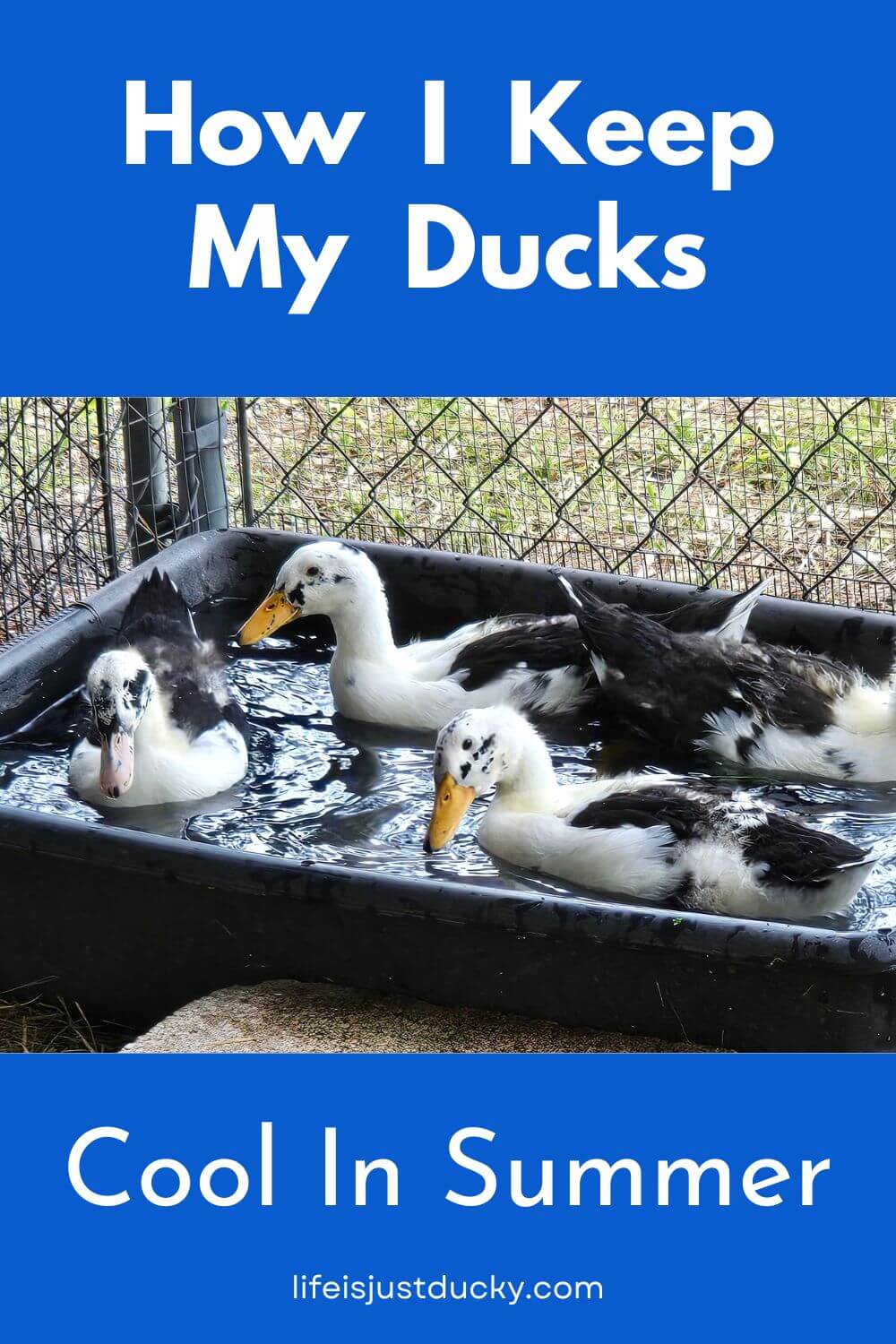
Few things make ducks happier on a hot day than water deep enough to splash in. A kiddie pool, stock tub, or shallow pond gives them a chance to cool their bodies and enjoy themselves.
You do not need an elaborate pond. Even a simple plastic pool can make a huge difference. Ducks will dip, bathe, paddle, and sometimes simply sit in the water when temperatures rise.
From my experience, a small pool quickly becomes the most popular place in the yard all summer long.
Related>> Do Ducks Need A Pond To Be Happy And Healthy?
Keep the Coop Cool and Airy
Duck houses can become stuffy fast in summer. Good ventilation helps remove heat and moisture while keeping the space healthier overall.
Ways to improve airflow include:
- Opening screened windows
- Adding extra roof vents
- Cleaning wet bedding regularly
- Avoiding overcrowding
- Positioning the coop where it gets shade
- Build a secure run around the coop so they can spread out and sleep under the stars
A summer coop should feel breezy, not hot and trapped.
Related>> Preparing For Predators On The Homestead
Change Their Routine During Heat Waves
Ducks are often most active in the cooler parts of the day. During very hot weather, it helps to adjust chores and free-range time around their natural schedule.
Try letting ducks out early in the morning or later in the evening when temperatures are lower. Midday is often when they prefer to rest quietly in shade.
I have learned not to expect much movement from ducks during a blazing afternoon. Mine usually settle down, nap, and wait for evening to become lively again.

Feed Cooling Summer Treats
Switch from cold weather treats to warm weather treats.
Fresh treats can help with hydration and give ducks something fun to do.
Good warm-weather treats include:
- Watermelon pieces
- Cucumber slices
- Lettuce, Kale, or other greens
- Frozen peas in shallow water
- Adding mint to their food or water is cooling.
Watching ducks bob for peas in cool water is one of the more entertaining parts of summer duck keeping.
Caution: Remember to feed treats in moderation. This should not replace a balanced diet.
Related>> What To Feed Ducks In Your Backyard?
Using Probiotics (and “Magic Water”) to Support Ducks in Summer Heat
Summer heat doesn’t just affect ducks externally—it can stress their systems internally as well. During hot weather, ducks often eat less, drink more, and can become a bit sluggish. Supporting their gut health is one simple way to help them stay more resilient through those long, hot days.
Probiotics can help maintain healthy digestion and support overall balance, especially during times of stress like heat waves. While they are not a replacement for shade, clean water, and airflow, they can be a helpful addition to your summer routine.
I’ve found that when temperatures stay high for days at a time, small supportive habits like this can make a noticeable difference in how my ducks recover in the cooler evenings.
Simple Ways to Add Probiotics
There are several easy, practical ways to offer probiotic support:
- Poultry-specific probiotic powders in water
- Fermented feed
- Small amounts of plain yogurt (occasionally)
- Plain, unflavored kombucha
If you already keep a homestead kitchen, you may have more options than you think.
Using Kombucha and Extra SCOBY
If you brew kombucha at home, you have a built-in source of beneficial bacteria. Extra SCOBY can be cut into small pieces and offered to ducks, and many will happily peck at it.
You can also add a small splash of plain kombucha to a separate water dish as an occasional probiotic boost.
A few important notes:
- Only use plain kombucha (no flavors or added sugars)
- Offer it in moderation
- Always provide fresh, clean water alongside it
This is a simple way to use something that might otherwise go to waste. (and they love it.)
Related>> How To Make Kombucha For Better Gut Health
What Is “Magic Water”?
“Magic water” is a simple, time-tested mix often used by poultry keepers to support chicks and ducklings when they first arrive stressed—but it can be just as helpful for adult ducks during times of stress, including extreme heat.
It typically includes:
- Apple cider vinegar
- Fresh garlic
- Honey
This combination is often used to support hydration, digestion, and overall wellness.
During very hot weather, offering magic water as an option (alongside plain water) can give your ducks a little extra support when they need it most.
Related>> Free Range Chickens and Ducks: The Pros, Cons, and How to Do It Safely
A Few Important Tips
Even when using probiotics or magic water, the basics still matter most:
- Ducks need constant access to clean, cool drinking water
- Shade and airflow are essential
- Pools or splash areas help regulate body temperature
And always remember—any probiotic or supplement should be optional. Ducks should always have access to plain, fresh water.
Probiotics, kombucha, and even a simple “magic water” mix can all play a small role in helping ducks handle summer stress. They are not a cure-all, but they are a practical, natural way to support your flock.
Sometimes it’s the small, consistent things that make the biggest difference—especially during the hottest days of the year.
Related>> Free Range Chickens and Ducks: The Pros, Cons, and How to Do It Safely
Watch for Signs of Heat Stress
Even with good care, ducks can still struggle during extreme heat. It is important to know the warning signs.
Look for:
- Panting
- Wings held away from the body
- Lethargy
- Weakness
- Refusing food
- Standing motionless in shade for long periods
If a duck seems overheated, move it to shade immediately and offer cool water. If symptoms continue or worsen, contact a veterinarian familiar with poultry.
My Favorite Summer Setup for Ducks
If I had to choose the simplest successful setup for hot weather, it would be this: a shaded yard, fresh water, a kiddie pool, and a clean, airy shelter. Ducks do not need fancy extras nearly as much as they need reliable basics.
Some of the healthiest, happiest ducks I have kept were not pampered birds with expensive equipment. They simply had what ducks value most—water, shade, safety, and room to relax and spread their wings.
FAQ: Keeping Ducks Cool in Summer
What temperature is too hot for ducks?
Many ducks begin struggling when temperatures climb into the upper 80s or 90s, especially with humidity. Watch behavior more than numbers.
Do ducks need a pool in summer?
A pool is very helpful, and in my mind necessary. Most ducks benefit greatly from access to water for cooling and cleaning.
Can ducks stay outside in hot weather?
Yes, if they have shade, water, airflow, and protection from overheating, they will actually be much happier.
Do ducks like fans?
Fans can help improve airflow in enclosed areas if used safely and where cords are protected.
Related>> Why Are My Ducks Not Laying Eggs
Final Thoughts on Keeping Ducks Cool in Summer
Keeping ducks cool in summer does not need to be complicated. Most of it comes down to fresh water, shade, airflow, and paying attention to your flock’s behavior.
Ducks usually tell us what they need if we watch them closely. When they head for the pool, rest under a tree, or slow down in the afternoon heat, they are reminding us to work with nature instead of against it.
A few thoughtful adjustments can make summer far more comfortable for your ducks—and easier for you as well.
Related>> Caring for Ducks in Winter. What You Need To Know.
Happy Backyard Homesteading!

I believe everyone can grow at least part of their own food! Let me show you how.

Mary is a gardener, backyard homesteader, and duck wrangler. She is also the owner and writer of LifeIsJustDucky.com and AGoodWordADay.com. (for daily devotions) Mary is passionate about helping others expand their backyard homesteading skills and learn to be more self-sufficient, no matter where they live.