
When you hear of mint what do you think of? Do you think of mint tea or candy canes? How about toothpaste or the curiously strong Altoids mints? Whatever you think of, maybe you should be growing mint in your herb garden.
How And Why To Grow Mint.
Mint is one of my favorite herbs to grow. And grow it does. Mint Is Almost Too Easy To Grow. If you live in a zone where it’s happy (which is most of them) it can easily take over your garden in a short amount of time. Sometimes that’s a good thing.
But if you prefer other things in your garden, mint can be contained by planting it in a pot. If you decide later you want it in your garden, just plant it pot and all. The pot will help keep it from spreading.
On the other hand, lots and lots of mint may be a good thing. Mint really wants to be a ground cover. The long branches grow upward and then flop over and root, spreading the plant wherever it can reach.
The spikes of white or pinkish flowers are attractive but brief. However, they do attract bees, butterflies, and even birds. Most mint plants are hybrids and will not grow true from seed so your best bet is to buy a plant. It spreads so quickly that you may never need to buy another one.
This post may contain affiliate links. I will be compensated if you make a purchase after clicking on my links. Please read my disclosure if you have questions.
Thank you for supporting this site with purchases made through links in this post. For Starters Here’s My Amazon Store.

The Marvelous Mint Family
A pot of mint makes a beautiful kitchen companion. And mints stand out as garden accents, ground covers, air fresheners, and herbal medicines.
There are many varieties of mint. You can grow peppermint, spearmint, chocolate mint, lemon mint, apple mint, and literally dozens of other varieties. Mints are easy to identify and not just because of their spicy scent. All members of the mint family have square stems.
Mint Growing Needs
Mint is a perennial that grows well in zones 3 – 11 or 5 – 11 depending on the variety. It does die back in the winter above zone 8 but comes back in the spring. It should be removed and replaced every 3 to 5 years as older plants get woody and lose some of their flavor and aroma.
Mint loves water so make sure the soil is well amended and mulched to retain moisture. Water it frequently especially if it is in full sun. However, it should never stand in water.
It likes full sun to part shade, but can even grow in mostly shade which will help slow its growth a bit.
Mint prefers a PH of 6.0 – 7.0.
It grows quickly, 1-2 feet wide and tall or more in just one year. It can use a little fertilizer every few weeks especially if you harvest a lot.
Mint also makes a wonderful houseplant if given enough sunlight, and in your garden, it is a great companion plant for cabbages and tomatoes.
Related>> How To Start An Herb Garden For Better Health.
Propagate Mint
The best way to get more mint plants for your herb garden is by runners, or by letting the long stems come in contact with the soil. Those stems will root right there if kept moist. You can also take a cutting and root it in water or dirt.
Mint does not produce true to seed. Mint cross-pollinates so easily that you never know what type of mint will come up from the seed.
How To Harvest
Harvest by snipping sprigs anytime during the growing season. In fact, frequent harvesting encourages a bushy plant so snip them as you need them. You can also cut them back to 1″ above the ground just before they flower to dry them for winter.
Using Mint To Cook
Generally, cooks prefer spearmint for savory dishes and peppermint for desserts. For a delicate mint taste in fruit salads, yogurt, or tea, try apple or orange mint.
Mint is used in Middle Eastern salads, such as tabbouleh, and does well with lamb. The Kentucky Derby just wouldn’t be the same without the mint julep.
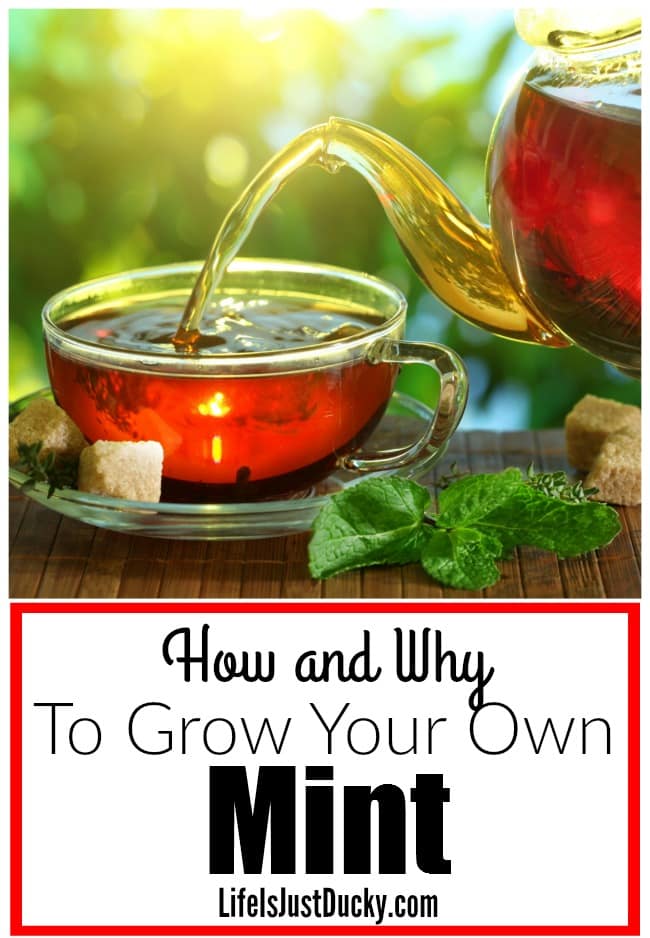
It also goes with peas, zucchini, fresh beans, marinades for summer vegetables, cold soups, fruit salads, and cheese. Try your hand at making peppermint patties or just have the taste of them without all the sugar when you make tea out of chocolate mint. Mint also mixes well with other herbs for herb teas. Consider growing your own tea garden. Freeze some fresh leaves in ice cubes to drop in your next iced tea or fruit drink. And this is just scraping the surface of possibilities.
Mint can be made into a refreshing iced tea too. Plain with a little honey or try this Mint tea latte recipe.
Preserve
Mint freezes well to add to recipes or iced tea, but the most common way to preserve it is by drying. Mint is very easy to tie into a bundle and hang in a dry place until very dry. Then store it in an airtight container in a cool place. If you don’t have a dry place to dry it in (ahem, I live in very humid Florida) you can use a dehydrator to do the job. All of these ways preserve most of the nutrients. Then just drop what you need in boiling water, allow it to steep, and enjoy a wonderful cup of tea.
Nutrition
Mint has one of the highest antioxidant capacities of any food. Nutritionally, mint is rich in many vitamins and minerals. No specifics here as each type of mint is a little different. Suffice it to say that you want mint in your diet.
Using Mint For Medicine
Mint has been used medicinally for thousands of years. In fact, it is referred to as the “world’s oldest medicine”. Ever have an after-dinner mint? That’s because mint’s most common use is as a digestive tonic, calming the stomach. It relieves indigestion and is used by some to calm motion or morning sickness (see safety factor below). It has been known to reduce colic and is used to help bring down fevers, relieve headaches, and is a wonderful breath freshener.
Mints owe their value in healing to their aromatic oils. Peppermint oil is mostly menthol. Spearmint oil contains a similar chemical, carvone. Both soothe the digestive tract, and are mild anesthetics. Mint’s vapors have decongestant qualities and it helps prevent many infections. And if that’s not enough, mint is being studied for its ability to stop the growth of some tumors.
Safety Factor – ALWAYS DO YOUR OWN HOMEWORK
There are some dangers with mint. It relaxes large muscle groups like the stomach and the uterus so it should be used with caution if you are pregnant. If you have a history of miscarriage you should not use this herb while pregnant. If you do choose to use peppermint for morning sickness, stick to a beverage-tea concentration.
Can you overdose on mint? Not likely if used from the plant. However, pure menthol is another story. DON’T USE PURE MENTHOL AS IT IS POISONOUS. That being said, the Food and Drug Administration has listed mint herbs as generally regarded as safe in amounts typically recommended. You won’t have any problem with a few cups of mint tea or several cough drops in a day. Remember, everything in moderation.
Mint For Your Flock
Mint is also wonderful for your ducks and chickens. Cool mint tea can be fed to your flock in the summer to help them cool off, get extra nutrients, and give them a change from plain water. Peppermint leaves, dried or fresh, fed to chickens also have been proven to improve egg production and egg quality. Chickens fed peppermint have thicker egg shells. Peppermint reduces cholesterol and increases total protein in the eggs. It also improves the flock’s immunity, helping to protect them from some infectious diseases.
Mint is great for keeping the pests out of your coop, as mice, insects, and even snakes don’t like the smell of it. So plant mint all around your coop, barn, and house, and anywhere else those mice and rats (and other pests) might be a problem. It also will help keep out mites and fleas. (hat tip to Lisa Steele)
Related>> Fast Ways To Get Rid Of Mice And Rats In Your Coop.
Unique use
Some people grow mint in “herbal lawns”. They can be mowed and lightly walked on. And they smell great!
Well, that should convince you that you don’t want to live another day without this very versatile and useful herb. I know I’m growing this in my herb garden….and around the duck coop…and in the garden…and on the back porch….
Happy Backyard Homesteading!

I believe everyone can grow at least part of their own food! Let me show you how.
Check out the newsletter for more helpful information and free stuff.

Mary is a gardener, backyard homesteader, and duck wrangler. She is also the owner and writer of LifeIsJustDucky.com and AGoodWordADay.com. (for daily devotions) Mary is passionate about helping others expand their backyard homesteading skills and learn to be more self-sufficient, no matter where they live.



Thanks so much for the share of my Peppermint Patty recipe! XO! 🙂
My pleasure. It really looks good.
First of all I want to say I thoroughly enjoy your blog! Second, here’s another tidbit about mint. Ants hate it. If I find an ant bed being built in my yard or garden, I place a small sprig right smack in the middle and within a couple of weeks they leave. Also, I ordered the tyfon Holland greens and shared with my neighbor. Great idea. Thanks so much for the info on those. It was very much appreciated. Btw, I live in Florida zone 9b. Now off to check on my ducks, chickens, rabbits, & quail! Have a wonderful day!
Glad to meet a fellow Floridian! Zone 10 here. I’ll up date my post with this info about the ants. That I’ve got to try! Fire ants are THE WORST!! By the way my ducks love the tyfon as much as I do. Have an awesome day and thanks for the comment.