

Have you ever looked at the price of gourmet mushrooms at the grocery store and thought, I wonder if I could grow mushrooms myself?
I did.
And as it turns out, growing mushrooms at home can be a lot easier than you might think.
This post may contain affiliate links. I will be compensated if you make a purchase after clicking on my links. Please read my disclosure if you have questions.
Thank you for supporting this site with purchases made through links in this post. For Starters Here’s My Amazon Store.

I started with a mushroom-growing kit my sister-in-law gave me. It sat right there on my kitchen counter, and before long, beautiful oyster mushrooms were growing from it. I sautéed them in butter, and they were delicious—meaty, flavorful, and nothing like the mushrooms I was used to buying at the grocery store.
Naturally, I wanted to try growing more.
That led me down the rabbit hole of growing mushrooms outdoors, including growing shiitake mushrooms on oak logs. I’ve learned a lot along the way, including a few things I would definitely do differently the next time.
If you’ve ever wanted to learn how to grow mushrooms at home, I’ll walk you through what I’ve learned about choosing mushrooms, growing oyster mushrooms, growing shiitake mushrooms on logs, and harvesting and preserving your mushrooms.
A Quick Word of Caution
This article is about growing mushrooms from reputable mushroom spawn, not identifying and eating wild mushrooms.
Wild mushroom foraging is a completely different subject. Many edible mushrooms have poisonous lookalikes, and correctly identifying wild mushrooms takes knowledge and experience.
When you’re starting out, purchasing spawn from a reputable mushroom supplier takes a lot of the guesswork out of it.
My First Adventure Growing Mushrooms
My first experience growing mushrooms was about as easy as it gets.
I got a mushroom-growing kit as a gift, and I put it on my kitchen counter. Before long, oyster mushrooms were growing right in my kitchen.
The mushrooms were delicious. They had a wonderful meaty texture, and they weren’t nearly as watery as some of the mushrooms I had purchased from the grocery store.
Then I saw people growing mushrooms on logs and decided I wanted to try that, too.
That’s when things got a little more complicated.
I initially saw oyster mushrooms being grown on logs and thought, I can do that! But I learned that not every mushroom grows well on every type of wood.
Oyster mushrooms can grow on some types of logs, but the particular strain matters. Oak, for example, turned out to be much better suited to the shiitake mushrooms I eventually grew.
I purchased shiitake plugs from Field and Forest Products and started my first batch of mushroom logs.
That project taught me something important: before you start growing mushrooms, choose the mushroom and growing method that actually fits your climate and your available growing space.

Why Grow Your Own Mushrooms?
There are plenty of reasons to grow mushrooms at home.
For me, the biggest one is simply that they’re delicious. There’s something especially satisfying about walking outside, harvesting something you’ve grown yourself, and bringing it straight into the kitchen.
Mushrooms can also be surprisingly productive when conditions are right. Once you have a good growing system established, you can continue harvesting without having to start from scratch every time.
And if you’re already growing vegetables, herbs, fruit, or keeping backyard animals, mushrooms can be another fun addition to your homegrown food supply.
You don’t need a huge garden, either. Some mushrooms can be grown indoors, while others can be grown outdoors in a shady area.
Related>> How to Grow Fruits and Vegetables at Home: Beginner Guide to a Productive Garden
Choosing the Right Mushroom for Your Area
This is one of the most important things to figure out before you begin to grow mushrooms.
Different mushrooms prefer different temperatures and growing conditions. A mushroom that does beautifully in a cool northern climate may not perform nearly as well in a hot, humid climate.
That’s something I discovered firsthand in South Florida.
Even different varieties of the same type of mushroom can have different temperature preferences. When I was looking for oyster mushroom varieties, I talked with a mushroom supplier about which strains would work in my climate. Some of the varieties that sounded interesting simply weren’t a good fit for our warm temperatures.
Your local gardening clubs, county extension office, mushroom growers, or a reputable mushroom supplier can be excellent sources of information about varieties that perform well in your area.
🌼 From Mary’s Backyard
Living in South Florida has taught me not to assume that something that grows beautifully for someone else will automatically grow well for me.That is especially true with mushrooms. When I was choosing oyster mushrooms, I talked with the people I was buying my spawn from about our warm climate.
It was a good reminder that sometimes the best gardening advice is to start with where you live and work from there.
Other Types of Mushrooms You Can Grow
Oyster and shiitake mushrooms are a great place to begin, but they’re certainly not the only mushrooms you can grow at home.
Depending on where you live, you may be able to grow varieties such as lion’s mane, wine cap, chestnut, king oyster, or pioppino mushrooms.
The substrate can vary considerably.
Temperature is especially important. Some mushrooms prefer cool weather, while others tolerate warmer conditions.
So instead of choosing a mushroom simply because you like to eat it, start by finding out whether it likes your climate and your growing conditions.
That’s likely to save you a lot of frustration.
Related>> Start An Instant Garden, Build And Plant The Same Day
What Do Mushrooms Need to Grow?
Mushrooms don’t need the same things your vegetable garden does.
They don’t need rich garden soil or hours of bright sunlight. In fact, many mushrooms prefer shady or partially shaded conditions.
The exact requirements depend on the mushroom you’re growing, but generally you’ll need the right growing material, mushroom spawn, moisture, appropriate temperatures, and good air circulation.
Some mushrooms need hardwood logs. Others grow well in straw, sawdust, wood chips, compost, or other substrates.
Most mushrooms also need moisture without being constantly waterlogged.
For outdoor growing, I like a location with shade and dappled light. My mushroom logs are under trees, where they get some light but aren’t sitting in direct Florida sunshine all day.
Good airflow is important too. Mushrooms need moisture, but stagnant, overly wet conditions can encourage problems.
Related>> The Beginner’s Garden Jumpstart
How to Grow Mushrooms at Home
The basic process is simple: choose a mushroom that suits your climate, choose the growing method that works for that mushroom, inoculate your growing material with mushroom spawn, and give the mycelium the moisture, temperature, and growing conditions it needs.
The length of time before you harvest depends on the mushroom and growing method. Oyster mushrooms grown on prepared straw can fruit relatively quickly, while shiitake mushrooms growing on logs may take many months before the first harvest.
Once you understand those differences, growing mushrooms becomes much less mysterious.
Related>> How to Keep Your Winter Homesteading Chores Running Smoothly
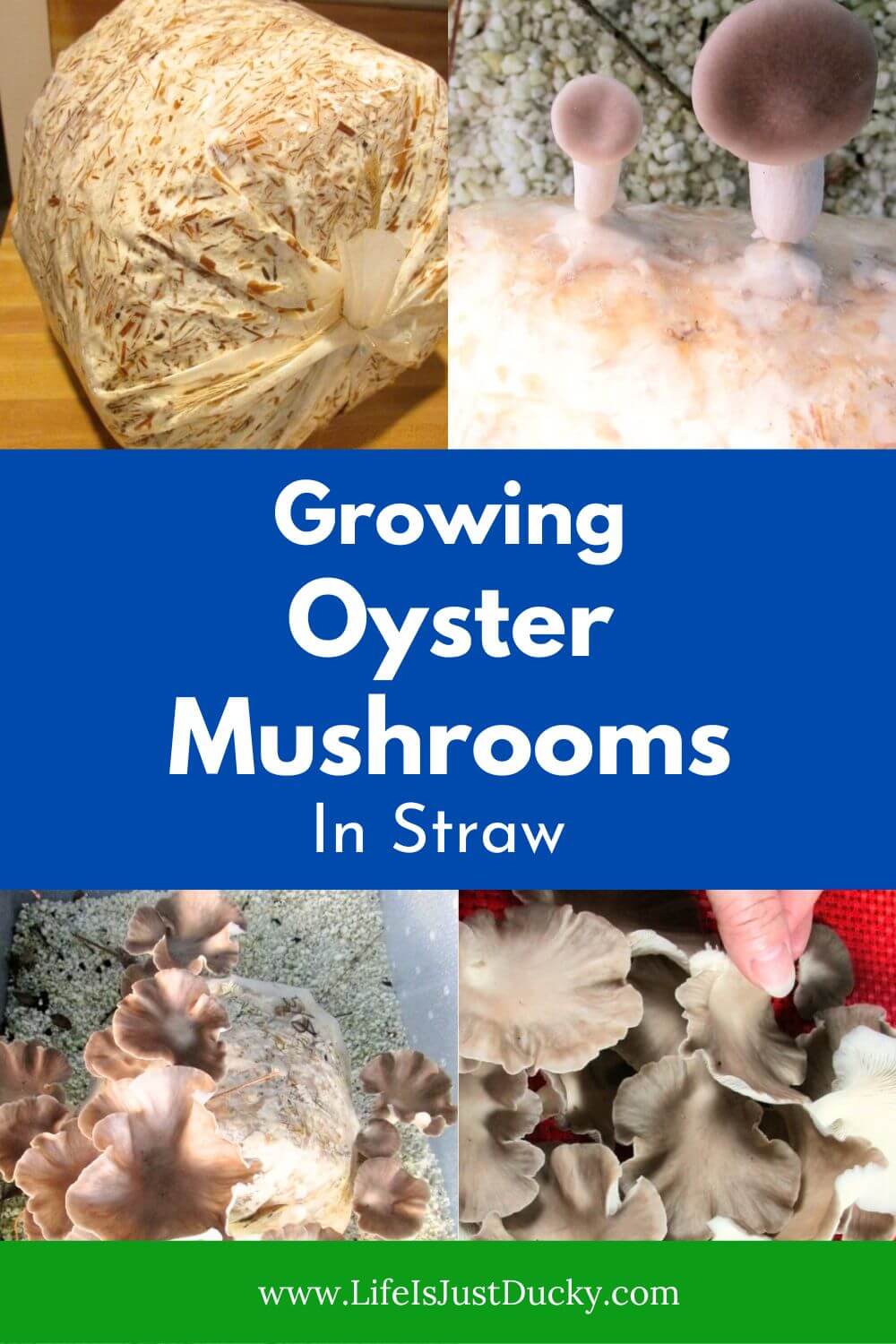
Growing Oyster Mushrooms
Oyster mushrooms are one of the mushrooms I’d recommend looking at if you’re just getting started.
They’re relatively forgiving, grow quickly compared with many other mushrooms, and can be grown using several different methods.
Oyster mushrooms can grow in materials such as straw, sawdust, hardwood chips, coffee grounds, and even toilet paper. For a beginner, straw is one of the methods I found most practical.
The important thing is choosing an oyster mushroom variety that matches your growing conditions.
Growing Oyster Mushrooms in Straw
Straw provides a relatively inexpensive growing medium for oyster mushrooms.
Before adding mushroom spawn, the straw needs to be treated so that competing organisms don’t take over the growing medium.
You’ll often see this process called sterilization, but for straw, pasteurization is generally the more accurate term.
I cut my straw into pieces about 2 to 3 inches long and put it into a cooler. I filled the cooler about two-thirds full, weighed the straw down, and covered it with boiling water.
The water needed to stay above about 160°F for approximately 45 minutes.
After treatment, the straw needs to drain and cool completely before you add the mushroom spawn. You don’t want hot straw to damage your mushroom spawn.
Once the straw is cool, you can begin inoculating it.
Adding Oyster Mushroom Spawn
I used plastic grow bags for my oyster mushrooms.
I put down a layer of straw, followed by a layer of mushroom spawn, and continued alternating the two. My layers were roughly 2 inches of straw followed by about 1/2 inch of spawn.
The bag is then closed and holes are added to allow for air exchange.
At this stage, the goal is to give the mushroom mycelium time to spread throughout the straw.
Keep the bags in a relatively dark area with appropriate temperatures for the particular oyster mushroom variety you’re growing.
After several weeks, the straw should become increasingly white as the mycelium colonizes it.
Once the growing material is fully colonized, it’s time to encourage fruiting.
How to Grow Oyster Mushrooms in Straw
Once the oyster mushroom spawn is in a growing bag, you want to keep it in the appropriate temperature and humidity conditions while the mycelium colonizes the straw. Once the straw is fully colonized, provide moisture, indirect light, and good airflow to encourage mushrooms to form.
The exact timing will vary with the oyster mushroom strain and growing conditions, but once fruiting begins, mushrooms can develop surprisingly quickly.
When the mushrooms reach the size you want, harvest them before the caps become completely flat and begin releasing large amounts of spores.
Growing Oyster Mushrooms Outdoors
You can also grow oyster mushrooms outdoors using straw.
One method is to put the straw on plastic with drainage holes, layer the straw with mushroom spawn, and cover it to help retain moisture while the mycelium develops.
After the straw has been colonized, remove the covering and keep the growing material moist.
When the mushrooms begin to appear, they can grow surprisingly fast.
After harvesting, continue providing moisture and cover the growing material again as needed. Depending on the conditions and how much of the growing material remains, you may get several flushes before the straw is exhausted.
Can Oyster Mushrooms Grow on Logs?
Some oyster mushroom varieties can grow on logs, but this is where choosing the right mushroom and the right wood becomes important.
Not every mushroom likes every type of wood.
If you’re interested in growing mushrooms on logs, check with your mushroom supplier to find out which mushroom strain and wood combination is appropriate.
That brings me to my favorite mushroom-growing project: shiitake logs.
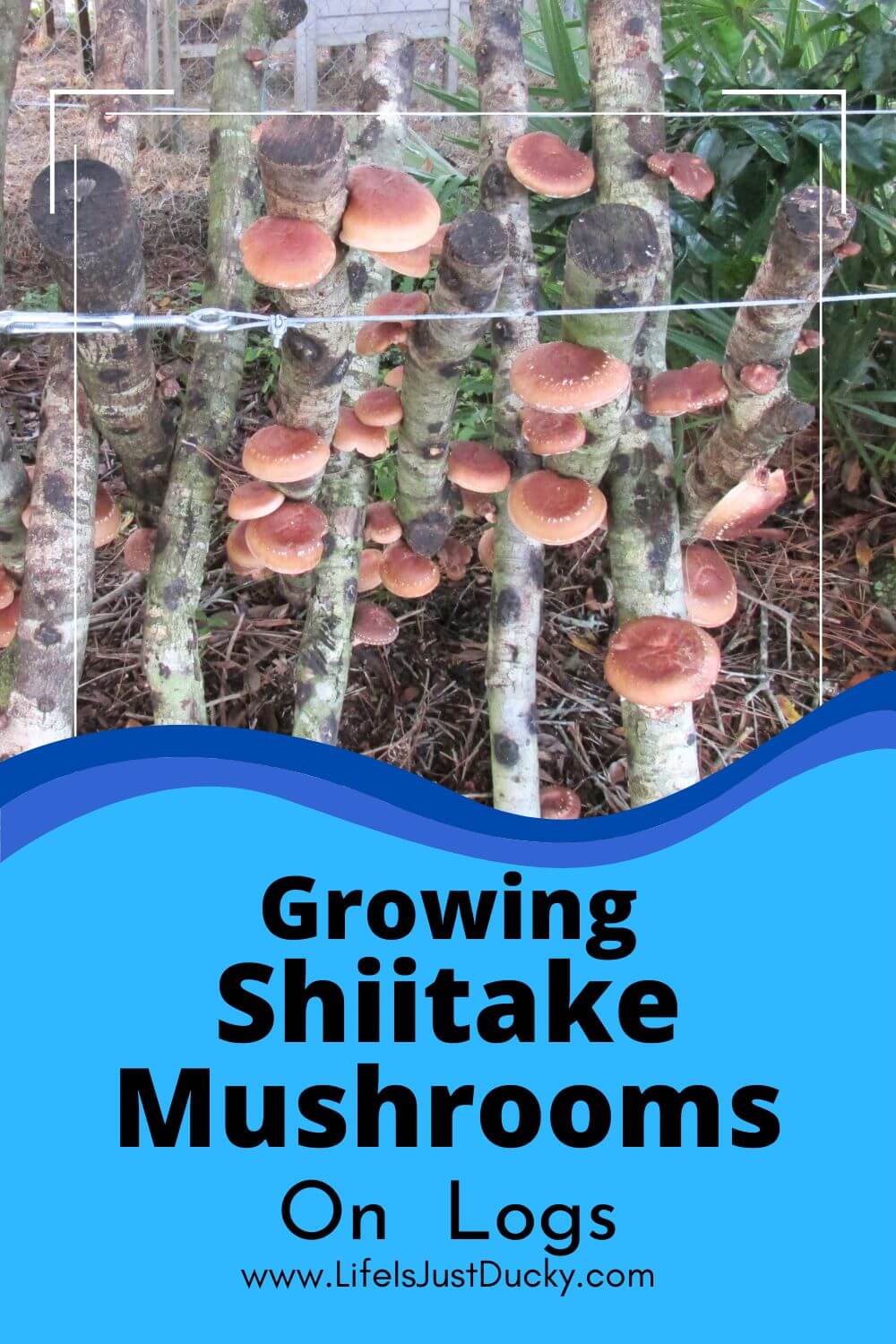
Growing Shiitake Mushrooms on Logs
Growing shiitake mushrooms on logs is a longer-term project, but it is also one of the most rewarding mushroom projects I’ve tried.
I had a young oak tree cut down at my daughter’s house, and rather than letting all that wood go to waste, I decided to turn some of it into shiitake mushroom logs.
I ordered about 1,000 shiitake plugs and stored them in the refrigerator until I was ready to use them.
The logs were approximately 4 feet long and between 3 and 8 inches in diameter.
Fresh logs are important because you want the wood to still have plenty of moisture and not already be colonized by other fungi.
Preparing Shiitake Logs
The process involves drilling holes throughout the log and filling those holes with mushroom spawn plugs.
I marked my drill bit at about 1 inch so I knew how deep to drill each hole. The holes were spaced about 2 inches apart in a diamond pattern around the log.
A drill press makes this job much easier if you have access to one.
Once the holes are drilled, the shiitake plugs are tapped into place with a rubber mallet.
Then the holes are sealed with wax.
The wax helps protect the plugs and helps keep moisture inside the wood while the shiitake mycelium gets established.
🌼 From Mary’s Backyard
A Lesson I Learned – If you’re inoculating a lot of logs, don’t underestimate how much work drilling all those holes can be.I did a lot of this by hand, and if I were doing it again, I’d definitely find a drill press and a helper.
That would have made the whole process considerably easier.
Soaking and Storing Shiitake Logs
Once my logs were inoculated, I put them in a shady location under trees.
I soaked the logs in a clean trash can overnight. A watering trough can work too, as long as you have a way to keep the logs submerged.
After that, I kept the logs in a shaded location and made sure they stayed moist.
Since I was already outside watering and feeding my ducks, watering the mushroom logs became part of the same routine.
That worked well for me because the logs were right there where I was already spending time.
Related>> Raising Ducks 101: How to Raise Ducks for Beginners
How Long Do Shiitake Logs Take to Produce Mushrooms?
This is where growing mushrooms is different from growing a vegetable garden.
You’re going to need patience.
Shiitake logs may take many months before they produce their first mushrooms. Depending on the mushroom strain, wood, log size, and growing conditions, the first flush can take somewhere around 6 to 18 months.
My first logs produced mushrooms after about nine months.
Once established, shiitake logs can continue producing for several years.
The timing isn’t perfectly predictable because temperature and moisture play such a big role.
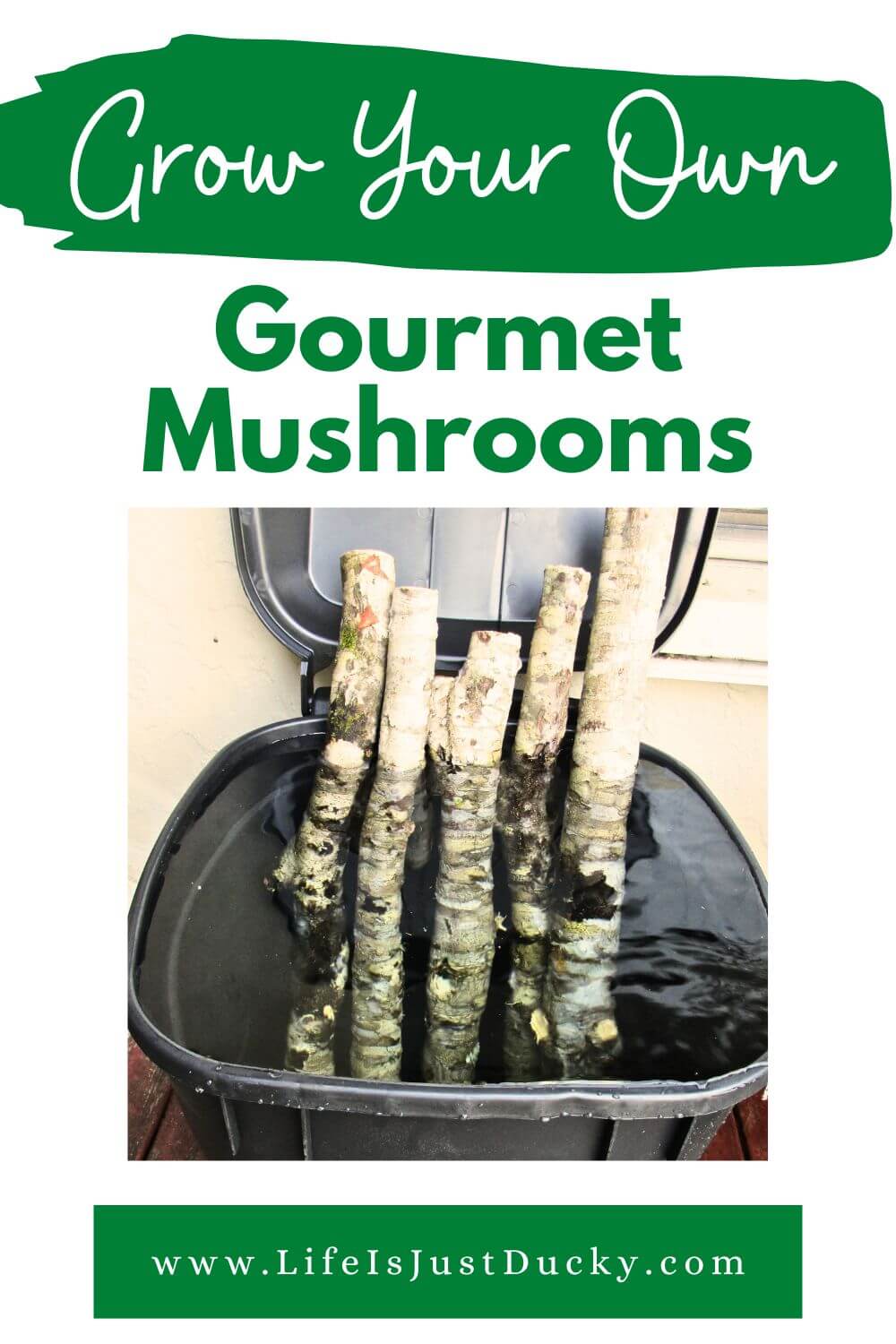
How to Force Shiitake Logs to Fruit
Once your shiitake logs are fully colonized, you can encourage them to fruit by soaking them in cold water.
I would soak my logs for approximately 12 to 24 hours and then return them to their shaded growing area.
After being soaked, the logs can begin producing mushrooms within a week or two, depending on conditions.
The logs need time to rest between fruitings. I allowed mine at least eight weeks between forced fruitings.
You don’t want to keep forcing the logs continuously. They need time to recover and allow the mycelium to rebuild its energy in the wood.
How Long Will Shiitake Logs Produce?
A healthy shiitake log can produce mushrooms for several years.
My logs would generally fruit every 8 to 12 weeks, with each flush lasting around two weeks.
When the mushrooms start appearing, they can develop surprisingly quickly, so check your logs regularly.
It’s easy to look one day and think, Nothing is happening, and then come back a couple of days later to find mushrooms ready to harvest.
When to Harvest Shiitake Mushrooms
I like to harvest shiitake mushrooms when the caps are well developed but the edges are still slightly rolled under.
You can also look at the gills underneath. I generally harvest when the gills are about 80% exposed.
To harvest, twist the mushroom gently from the log or cut it off with a clean knife.
Don’t let the mushrooms sit on the log until they’re completely flat and overmature.
Regular harvesting also gives you the opportunity to enjoy the mushrooms at their best.
What to Do With Extra Mushrooms
One of the fun parts of growing mushrooms is that you can suddenly have a lot of them at once.
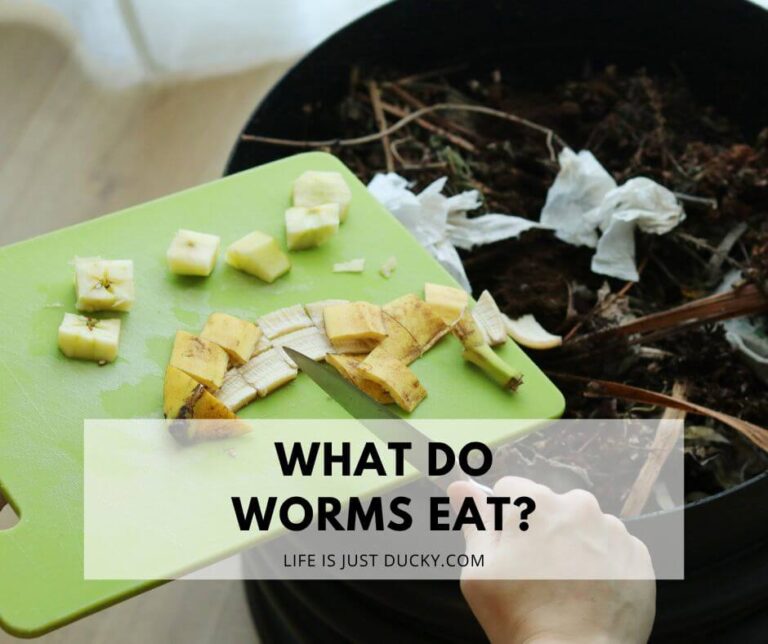
If I have more mushrooms than we can eat immediately, I’ll cook them and freeze them, dry them for later, or give some away.
Fresh mushrooms are wonderful sautéed in butter, and they’re also delicious grilled.
Shiitake mushrooms can be dried and stored for later use, which makes a large harvest much easier to manage.
And, of course, there’s nothing wrong with sending a basket of homegrown mushrooms home with a friend.
Related>> 8 Easy Ways To Preserve Your Harvest
🌼 From Mary’s Backyard
Growing mushrooms has taught me that sometimes the best projects are the ones that take a little patience.My mushroom logs weren’t an overnight success. I had to wait months before I saw that first flush of shiitakes.
But there was something pretty exciting about walking outside and seeing mushrooms growing on logs that I had inoculated myself.
And when you harvest something you’ve grown and bring it into the kitchen, it feels just a little more special.
Related>> How to Store Fresh Mushrooms and Keep Them Fresh Longer
What I Would Do Differently
Every growing project teaches you something, and my mushroom logs were no exception.
If I were starting over, I’d definitely get some help.
I’d also use a drill press if I had access to one. Drilling hundreds of holes by hand is a lot of work.
And I would use wire cable rather than rope for hanging or supporting the logs. The rope I used eventually broke after going through repeated wet and dry cycles.
Most importantly, I would start another batch of logs sooner.
Because when you have a successful mushroom log producing delicious shiitakes, you’ll probably wish you had more.
🌼 From Mary’s Backyard
There is something pretty satisfying about walking past a stack of mushroom logs and realizing that those logs are going to feed you for years.Of course, there is also a lot of waiting involved!
I had to be patient while the shiitake mycelium colonized the logs. Then one day, there they were—mushrooms growing right out of the wood.
That first harvest made all those drilled holes, soaked logs, and months of waiting seem worthwhile.

Final Thoughts on Growing Mushrooms at Home
Growing mushrooms at home can be as simple as starting with a countertop oyster mushroom kit, or it can become a much bigger project involving dozens of hardwood logs.
I happen to enjoy both.
The oyster mushrooms gave me an easy introduction, while the shiitake logs became a longer-term backyard project.
If you’re just getting started, I’d recommend beginning with a mushroom variety that fits your climate and a growing method that doesn’t overwhelm you.
Once you see that first little mushroom appear, you may find yourself hooked too.
And don’t be surprised if you start looking around your yard wondering what else you could inoculate with mushroom spawn.
That’s how it happened for me.
Frequently Asked Questions About Growing Mushrooms
What is the easiest mushroom to grow at home?
Oyster mushrooms are often a good choice for beginners because they grow relatively quickly and can grow on several different substrates, including straw. Choose a variety suited to your local temperature and growing conditions.
Can you grow mushrooms in your backyard?
Yes. Many mushrooms can be grown outdoors as long as you provide the appropriate growing material, moisture, temperature, shade or indirect light, and air circulation. Shiitake mushrooms can be grown on hardwood logs, while some oyster mushrooms can be grown on straw or other substrates.
How long does it take to grow mushrooms?
The answer depends on the mushroom and growing method. Oyster mushrooms grown on prepared substrate can produce mushrooms within weeks, while shiitake mushrooms grown on logs may take several months before the first harvest.
Where is the best place to grow mushrooms?
Most outdoor mushrooms do best in a shaded or partially shaded location protected from harsh direct sunlight. They also need adequate moisture and good air circulation. The ideal conditions depend on the mushroom variety.
Can you grow mushrooms indoors?
Yes, some mushrooms can be grown indoors, and oyster mushrooms are a particularly practical choice for indoor growing. A mushroom-growing kit is an easy way to get started, but you can also grow mushrooms on prepared substrates.
Indoor mushrooms still need the right temperature, moisture, and air circulation. They don’t need bright sunlight, but they do need appropriate growing conditions for the particular variety.
I grew my first oyster mushrooms indoors on a kitchen counter, and that little kit was what got me interested in growing mushrooms in the first place.
What is mushroom spawn?
Mushroom spawn is growing material that has been colonized by mushroom mycelium. Think of it as the starting material you add to your growing medium so the mushroom can spread and eventually produce mushrooms.
Spawn can come in different forms, including plugs for inoculating logs or grain and other materials for growing mushrooms in substrates such as straw.
When you’re starting out, purchasing spawn from a reputable mushroom supplier is much easier than trying to produce your own.
Do mushrooms grow back after you harvest them?
Many mushrooms will produce additional flushes when the growing conditions remain favorable. For example, properly established shiitake logs can produce mushrooms repeatedly over several years, with rest periods between fruitings.
Happy Backyard Homesteading!

I believe everyone can grow at least part of their own food! Let me show you how.

Mary is a gardener, backyard homesteader, and duck wrangler. She is also the owner and writer of LifeIsJustDucky.com and AGoodWordADay.com. (for daily devotions) Mary is passionate about helping others expand their backyard homesteading skills and learn to be more self-sufficient, no matter where they live.





Oh i love your fun guy joke 😉 btw i sauteed mine with onions and steak. Soooo good 🙂
So easy and so good!