

Whether you’re a backyard homesteader or have access to a local farm, you may be wondering how to store farm fresh eggs.
Should they be washed or remain unwashed? In the fridge or on the counter? How long do they last? What is a bloom?
When I first started raising chickens and ducks, I wondered these things too.
I absolutely love having farm fresh eggs from my ducks and chickens. And after a decade of taking care of my flock and eating oh so many eggs, I’ve got the scoop for you.
This post may contain affiliate links. I will be compensated if you make a purchase after clicking on my links. Please read my disclosure if you have questions.
Thank you for supporting this site with purchases made through links in this post. For Starters Here’s My Amazon Store.

Collecting Farm Fresh Eggs.
Eggs that you want to bring into your house for your family to eat should be clean, not broken, and not frozen.
When gathering your eggs, it is very important to get rid of any that appear to be cracked. Bacteria can enter these eggs, making them unsafe to eat.
Keep your nest boxes clean, changing the bedding regularly and, for ducks, keep the nesting boxes far away from a water source to keep the mud to a minimum.
The ways to achieve this are:
- Collect eggs at least once a day. More often in the winter to keep them from freezing.
- Have enough boxes to avoid overcrowding.
- Replace the bedding in the nesting boxes often.
- Discourage roosting/sleeping in the nests.
- Increase calcium supplementation if you have many broken eggs.
Related>> Deep Litter – The Best Method For A Duck And Chicken Run.
How to Store Farm Fresh Eggs
There are two main methods when it comes to storing fresh eggs. But which is better? Is it better to keep eggs on the counter or refrigerated?
It all comes down to whether the eggs have been washed or not, how long you want to store them, and your personal preferences.

What Is The Bloom?
Did you know that there is a natural protective layer on eggs? This protective layer is called the bloom (or cuticle). It is a protective coating that the chicken or duck applies to the entire eggshell right before the egg is laid. As the egg travels down the hen’s oviduct, it is covered with this liquid called the bloom.
Importance Of The Bloom In Egg Storage
The bloom is what makes a freshly laid egg look shiny and feel a little sticky and wet. Once the bloom dries, which is usually no more than a minute or two after the egg is laid, it will provide a protective barrier over the porous eggshell to keep harmful bacteria out of the egg. If bad bacteria gets into the egg, the egg will go bad or, worse, make you sick when you eat it.
Fresh eggs that have not had the bloom washed off naturally have a longer shelf life thanks to that protective barrier that covers the egg.
So, why do clean eggs and the bloom matter so much? This actually can determine how you can store your eggs!
Related>> How To Start Urban or Suburban Homesteading.
Should You Wash Your Farm Fresh Eggs?
If you are going to be storing your eggs, it’s not necessary to wash your chicken or duck eggs. Bring your eggs inside from the coop or bring them home from the farm, and they are ready to store. If you do wash them, the bloom will be removed, and they will have to be refrigerated right away.
Do You Need To Wash Farm-Fresh Eggs?
If you find an egg that is especially dirty or has a compromised bloom (in a mud puddle or sitting in the wet grass, for example), you can give those to your dogs, pigs, or scramble them up and feed them back to your birds. It is a great source of protein for them.
You will, however, want to wash them before you crack them open and cook them for your family. I will go over this procedure later in this article.
 Buy Now →
 *ad
How Long Do Fresh Eggs Last Unrefrigerated?
Eggs on the counter can last for 3 to 4 weeks easily. Just make sure you organize them in such a way that you use the oldest ones first.
We have a stacking system that helps us keep them rotated.

How To Store Backyard Fresh Eggs
In our modern world, we tend to refrigerate everything. In fact, when I first started raising ducks, that is how I kept mine.
But as long as your eggs are fairly clean, and the bloom is intact, freshly laid duck or chicken eggs don’t have to be kept in the refrigerator. They can last for weeks at room temperature.
If there is any dirt (poo) on the egg, it often can be brushed off by a dry towel, flicked off by a fingernail or brushed away with a dry soft brush.
There are benefits and limitations of non-refrigerated egg storage.
The biggest benefit is that it can free up a lot of space in your refrigerator. And a basket of eggs on the counter can look beautiful.
Another great benefit is that if the electricity goes out for an extended period of time, you won’t lose all your eggs. When we have a hurricane and the electricity goes out for days on end, all the eggs in the refrigerator have to be thrown out.
Related>> How To Keep Eggs From Freezing In The Coop.
How To Store Eggs In The Winter
However, in the wintertime, when the eggs get cold, the eggs think they have been put into the refrigerator, even though they are outside. When they warm to room temperature, condensation can form on the eggs. This moisture can compromise the bloom.
So, if the eggs get cold, they should remain cold. This is one time you need to keep them in the fridge.
Related >> Caring For Ducks In Winter. What You Need To Know.
When To Refrigerate Eggs?
How do you store washed eggs?
All store-bought eggs in the US, as well as any eggs you wash yourself, must be refrigerated.
And once they are refrigerated, you need to keep your eggs refrigerated.
Washing removes the protective bloom, so they cannot be kept at room temperature without spoiling. That bloom makes all the difference.
One thing to note with washed eggs is that they will lose moisture more rapidly when that protective bloom coating is gone.
Storing Unwashed Eggs In The Refrigerator
You can, however, refrigerate unwashed eggs as well. If you know you will not be using them up sooner than 1 month, a benefit of refrigerating unwashed eggs is that they’ll last longer at the cooler temperature.
Related>> Duck Eggs Vs. Chicken Eggs, Which Are Better?
How To Store Eggs In The Refrigerator
Should You Wash Eggs From The Coop Before Refrigerating?
For longer-term storage, the fridge is a better option. Whether they are washed or not, they will last much longer in the refrigerator.
The best place in the refrigerator is not in the door, where the temperature fluctuates. Keep them on the shelves where the temperature is more consistent. You can use egg cartons or egg holders that fit under the glass shelf. These free up so much space on the shelf itself.
So, if you have a lot of eggs, you can put them in the refrigerator. In the fall, while your birds are molting and laying slows down, you can have an egg cache in the refrigerator to extend your season.
Related>> What Is Molting And What Can You Do To Help Your Birds?

The Best Way To Wash Eggs
Whether or not you choose to wash your eggs before you store them. You definitely should wash them before you crack and cook them. Follow these guidelines for the safest procedure to wash your eggs.
The first thing is to use running warm tap water that is warmer than the egg. Don’t use cold water. Cold water will cause the egg to suck any bacteria that is on the shell right through the shell pores into the egg itself.
I learned this by reading about how they can inoculate chicks before they hatch. They will actually mix up the inoculate in water and put it in the refrigerator. When they place the room temperature egg in the cold water, and the egg will suck the water/inoculant right through the shell. This doesn’t work with warm water.
Do not put them in a pan of water. You want the clean water to run over the egg, carrying the dirt away. Using a gentle hand so you don’t crack the shell, you can use a clean cloth or soft brush to clean the shell. There is no need to use soap.
You can cook it right away or dry the egg before storing.
How Long Do Eggs Last?
As a general rule, unwashed eggs will last up to 4 weeks unrefrigerated at room temperature.
Washed eggs in the refrigerator will last about 2 months, and unwashed eggs in the refrigerator will last about 3 months.
When the eggs are coming in hot and heavy, it’s smart to refrigerate any unwashed fresh eggs you aren’t planning to eat in the next couple of weeks. This will help them last longer.
Make sure you rotate your eggs so you are using the oldest eggs first.
Proper Farm Fresh Egg Storage Tips
I highly recommend using some kind of egg organizer so you know which eggs are freshest and which need to be used up next.
There are many options, from egg cartons that are labeled. I’ve even seen eggs that were individually marked with food-safe markers.
If you only have a few hens, a spiral egg organizer is really pretty, and you can easily tell which is the oldest.
For Eggs On The Counter
 Buy Now →
 *ad
If you have a lot of hens, this stacking organizer is wonderful. When you empty one tray, you pull it out and move everything down, or like we do, add dry erase marking tags to the front, and you can mark which is oldest.
When you have more than a few eggs.
 Buy Now →
 *ad
These refrigerator organizers are wonderful for saving space on the shelves.
Free up shelf space in your fridge.

Egg Drawer – Under Shelf Refrigerator Drawer
Buy Now →*ad
Determining Egg Freshness
What if your eggs get old?
The first thing that happens when an egg gets old is the quality of the white and yolk will deteriorate. The yolk will flatten instead of standing high, and the white will get runny. The nutritional value will start to degrade as well.
But are your eggs still safe to eat?
The egg float test
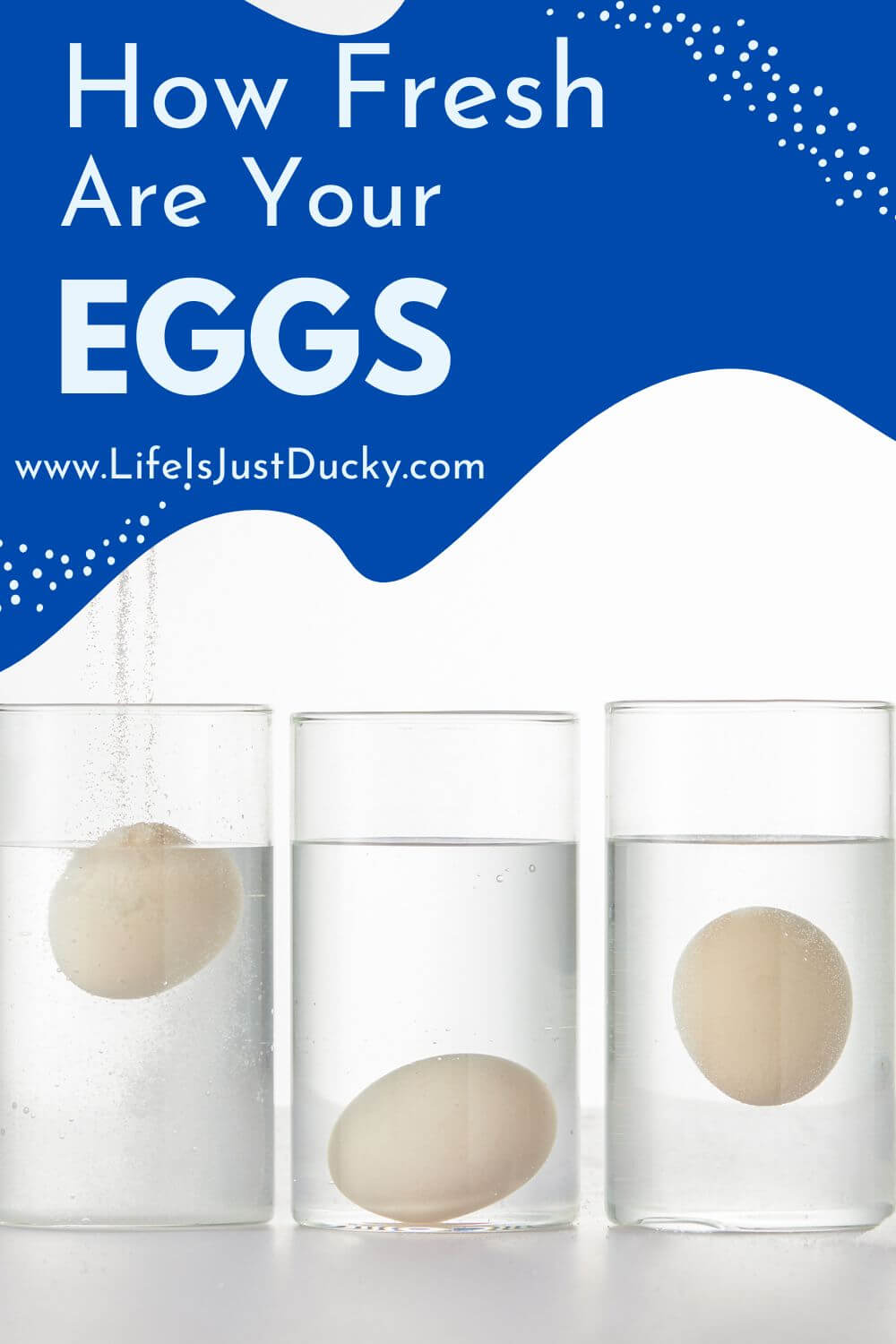
Without cracking the egg open, you can do the float test. Place the egg into a glass of water and observe what happens. A young egg has a small air cell and will sink, and an old egg has a large air cell and will float.
If you are not sure how old your egg is, it’s a good idea to crack your egg into a separate dish and not into the bowl with six other eggs or your cake batter. This way, if it is a bad egg, you won’t ruin the whole batch.
Related>> Nesting Boxes For Ducks. How To Make Your Own.
How To Tell If An Egg Is Rotten
The best way to determine if an egg is rotten or not is to use your nose.
Start by smelling the shell. The hydrogen sulfide smell is a dead giveaway. If it smells bad, don’t eat it.
If you suspect it might be bad, it is best to crack it outside, as that smell is hard to get out of your house.

Conclusion: Best Practices for Storing Farm Fresh Eggs
Now that you know how to store farm fresh eggs, you can enjoy, and not be afraid of your eggs.
Fresh eggs are one of the greatest gifts chickens and ducks give us. No matter which method you choose, you now know how long they will last.
Knowing how to store them properly will give you the confidence to use your fresh eggs to the fullest.
You can start your own flock of ducks. Order your ducklings and supplies from Cackle Hatchery.
More You May Enjoy
The Simple Start Raising Ducks System.
Setting Up A Brooder Box For Baby Ducks.
A Well Designed Duck Coop To Make Your Life Easier.
Duck Eggs vs. Chicken Eggs, Why Duck Eggs Are Better.
Raising Ducks 101 – How To Take Care Of Baby Ducklings.
How To Get Clean Water For My Ducks.
Happy Backyard Homesteading!

I believe everyone can grow at least part of their own food! Let me show you how.

Mary is a gardener, backyard homesteader, and duck wrangler. She is also the owner and writer of LifeIsJustDucky.com and AGoodWordADay.com. (for daily devotions) Mary is passionate about helping others expand their backyard homesteading skills and learn to be more self-sufficient, no matter where they live.