

Determinate or indeterminate tomatoes. What’s the difference, and which type is best for your garden? If you’ve ever looked through a tomato seed catalog and wondered what those terms mean, you’re not alone. Knowing whether a tomato is determinate or indeterminate can help you choose the right plants for your space, your growing season, and the way you like to use your harvest.
Whether you want a big batch of tomatoes for homemade sauce or fresh tomatoes for your sandwiches all summer, there’s a tomato plant for you. Let’s look at the differences and how to decide which one to grow.
This post may contain affiliate links. I will be compensated if you make a purchase after clicking on my links. Please read my disclosure if you have questions.
Thank you for supporting this site with purchases made through links in this post. For Starters Here’s My Amazon Store.

What’s the Difference Between Determinate and Indeterminate Tomatoes?
When you look through a seed catalog or browse tomato plants at the garden center, you may see the abbreviations DET and IND. These stand for determinate and indeterminate.
The difference is how the plants grow and produce their fruit. One tends to give you a more concentrated harvest, while the other keeps producing new growth and tomatoes over a longer period.
Neither type is automatically better. The best choice depends on your garden and what you want to do with your tomatoes.
Related>> Secrets for Growing Great Tomatoes: 16 Tips for a Better Harvest
Determinate Tomatoes
Determinate tomatoes grow to a relatively predictable size for their variety. The plants stop extending their main shoots once they reach their natural growth limit, and much of their fruit production is concentrated into a shorter period.
They’re often called bush tomatoes because many varieties have a compact growth habit.
Why would you want a tomato plant that produces most of its crop in a relatively short time? Well, think about what you do with your harvest.
If you want to can tomatoes, make a big batch of marinara sauce, or dry tomatoes for later, having a large crop available within a shorter period can be a real advantage. You can get your preserving work done in batches instead of collecting a few tomatoes every day for weeks.
Determinate tomatoes can also be useful if you have a short growing season. Many varieties mature relatively early, although you’ll want to check the days to maturity for the specific variety you choose.
Because many determinate varieties stay smaller than indeterminate varieties, they can be easier to manage in a small garden. Some are also well suited to containers, especially varieties specifically bred for compact growth.
Determinate plants still need appropriate support. Depending on the variety and the weight of the fruit, a cage or stake may be helpful.
Look for DET in seed catalogs and on plant labels.
Indeterminate Tomatoes
Indeterminate tomatoes are the ones that keep growing throughout the growing season as long as conditions remain favorable. Rather than stopping at a predetermined size, their stems continue to grow, producing new leaves, flowers, and fruit clusters.
These plants can become quite large, and many varieties need sturdy, tall support.
The big advantage? You can harvest fresh tomatoes over a longer period instead of getting most of your crop within a relatively short window.
Want tomatoes for sandwiches one day, salads the next, and a fresh tomato sauce when you have enough ripe fruit? An indeterminate variety can be a good choice.
You’ll often have tomatoes at several stages of development on the same plant, from small green fruit to tomatoes that are nearly ready to pick.
Indeterminate tomatoes aren’t necessarily a poor choice for containers. Some varieties can do well in a large container with good drainage, adequate soil, and strong support. However, large, vigorous varieties generally need more room and a substantial structure to keep them upright.
Look for IND in seed catalogs and on plant labels.
🌼 From Mary’s Backyard
There’s more to choosing a tomato than the seed catalog tells you.I always have to think about where I’m going to put a tomato plant before I decide which one to grow. Here in South Florida, our weather gives us plenty to think about already! Heat, humidity, and heavy rain can make tomato growing a challenge, so I want to give each plant the best chance I can.
A little planning before planting saves a lot of frustration later. Think about the space you have, how you’ll support the plant, and what you want to do with all those tomatoes. Then choose a variety that fits your garden, not just one that looks pretty in the catalog.

Determinate vs. Indeterminate Tomatoes: Which Is Right for You?
Choosing between determinate and indeterminate tomatoes comes down to how you want your tomatoes to grow and how you plan to use your harvest.
Determinate tomatoes are often a good choice if you want a more concentrated harvest for canning, making sauce, or drying tomatoes. Many varieties stay relatively compact, making them worth considering for smaller gardens and containers. If you have a short growing season, look for an early-maturing variety.
Indeterminate tomatoes are a good choice if you want to keep picking fresh tomatoes over a longer period. These plants continue growing throughout the season when conditions are favorable, so they generally need more room and sturdier support.
Of course, these are general guidelines. Some determinate tomatoes grow larger than others, and some indeterminate varieties are well suited to containers. Always check the description of the particular variety you’re considering.
And remember, you don’t have to choose just one type! Growing both can give you tomatoes for fresh eating and a more concentrated harvest for preserving.
Related>> Simple Ways To Get Rid Of Tomato Hornworms
Tomato Cage Ideas for Indeterminate Tomatoes
Let’s talk about supporting those big tomato plants!
I’ve tried plenty of store-bought tomato cages, and many just aren’t sturdy enough for a full-size indeterminate tomato. I’ve even had to tie cages from the top to the garden fence on both sides to keep everything upright.
Have you ever tried working in a garden while ducking under strings going every which way? It’s not exactly convenient!
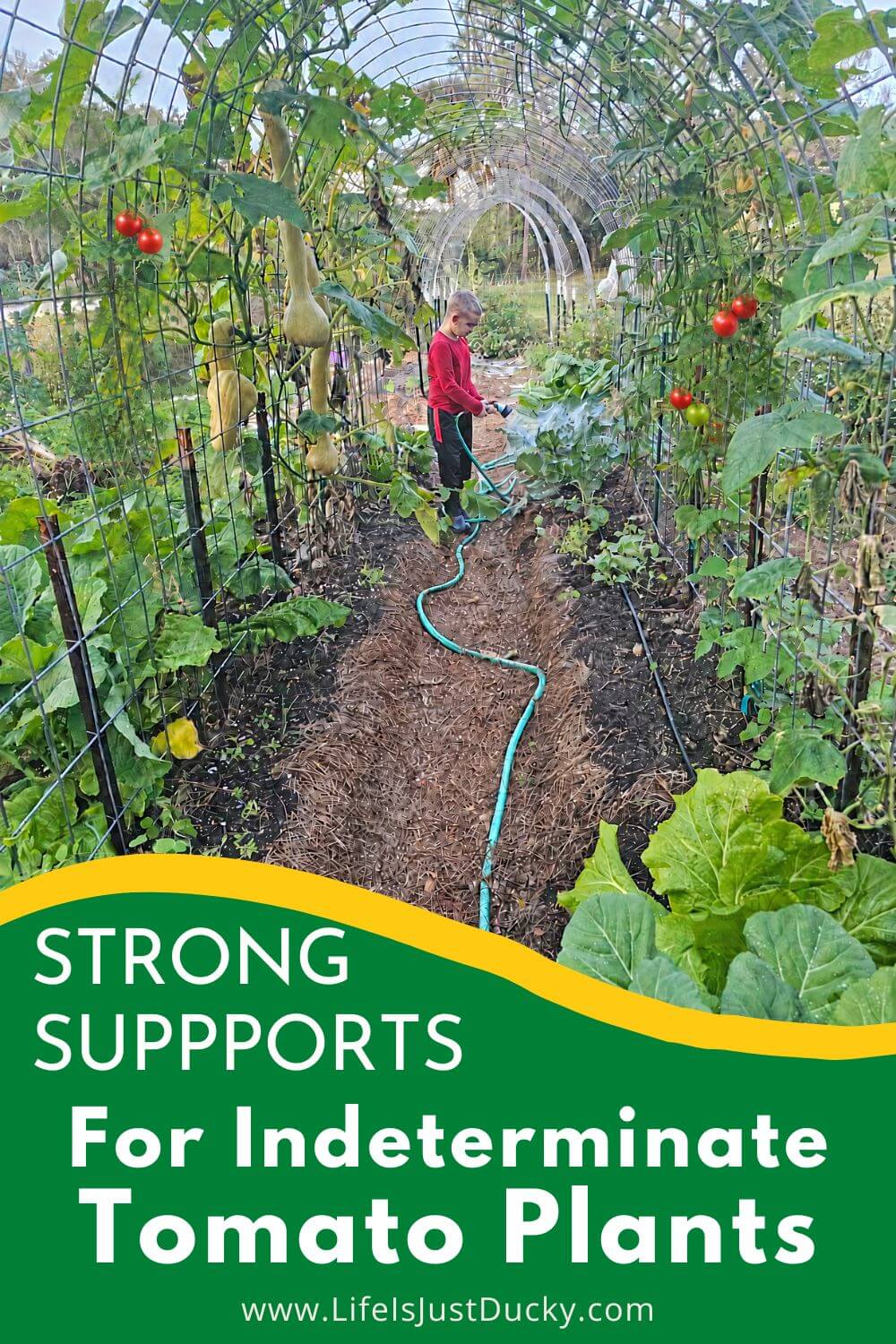
In my garden, I now use cattle panels to support my tomatoes. They give vigorous plants room to grow while providing a strong structure to tie them to as needed.
You could also consider the Florida weave if you’re growing tomatoes in a row. Sturdy stakes and appropriately sized cages are other options, depending on how many plants you’re growing and how you want to manage them.
Whatever support you choose, plan for the mature plant rather than the little transplant you’re putting in the ground today. A support that looks plenty big in spring can seem awfully small once a vigorous tomato plant takes off.
🌼 From Mary’s Backyard
A tomato cage that falls over is no help to anybody!Sometimes the best garden solutions are the ones you come up with yourself!
I’ve learned that gardening doesn’t always go according to plan. You can buy all the right supplies, follow the instructions, and still find yourself trying to figure out a better way. That’s part of gardening, isn’t it? Every season teaches you something, and sometimes a little experimenting leads to a solution that works better for your garden. Don’t be afraid to try something different!
These days, I use cattle panels to support my tomatoes. Whatever support you choose, think about the size of the mature plant. That little tomato transplant can turn into a whole lot of vine before you know it.
Can You Grow Both Determinate and Indeterminate Tomatoes?
Absolutely! If you have room, growing both types can give you the best of both worlds.
Plant a determinate variety when you want a concentrated harvest for canning, drying, or making a large batch of sauce. Add an indeterminate variety for a continuing supply of fresh tomatoes.
Of course, your growing season and local weather matter, too.
If you’re deciding which tomatoes to grow, consider how much space you have, how long your suitable growing season lasts, and what you plan to do with your harvest.
Related>> How To Make Traditional Ratatouille Recipe
From the Garden to the Kitchen
What’s the point of growing all those delicious tomatoes if we’re not going to enjoy them in the kitchen? Whether you’re picking a basket of fresh tomatoes from your garden or bringing home a haul from the farmers’ market, there are so many wonderful ways to use them.
When you have plenty of tomatoes, it’s time to turn that harvest into something delicious!
- Marinara Sauce — A homemade classic for pasta night, pizza, and all sorts of family favorites.
- Ratatouille — A delicious way to bring tomatoes together with other garden vegetables for a hearty, flavorful dish.
- Moussaka — A comforting, layered dish that makes wonderful use of tomatoes in a satisfying meal.
From the garden to the kitchen, homegrown tomatoes make good food even better!
Frequently Asked Questions About Determinate and Indeterminate Tomatoes
Are determinate or indeterminate tomatoes better?
Neither is best for every garden. Determinate tomatoes tend to produce a concentrated crop, while indeterminate tomatoes generally produce over a longer period.
Do determinate tomatoes produce all their fruit at once?
They produce much of their crop over a relatively short period, but the tomatoes don’t necessarily ripen on the same day.
Can indeterminate tomatoes grow in pots?
Yes. Choose a suitable variety, use a large container with good drainage, and provide strong support. Compact varieties are generally easier to manage in containers.
Which tomatoes are best for canning?
Determinate varieties can be convenient because their concentrated harvest makes it easier to gather enough tomatoes for a batch. However, indeterminate varieties can also be used for canning if you collect and store ripe fruit until you have enough.

Related>> 12 Best Hot Weather Vegetables To Grow In Your Garden
Which Tomato Type Is Best?
There’s no single winner in the determinate vs. indeterminate tomato debate. The best tomato is the one that fits your garden and your plans for the harvest.
If you want a big batch of tomatoes for preserving, start by looking at determinate varieties. If you want to pick fresh tomatoes over a longer period, consider indeterminate varieties. And if you have room for both, why not try a little of each?
Now I’d love to hear from you. Do you grow determinate or indeterminate tomatoes, or a combination of both? Which varieties have worked best in your garden?
Keep Learning
Want to get even more from your backyard garden? Here are a few more posts to help you grow and enjoy your harvest.
- Growing Great Tomatoes – Learn the secrets to growing tomatoes.
- Tomato Hornworms – Find out how to identify these hungry garden pests and protect your tomato plants.
- The First Ripe Tomato – Waiting for that first homegrown tomato? Here’s more to enjoy while you wait.
- Companion Planting – Discover plants you can grow alongside your tomatoes and other garden crops.
- Preserve Your Harvest – When your garden produces more than you can eat fresh, learn ways to save your harvest for later.
Happy Backyard Homesteading!

I believe everyone can grow at least part of their own food! Let me show you how.

Mary is a gardener, backyard homesteader, and duck wrangler. She is also the owner and writer of LifeIsJustDucky.com and AGoodWordADay.com. (for daily devotions) Mary is passionate about helping others expand their backyard homesteading skills and learn to be more self-sufficient, no matter where they live.



Wonderful! Sorry, I take a little time for you. You are right but I speakeraggi and I read english only a little, so is this the only reason for my few click. Thanks a lot, you are marvellous
Wonderful. Glad you are along for the ride.